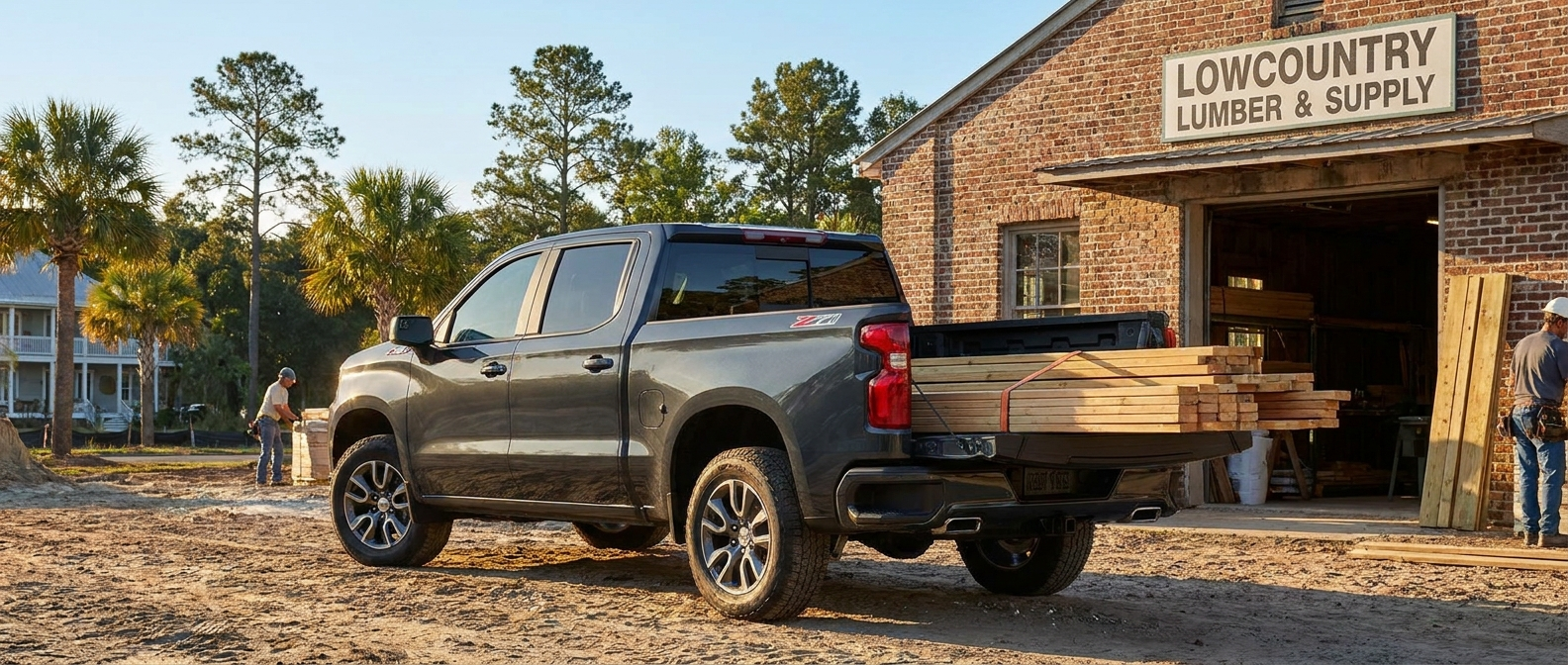




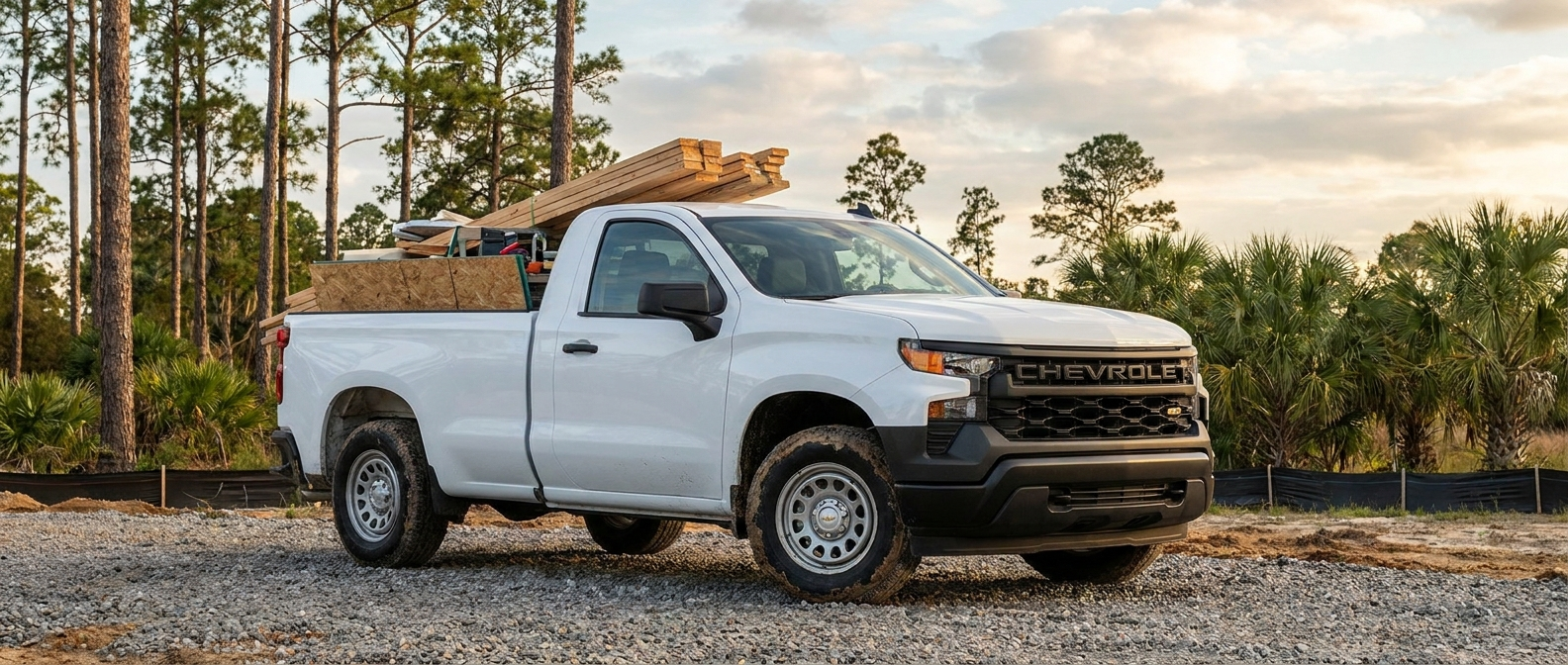
In this article What Does 'Value' Actually Mean in a Work Truck? What Do You Actually Get at Each Tier? Matching the Trim to the Job in Horry County The Case for the HD Tier (and When the 1500 Genuinely Covers It) The Smart Choice for Grand Strand Business Buyers For most Horry County trades, service businesses, and owner-operators running the US-501 corridor, the 2026 Silverado line delivers more practical capability per dollar than anything else in its class. Buying the wrong tier is a real mistake, though. Overshoot and you're paying for comfort features that sit idle in the work bed. Undershoot and you're making two trips where one was possible, or stressing a powertrain pulling a trailer it was never matched to. We work with a lot of local contractors, landscapers, HVAC crews, and marina operators out of our Conway lot. The Silverado 1500 is the right answer for a wide range of Grand Strand businesses. But "Silverado" covers nine trim levels and three different truck classes. The better question is which configuration is actually worth your money for the work you're doing here. What Does 'Value' Actually Mean in a Work Truck? Value in a business context is simpler than the marketing makes it sound, and it comes down to a single ratio, the capability you actually use divided by the operating cost you carry every day, which means the right trim depends entirely on the work you're doing. A trim loaded with leather and a premium audio system is a poor value if the truck spends its days hauling mulch and parking on a muddy site. A bare-bones WT is equally poor value if the owner-operator is driving it two hours a day on US-501 and showing up to client meetings stiff and distracted. The Grand Strand's business profile is specific, and right now it's a construction story. The Myrtle Beach metropolitan area is the second-fastest growing population center in the country, per 2026 U.S. Census Bureau data. Conway alone is in the middle of an 808-acre waterfront transformation on a former Santee Cooper site, with a TIF funding structure approved in December 2025 and construction timelines stretching two to three years out. All of that means steady demand for roofing crews, concrete contractors, electrical subcontractors, landscapers, and general subs, every one of whom needs a truck that earns its keep five days a week. The tier you choose should match the actual work, and the Silverado line breaks down cleanly once you've named the job. The table below lays it out. What Do You Actually Get at Each Tier? Each tier draws a clear line on the spec sheet, with Chevrolet publishing payload and towing by configuration, and the gaps between those tiers run wide enough to decide which jobs a truck can shoulder day after day without complaint. The numbers below show where each one lands, and they're worth reading closely. Silverado Tier Work Fit Towing (when properly equipped) Max Payload (when properly equipped) Who It's For 1500 Work Truck (WT) Light commercial Up to 9,500 lbs (2.7L TurboMax) Up to 2,260 lbs Landscapers, painters, solo tradespeople with enclosed or open trailers under 8,000 lbs 1500 LT Work + daily driver Up to 13,300 lbs (w/ Max Trailering Pkg) Up to 2,260 lbs Owner-operators who need tech, comfort for long days on US-501, and real towing range 1500 LTZ Premium work/daily Up to 13,300 lbs Up to 2,260 lbs Business owners client-facing daily; ProGrade Trailering system standard 2500 HD Heavy commercial Up to 22,420 lbs (diesel, properly equipped) Up to 3,979 lbs HVAC, plumbing, electrical contractors pulling enclosed trailers, skid steers, or equipment 3500 HD Maximum duty Up to 36,000 lbs gooseneck (diesel DRW, properly equipped) Up to 7,442 lbs Crane-assist, flatbed, or multi-unit equipment haulers; heavy marina or marine contractors All payload and towing figures are from Chevrolet's published specifications and require proper equipment configuration. Verify the door-jamb Tire and Loading Information label on your specific truck before hauling. Don't skip reading that label. Matching the Trim to the Job in Horry County The WT earns its keep when the truck works as a pure tool, and that's a solid fit for plenty of Horry County crews, with vinyl floors, a 7-inch screen, and 17-inch steel wheels built to take abuse rather than turn heads in a parking lot. The truck is genuinely durable, it carries the same 2,260-pound payload ceiling as the LT (because the lighter interior actually helps), and the 2.7L TurboMax four-cylinder puts out 310 horsepower and 430 lb-ft of torque. For a painter or landscaper running an open trailer to job sites off SC-544 or SC-22, that combination is plenty, and the lower acquisition cost matters for a business watching its fixed expenses. The math is simple enough. With the LT, the conversation changes. Chevrolet adds a 13.4-inch touchscreen, a 12.3-inch digital driver information center, Google Built-In connectivity, and heated front seats, which matter when you're running 40 minutes each way to Myrtle Beach and back. The Silverado 2500 HD closes the gap the moment your trailer weight climbs past what a half-ton was designed to handle comfortably. Its 6.6L Duramax diesel produces 975 lb-ft of torque and pulls up to 22,420 pounds when properly equipped, which covers most enclosed-trailer and skid steer scenarios without drama. Our Work Truck Solutions team can walk through fleet upfit options for the HD line if you're running multiple vehicles. Our team's honest observation: The LT trim is where owner-operators often settle after driving both the WT and the LT back to back. A WT handles the job. The LT handles the job *and* the driver, which matters when you're in that seat six or seven hours a day. We think of that as a fatigue calculation, not an upsell. Next step: If you're not sure whether a 1500 or 2500 HD matches your trailer, bring us the actual trailer weight (not an estimate) and we'll pull the Chevrolet trailering guide for the specific configuration. Getting that number wrong is expensive either way. The Case for the HD Tier (and When the 1500 Genuinely Covers It) The HD tier is the right call for a real share of Grand Strand contractors, and we'd rather say that plainly than have you find out on a loaded trailer on US-501. The 1500 simply isn't built for every job in this market. If your enclosed trailer is loaded with HVAC equipment and refrigerant, or you're pulling a skid steer to a site in Carolina Forest, you need to know the actual loaded trailer weight before you decide. A loaded 1500 handles up to 13,300 pounds on the right configuration with the Max Trailering Package. The number is real. But the Silverado 2500 HD offers up to 22,420 pounds of diesel towing and up to 3,979 pounds of payload, with a heavier-duty chassis built for sustained load cycles. The difference shows up across three or four years of daily hauling, long after day one. The 1500 wins clearly when your trailer stays under 8,000 to 10,000 pounds and your work week mixes hauling with client visits, long highway stretches, and days where the truck is parked and you're on foot. Step up to the HD when the load is consistent, heavy, and the truck functions as a commercial asset more than a personal vehicle. The load makes the call. Explore Financing for Your Business Truck The Smart Choice for Grand Strand Business Buyers The 2026 Silverado line is wide enough that the right answer sits somewhere in it for almost every Horry County business, and the trick is letting the numbers lead the decision from the first conversation at our Conway lot onward. Read Chevrolet's trailering guide first, then check the door-jamb label on the specific truck, and you'll have the actual payload in hand. Those two numbers drive the conversation. If your work week looks like a mix of a medium trailer, long drives on US-501 or Veterans Highway, and client-facing time, the 1500 LT is genuinely hard to beat. If your trailer is heavy, your loads are daily, and the truck is a commercial vehicle first, step to the 2500 HD with the Duramax option and don't look back. If you run multiple trucks, our Work Truck Solutions program is built for fleet buyers, not one-off transactions. The Grand Strand is in the middle of a building cycle that's going to run for years. Having a truck that's sized for that work, not the other way around, is the practical call. Frequently Asked Questions What payload and towing should a Grand Strand contractor look for in a Silverado? For most trades hauling a loaded open or enclosed trailer, the 2026 Silverado 1500 covers the range. Chevrolet lists up to 2,260 pounds of payload and up to 13,300 pounds of towing when properly equipped with the Max Trailering Package. If your trailer weight routinely exceeds 10,000 pounds loaded, or your payload consistently runs above 2,000 pounds in the bed, the Silverado 2500 HD is the more honest fit, with up to 22,420 pounds of diesel towing and up to 3,979 pounds of payload per Chevrolet's published specifications. Always verify the specific truck's door-jamb Tire and Loading Information label before hauling. Is the Silverado Work Truck or LT better for a Horry County small business? The Work Truck (WT) makes sense when the truck is strictly a tool, with vinyl floors, a durable 7-inch-screen interior, and the same 2,260-pound payload ceiling as higher trims because the lighter build actually preserves capacity. The LT adds a 13.4-inch touchscreen, 12.3-inch digital driver information center, Google Built-In, and heated seats. For an owner-operator who covers long stretches of US-501 to Myrtle Beach daily and also meets clients, the LT's comfort features translate into real productivity. For a pure fleet asset driven by different crew members, the WT's lower complexity and durability-first build is the stronger case. Value Your Current Work Truck Palmetto Chevrolet 1122 4th Ave, Conway, SC 29526 (843) 248-4283
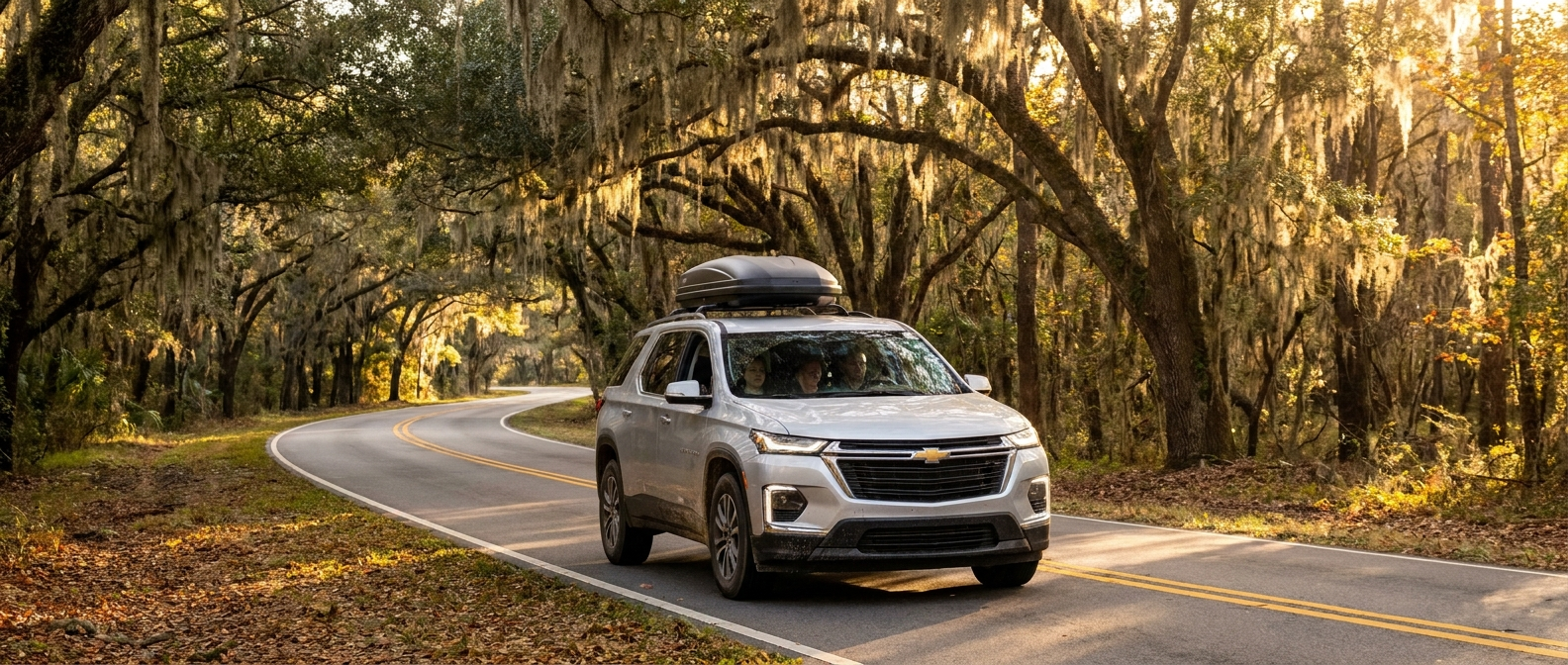
Best Chevy SUVs for the Conway to Savannah Road Trip
The drive from Conway to Savannah covers about 213 miles on a mix of US-378 and I-95. Run it non-stop and you're looking at roughly three hours and forty minutes. Add a couple of intentional pauses and the whole thing becomes a full, unhurried day that lands you on River Street before the dinner rush. We'll lay out the plan and help you pick the Chevy SUV that fits your crew. We spend a lot of time talking with families loading up for exactly this kind of run. The question that decides vehicle fit isn't "which one looks coolest on paper?" The better question is "how many miles can we go between fill-ups, and does everything we're bringing actually fit?" Those two things shape the day more than any brochure feature. The 2026 Traverse is where we start the conversation for most groups, though it isn't the only right answer. What's the Route? The route breaks into four stops that spread a 213-mile drive across one easy day, and the table below lays out every leg in one view, with drive times built on normal fall and early-winter traffic on I-95 and no stop time folded in. Stop Drive from Previous What to Do What to Pack/Know 1. Conway Riverwalk (Start). Pre-trip stretch along the Waccamaw River; grab coffee downtown Full tank, tire pressure checked 2. Walterboro Wildlife Sanctuary ~1 hr 30 min Boardwalk loop through ACE Basin Lowcountry; free, opens at dawn Walking shoes, water bottles from the cooler 3. Hardeeville, SC / I-95 Fuel Stop ~40 min Fuel and snacks before the Georgia line Good moment for a Traverse or Equinox fill-up; Tahoe diesel drivers can often skip this 4. Savannah Historic District ~30 min Forsyth Park, River Street, City Market Parallel street parking on Jones or Gaston; Traverse fits standard spaces fine Those four stops form the backbone of a solid day. Total seat time with the stops above lands around five to five and a half hours, which keeps it approachable with kids. The Stops, in Detail Stop 1: Conway Riverwalk (Mile Zero) Pull out of your driveway in Conway and give yourself fifteen minutes before you jump on US-378 West. The Conway Riverwalk runs right along the Waccamaw River downtown. You get a short leg-stretch, a decent cup of coffee from one of the Main Street shops, and a clean mental shift from "home" to "road trip." Check your tire pressure before you leave. A small thing, but it makes a noticeable difference in highway fuel economy over 200-plus miles. A cold morning start in Horry County in November can leave your tires reading two to four PSI below what they showed in September. Worth the ninety seconds to top them off. The EPA highway ratings for the 2026 Traverse FWD (26 mpg) and the 2026 Equinox FWD (29 mpg highway) assume correctly inflated tires. Stop by Palmetto Chevrolet and our service team can help with a quick pre-trip tire check before a long run if you haven't rotated recently. Stop 2: Walterboro Wildlife Sanctuary (The Real Midpoint) Walterboro sits right off I-95 at exits 53 and 57, about ninety minutes southwest of Conway, and this is where the Lowcountry really earns its name. The Walterboro Wildlife Sanctuary is a 600-plus-acre preserve inside the ACE Basin, the largest undeveloped estuary on the East Coast, and it sits three minutes from the interstate. Free entry, open dawn to dusk. The boardwalk trail wanders through braided creek swamp and hardwood flats draped in Spanish moss. You're likely to see herons, egrets, wild turkey, and deer. Call it the antidote to two hours of windshield staring. Give it forty-five minutes to an hour and everyone re-boards refreshed. The cargo math matters here too, because this is also where the Traverse's 97.6 cubic feet of maximum cargo capacity (with seats folded) earns its keep if you've packed a stroller, bikes, or a soft-sided cooler. The 2026 Equinox folds to 63.5 cubic feet, which handles a couple's weekend bags without a fuss. You feel the difference when you're unloading at a trail parking lot. Timing note (November). November is genuinely one of the best months for this drive. Heat and humidity have broken. The mosquitoes at the sanctuary stay manageable, unlike July. I-95 traffic between Walterboro and Hardeeville runs lighter than the summer beach-season corridor, and Savannah's squares are comfortable for walking all afternoon. Stop 3: Hardeeville, SC (Fuel Before Georgia) About forty minutes south of Walterboro, Hardeeville is the last South Carolina town before you cross into Georgia, which makes it a natural fuel stop even though most of these Chevy SUVs can reach Savannah without it. For a 2026 Tahoe running the Duramax 3.0L turbo-diesel, Chevrolet rates this configuration at an EPA-estimated 28 mpg highway with RWD. That 24-gallon tank gives you a theoretical highway range pushing past 650 miles. A crew in that rig might skip Hardeeville entirely. For the Traverse FWD (26 mpg highway, 21.7-gallon tank), you're looking at a highway range north of 550 miles, so the stop's optional comfort rather than necessity on a 213-mile trip. The 2026 Equinox FWD goes up to 29 mpg on the highway on a 14.8-gallon tank. That works out to about 420 highway miles on a full tank. You left Conway full, so Hardeeville is an easy stop either way. The Tahoe asks for one honest tradeoff. That diesel economy is real, and the 5.3L V8 is rated at 20 mpg highway with RWD. If you're towing a camper or a boat (the Tahoe handles up to 8,400 lbs when properly equipped, so verify the door-jamb label for your specific configuration), it's the right tool for this run. For four adults and luggage, the Traverse or Equinox costs noticeably less to feed on a November road day. Schedule a Pre-Trip Service Check Stop 4: Savannah Historic District (The Payoff) Take I-95 to I-16 East and you're in downtown Savannah in ten minutes, where Forsyth Park makes the natural first stop, a 30-acre city park anchored by one of the most photographed fountains in the South. Live oaks and Spanish moss make the Conway Riverwalk feel like a preview. After the park, it's a short walk to City Market, Broughton Street, or River Street depending on your crew's appetite and energy. Parking in the Historic District takes a little planning. The Traverse fits standard parallel spaces on the residential streets (Jones Street, Gaston Street) without drama. Its overall length is 204.4 inches. Plan your spot before you arrive on a busy weekend, since Savannah draws crowds year-round. You'll find the Tahoe hard to park on the tight colonial-grid streets. Factor that in when you're choosing a vehicle for a city-destination trip versus a towing or big-family run. Tweak It to Your Crew Treat this itinerary as a framework and adjust it to your group, because the right SUV for the Conway-to-Savannah run changes with crew size and gear load far more than any single feature on the spec sheet, once you know who's riding and what you're hauling. The 2026 Suburban makes sense if your group's bigger than eight, or if you need a seven-to-eight-passenger vehicle that can also haul enough cargo for a long Savannah weekend without an argument over who sits where. For a couple, or two adults and one kid, the Equinox stretches the fuel budget farthest and parks anywhere. Crew Size / Gear Load Best Fit Why It Works Here Couple or small family, light packing 2026 Equinox 29 mpg hwy, parks in tight Savannah spots, manageable day-to-day size Family of 5-7, weekend bags, stroller 2026 Traverse 26 mpg hwy (FWD), 97.6 cu ft max cargo, 5,000 lbs tow if you trail a small camper Family of 7-9 OR towing a larger rig 2026 Tahoe or Suburban Tahoe diesel hits 28 mpg hwy, up to 8,400 lbs tow (properly equipped) One easy trap is sizing up "just in case" and then paying to feed a larger fuel tank all year for a vehicle that only gets stretched on a couple of road trips. If the Traverse covers 90% of your year and you're not towing, it covers the Conway-to-Savannah run comfortably. The Tahoe earns its place when the trailer hitch is actually loaded. [ ] Check tire pressure before departure (all four plus the spare) [ ] Fill the tank at Palmetto Chevrolet's neighborhood gas stations in Conway before getting on US-378 [ ] Download an offline map section for the Walterboro detour off I-95 [ ] Pack a soft-sided cooler that fits flat under the Traverse's second row [ ] Bring walking shoes you can leave on after Walterboro into Savannah [ ] Look up Forsyth Park parking before 10 AM on a Saturday [ ] Check the weather for the Lowcountry corridor; November fog is common before 9 AM near the ACE Basin Stop by and see us at Palmetto Chevrolet on 4th Ave in Conway. Our team can walk you through what's on the lot and help you figure out which SUV fits your version of this trip. Explore Financing Options Palmetto Chevrolet 1122 4th Ave, Conway, SC 29526 (843) 248-4283