



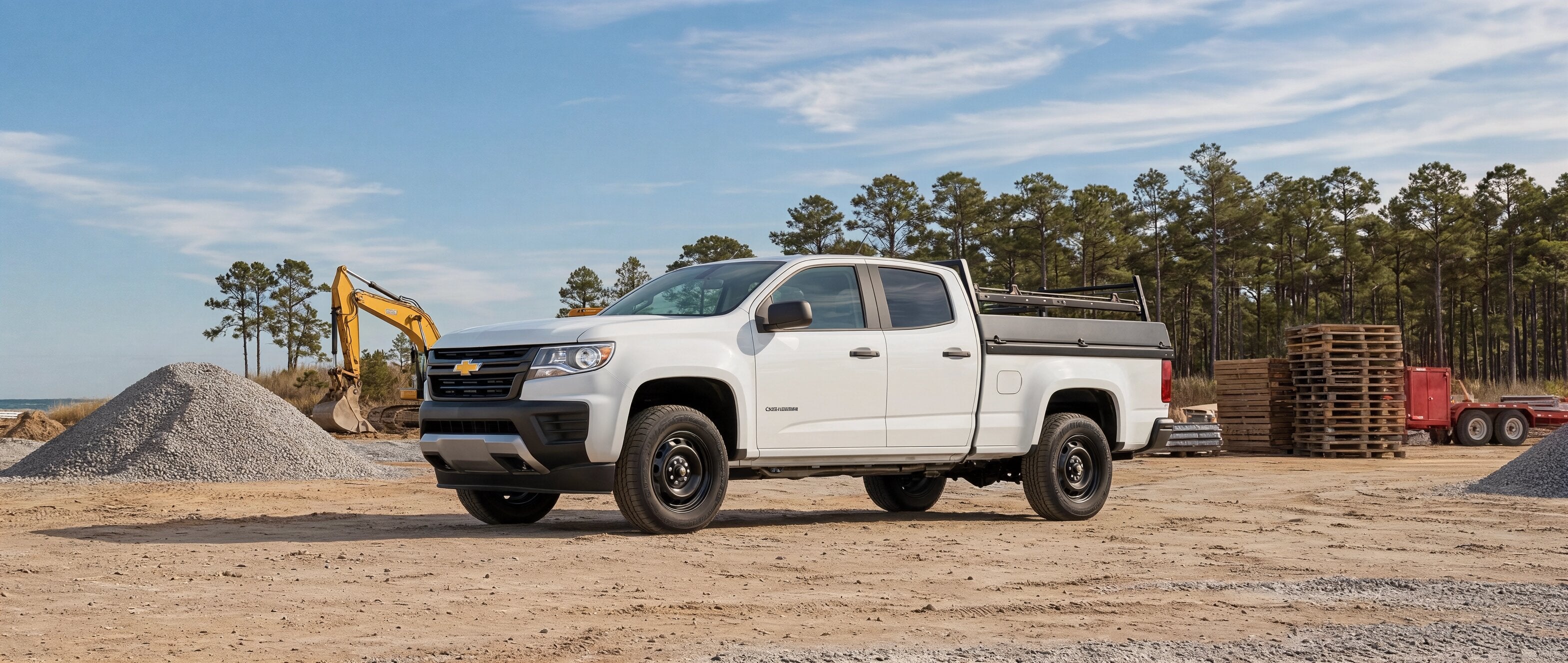
The 2026 Chevrolet Colorado looks like an easy call on paper. It's a midsize truck with a full-size work personality, it tucks into tight parking downtown, and Chevrolet lists its towing capacity at an impressive 7,700 lbs. So you figure you're covered. For some buyers, that figure costs them.
So the practical read is simple. The Colorado is a genuinely capable work truck for most small businesses in Horry County, but the maximum tow number requires a specific equipment package that doesn't come standard on the base Work Truck trim. Know that before you configure, and the rest of the decision gets a lot cleaner.
Browse the 2026 Colorado at Palmetto Chevrolet to see what's in stock right now, then come back for the part most listings don't explain.
What's Actually Going On With the Towing Numbers?
The gap between the spec sheet and what a stock Work Truck actually tows is real, and it's the one thing to pin down before you order, since the headline 7,700-lb number and the base truck's rating are not the same figure. Use this table to find your situation fast.
| Your Towing or Load Scenario | WT Standard (no package) | WT or LT With Advanced Trailering Package | Trail Boss / Z71 (package included) |
|---|---|---|---|
| Small open trailer with tools or mowers | 3,500 lbs (covered) | 7,700 lbs | 7,700 lbs |
| Landscape or utility trailer, 4,000-6,000 lbs | Not covered | Covered | Covered |
| Enclosed cargo trailer, up to 7,500 lbs | Not covered | Covered | Covered |
| Boat or PWC trailer under 3,500 lbs | Covered | Covered | Covered |
| Bed cargo: mulch, pavers, roofing materials | Up to 1,710 lbs (2WD WT) | Same rating | Varies by config |
Chevrolet rates the 2026 Colorado at 7,700 lbs of maximum towing when properly equipped. Without the Advanced Trailering Package, the standard tow limit on the WT and LT is 3,500 lbs. The gap there is substantial. The package is a factory option, not a dealer add-on after the fact, so if your business involves hauling a loaded enclosed trailer or a heavier landscape rig down US-501 to a job site, you need to spec it in at the time of order or find a unit that already has it.
So much for the diagnosis. The good news is that once the package is on board, the numbers hold up.
The Engine Earns Its Keep on a Horry County Work Day
Our Work Truck Solutions team works with contractors and fleet buyers often, and the spec that earns its keep in daily use is low-speed torque, because that's what moves a loaded trailer off the line and crawls a soft site without drama. The 2026 Colorado runs Chevrolet's 2.7L TurboMax turbocharged four-cylinder across every trim. Chevrolet lists output at 310 horsepower and 430 lb-ft of torque. That torque arrives low in the rev range, which is exactly what shows up on the job. Pull a loaded utility trailer from a dead stop at a SC-544 light, or crawl through a soft-ground site at low speed, and the low-end pull is what actually moves the work.
The 8-speed automatic handles shifting without drama, nothing you'll think about. For most tradespeople working paved or packed-gravel sites around Conway, the 2WD WT or LT is the right call.
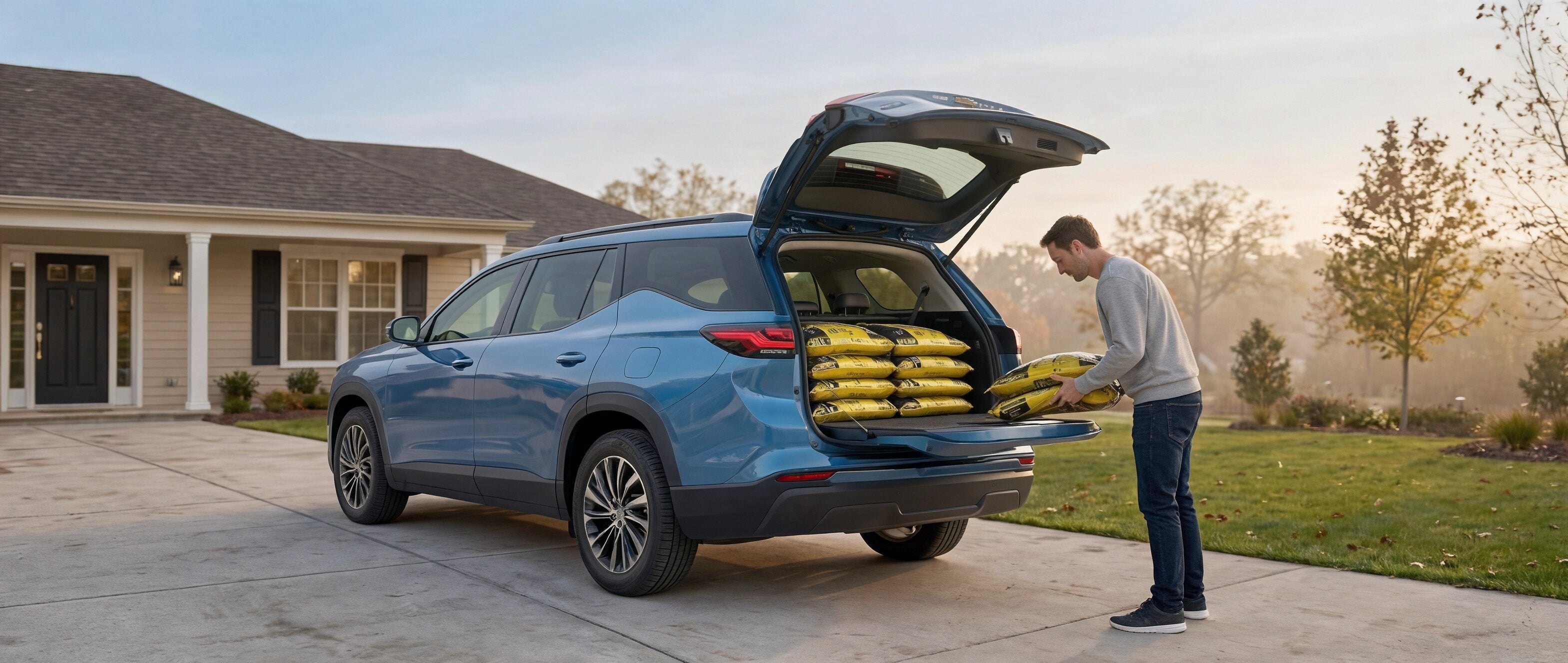
It also delivers the best payload of the lineup. Chevrolet's published spec puts the 2WD WT payload at up to 1,710 lbs (always verify your specific truck's door-jamb label, since actual payload varies by exact configuration). Call it real capacity for a landscaper running bagged mulch or a roofer loading shingles.
What about fuel economy? Call that the honest trade-off. The EPA rates the 2WD 2026 Colorado at 19 city, 24 highway, 21 combined. Reasonable for a capable midsize work truck. Not exceptional. If you're running high daily mileage between Conway and the beach corridor, that number factors into operating costs in a way worth noting upfront.
Which Trim Makes Sense for Your Business
Trim choice comes down to how rough your sites are and how much comfort you want in the cab, and for most Conway businesses the LT lands in the middle while the WT and the off-road trims bracket it on either end. See what's currently in stock and use these notes to narrow it down.
The Work Truck (WT) ships to spec, nothing extra. Vinyl seating, rubber floors, no frills. For a sole proprietor who wants a dedicated work vehicle and nothing more, that simplicity really is a feature. It parks easily, cleans up fast after a messy job, and it doesn't look like you're billing your customers for a luxury truck.
Step up to the LT and you've found the sweet spot for most small-business owners who need the Colorado to do double duty, client visit in the morning, job site in the afternoon. The added comfort doesn't cross into territory that feels out of place for a trades vehicle. It still hits 7,700 lbs with the Advanced Trailering Package.
The Trail Boss and Z71 make sense when you're routinely getting onto unpaved sites, pulling into soft ground, or working rural Horry County roads where the surface isn't always predictable. Both add a limited-slip rear differential (the WT runs an open rear diff), which is a real-world advantage when you're on a muddy embankment with a loaded bed trying to get moving.
The ZR2 is a different truck. Its off-road hardware changes the tow rating down to 6,000 lbs and reduces payload compared to the WT. Unless technical off-road access is genuinely central to your operation, it isn't the work truck choice.
DIY Upkeep vs. Bringing It to Our Service Team
The TurboMax is a modern turbocharged, direct-injected engine, so it rewards consistent maintenance, and the split between what you can handle and what's worth a bay comes down mostly to the turbo and the oil that keeps it healthy. Turbocharger health depends on clean oil, and letting the interval slide on a truck running daily in Horry County's summer heat and humidity is where problems develop downstream.
Here's what most owner-operators can handle themselves, and what's worth bringing in.
Take care of yourself, no special tools needed:
- Tire pressure checks (coastal South Carolina temperatures can swing 30-plus degrees between November nights and afternoons, which affects PSI)
- Visual hitch and trailer connection check before every tow
- Cabin air filter replacement
- Keeping the bed, door seals, and undercarriage clear of sand and salt after beach-corridor jobs
Bring to the service team:
- Engine oil and filter on the interval Chevrolet specifies (don't extend the interval on a turbo working hard)
- Trailer brake controller calibration if you're towing near the upper end of your rating
- 4WD transfer case service if 4WD sees regular use on wet or sandy terrain
- Any warning light on the driver information center
Schedule service at Palmetto Chevrolet when you're ready. Our team can also walk through tow-package configuration if you're new to trailering with the Colorado specifically.
Schedule a Service Appointment
Colorado or Silverado 1500: Choosing the Right Fit
The choice comes down to load volume and frequency, and the quick version is that the Silverado 1500 wins when your loaded trailer clears the Colorado's ceiling, while the Colorado wins on size, parking, and daily drivability around town. On capability, the Silverado 1500 tows significantly more (Chevrolet rates it up to 13,300 lbs properly equipped on certain configurations) and offers a longer bed option. If your trailer loaded consistently runs north of 7,700 lbs, the Silverado is the truck. Full stop.
The Colorado's advantage is everything else. At about 213 inches overall, it's meaningfully shorter than a full-size crew cab. It fits into tight parking on a downtown Conway street, slides into a residential driveway without blocking traffic, and navigates narrow construction entrances where a full-size creates problems. It also works as a daily driver in a way that a full-size can feel like overkill for.
For a landscaper, a small electrical contractor, an HVAC tech, or a property maintenance operation hauling trailers consistently in the 3,500- to 7,700-lb range, the Colorado isn't a compromise. Call it right-sized for the job.
Frequently Asked Questions
Does the 2026 Chevrolet Colorado really tow 7,700 lbs, or is extra equipment required?
The 7,700-lb figure is real, but it requires the Advanced Trailering Package. Without that package, the Work Truck and LT trims have a standard tow rating of 3,500 lbs. The package is a factory option, so confirm it's on the truck or included in your order before you purchase. Trail Boss and Z71 include it as standard. Always verify the final tow rating on your specific unit's door-jamb label, since actual capacity varies by configuration.
Is the 2026 Colorado a good work truck for a Conway or Horry County small business?
For most tradespeople and contractors in the area including landscapers, HVAC technicians, electrical contractors, and property maintenance crews, yes. Chevrolet's 2.7L TurboMax delivers 310 hp and 430 lb-ft of torque, the 2WD WT payload reaches up to 1,710 lbs, and the truck is sized to navigate residential neighborhoods and job sites where a full-size creates problems. The main thing to watch is the tow rating: if your trailer regularly loads above 3,500 lbs, confirm the Advanced Trailering Package is on the unit, and always cross-check the door-jamb label for your specific truck's rated payload. ---