




Blog

Chevy Trax by Model Year: Which Used Years to Target Near Conway

used-chevy-trax-model-year-guide-conway-sc

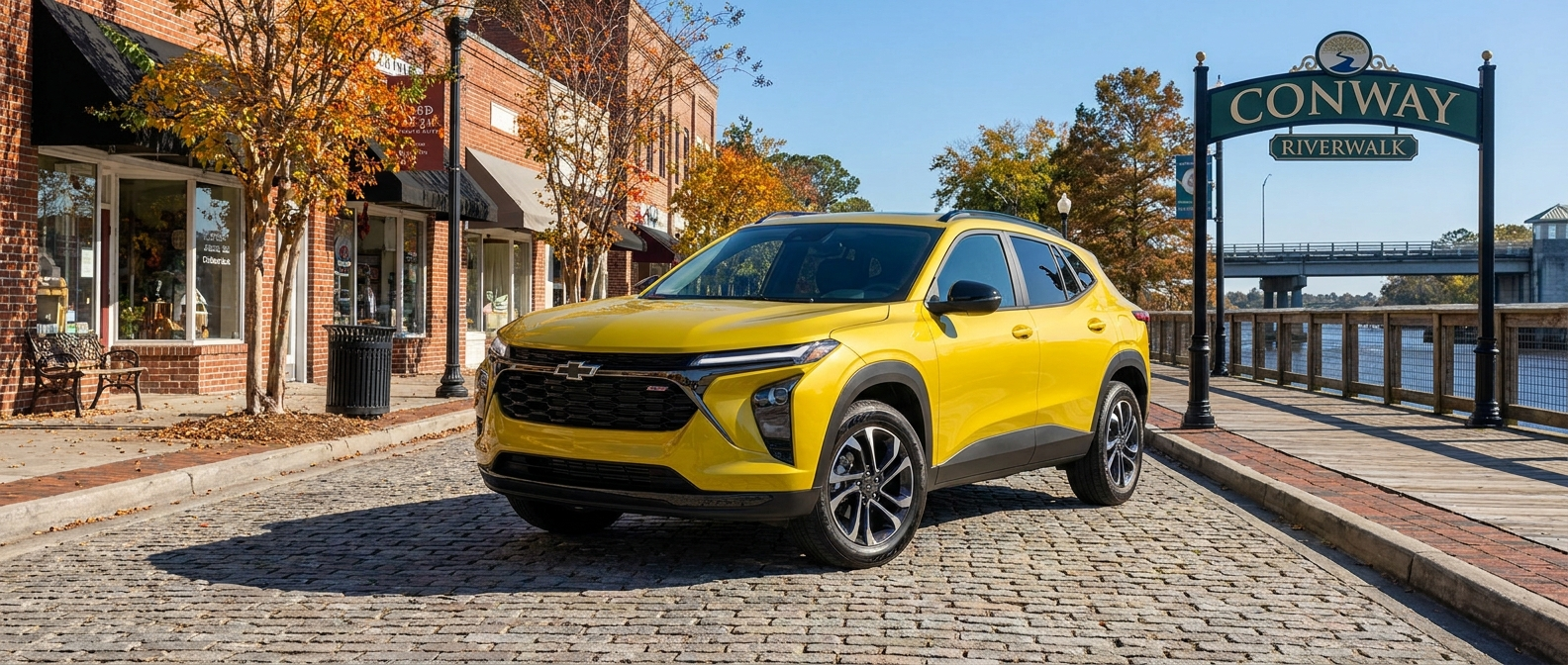
Shopping a used Chevy Trax near downtown Conway and wondering which years earn their keep? Here's our take: target a 2020-2022 for the tightest budget or a 2024-2025 if you can stretch a little, and skip 2015 through 2019 unless the recall history has been fully documented and cleared. The Trax story splits cleanly into two generations, and knowing where that line falls saves you real money and a few headaches.

The short version
  • Sweet spot on a budget: 2020, 2021, or 2022, the cleanest years of the first generation, well past the recall-heavy early years
  • Sweet spot if you can stretch: 2024 or 2025, a full redesign with a roomier interior, wireless CarPlay, and modern safety tech
  • Years to watch carefully: 2015 through 2019. NHTSA logged multiple recall campaigns for lower control arms, airbags, and electrical issues across this window
  • No-AWD reality check: every Trax ever built is front-wheel drive only; for Conway's mild winters and summer beach runs on US-501, that's a genuine non-issue
  • Local fit: at 178.6 inches long, the Trax slots into downtown Conway's tighter street parking and the Coastal Carolina University corridor without the drama a midsize SUV brings

Browse our used Chevy Trax inventory at Palmetto Chevrolet

Which Model Years Are the Sweet Spot for a Used Trax?

For a budget-minded buyer, we'd point you at the 2020-2022 window first, since Chevrolet had ironed out the most serious first-generation problems by then, and a buyer who can stretch a bit is better served by the 2024 redesign. NHTSA data backs the budget call. The 2022 model year logged just 9 owner complaints on record, the lowest of any Trax model year in the database. No accident there. By 2020, the control arm welding campaigns that swept through the 2015-2019 Trax population were behind the design, and the late first-generation cars benefited from a platform refined over several years. It shows in the numbers.

The 2021 and 2022 models also added Apple CarPlay and Android Auto as standard features, which matters if you're daily-driving the US-501 corridor and need hands-free navigation through beach-season traffic. The 2022 stands out as the final year of the first generation, with no rushed mid-cycle changes from Chevrolet, and the powertrain (a 1.4-liter turbocharged four-cylinder in Gen 1) had built a solid real-world track record by then. The platform was proven.

Then there's the 2024. Chevrolet skipped the 2023 model year entirely and came back with a ground-up redesign. The second-generation Trax grew by nearly a foot in overall length, added 3 inches of rear legroom (now 38.7 inches per Chevrolet's published specs), and swapped in a new 1.2-liter turbocharged three-cylinder making 137 horsepower and 162 lb-ft of torque, paired with a six-speed automatic. Wireless Apple CarPlay and Android Auto are standard across all trims. The EPA rates it at 28 city and 32 highway. That's the car that showed up on the lot and made people forget there had ever been an older Trax.

Model YearGenerationKey StrengthsCargo (seats up)EPA Combined
2020Gen 1Post-recall cleanup, budget sweet spot~18.7 cu ft~26 mpg
2021Gen 1CarPlay/Android Auto standard, proven platform~18.7 cu ft~26 mpg
2022Gen 1Final Gen 1 year, lowest NHTSA complaint count (9)~18.7 cu ft~26 mpg
2024Gen 2Full redesign, roomier, wireless tech, modern safety25.6 cu ft30 mpg
2025Gen 2Same strong second-gen platform, slightly more used availability25.6 cu ft30 mpg

See new Trax models at Palmetto Chevrolet for comparison

Which Trax Years Should You Watch Out For?

The years to approach with caution are 2015 through 2019, and all five carry documented NHTSA recall history worth a careful look before you hand over a check, though you shouldn't write them all off if the paperwork checks out clean.

Per NHTSA recall campaign 19V652000, the 2015-2018 Chevrolet Trax was subject to a front lower control arm recall. An improperly welded joint in the control arm could partially separate from the vehicle, affecting steering and handling. Campaign 19V312000 extended that coverage to the 2017-2019 models, so the 2017 and 2018 Trax each fell under both campaigns. When you're checking VIN history, that detail matters. Two separate recall campaigns on one component mean two separate paperwork trails to verify. Check both.

The 2015 and 2016 model years also logged the highest per-model recall counts in the generation, and they're the pair to scrutinize hardest. NHTSA data shows 7 recall campaigns for the 2015 Trax and 5 for the 2016, covering issues from front airbag deployment failures (campaign 16V651000) to seat belt pretensioner problems. The 2016 drew 171 NHTSA complaints in total. The 2019, despite not carrying the same volume of recalls, logged 133 NHTSA owner complaints, the second-highest complaint count across all Trax model years.

None of this makes every 2015-2019 Trax a lemon. Recalls get repaired. But it does mean you'll want solid documentation on any example from those years. Always check nhtsa.gov/recalls with the vehicle's VIN before you commit.

NHTSA data shows 7 recall campaigns for the 2015 Trax and 5 for the 2016, the two highest recall totals across all Trax model years. Verify recall completion status on any pre-2020 example before purchase.

The 2019 is a genuinely awkward one to frame. Some sources call it a decent late Gen-1 buy, while the NHTSA complaint volume (133 filed) tells a more cautious story. If you're looking at a 2019, confirm both control arm campaigns (19V312000 and a related airbag control module recall, 18V774000) have been addressed. A clean repair history for those two items changes the picture considerably. Worth the digging.

Explore financing options for a used Trax at Palmetto Chevrolet

What Downtown Conway Drivers Actually Need to Know About the Trax

The spec that shapes every Trax decision around here is drivetrain, because the Chevy Trax is front-wheel drive only across every single model year and every trim, and for Conway you're not actually giving up a thing that matters.

A fair question before you commit is whether you're exposed without all-wheel drive, and buyers relocating from colder states raise it with us on the lot. For Conway, the answer is no.

South Carolina winters on the Grand Strand are mild, and US-501's biggest challenges are summer beach traffic backups (where fuel economy matters far more than traction) and the occasional thunderstorm in hurricane season. The Trax's EPA ratings of 28 city and 32 highway on the second-generation model are genuinely useful on that corridor, and you'll feel it in beach-season stop-and-go.

The other local reality is parking. Downtown Conway's historic streets and the Riverwalk area aren't built for a midsize SUV. The Trax's 178.6-inch overall length (Chevrolet's published spec for the second generation) tucks into parallel parking slots that a Blazer or an Equinox will leave you sweating through. If you're also running the SC-544 corridor to Coastal Carolina University for work, classes, or evening events, a smaller footprint is a practical advantage, not a compromise.

The honest downside? The Trax has no towing capacity. None. If you're the person who hauls a small boat out to the Waccamaw River on weekends, this isn't your vehicle. A midsize SUV like the Chevy Equinox or Trailblazer would serve that lifestyle better. The Trax is built for commuting, parking, and eating up the 501 with the least amount of fuel cost, and it does those jobs very well.

Which Year Is Right for Which Conway Buyer?

The right year comes down to your budget and whether AWD or towing is ever in play, and in our experience on the lot, the choice tends to sort into four clear camps, each one matching a Conway driver who's shopping for something different.

You want a 2022 if the budget stays tight, the newer styling doesn't pull at you, and you want the strongest used-market value with the cleanest first-generation track record. The 38.7-inch rear legroom figure belongs to the second generation, so keep in mind that the first gen ran a smaller cabin if you're regularly carrying passengers.

You want a 2024 or 2025 if you'll pay a modest premium for the redesigned interior, the standard wireless tech, and the 25.6 cubic feet of cargo space behind the rear seat (which the EPA-rated second generation delivers per Chevrolet's published spec). Young professionals doing Myrtle Beach runs on weekends will feel the difference in cabin quality. The 11-inch touchscreen available on upper trims is a legitimate step up from the first generation.

You want to look carefully at any 2015-2019 only when the VIN check on nhtsa.gov confirms all open recalls are completed, you've got maintenance records, and the price reflects the extra due diligence it asks for. We're not telling you to walk away from every one of them. We're telling you not to buy one without homework.

You should skip the Trax entirely if AWD is non-negotiable or towing is part of your routine. That's no knock on the vehicle. For the right situation, the Trax is the right call.

Frequently Asked Questions

Is the Chevy Trax available with all-wheel drive?

No. Every Chevy Trax, across all model years and all generations, is front-wheel drive only. For most Conway and Grand Strand buyers, that's a practical non-issue given South Carolina's mild winters and flat terrain, but it's a firm limitation worth knowing before you shop.

What changed with the 2024 Chevy Trax redesign?

Chevrolet skipped the 2023 model year and returned for 2024 with a fully redesigned second-generation Trax. The new model is nearly a foot longer than the outgoing first generation, offers 38.7 inches of rear legroom (per Chevrolet's published specs), and added a new 1.2-liter turbocharged three-cylinder engine rated by the EPA at 28 city and 32 highway mpg. Wireless Apple CarPlay and Android Auto are standard on all trims in the second generation.

What recalls should I check on a used Chevy Trax before buying?

The most significant recall activity in the Trax's history covers the 2015-2019 model years. NHTSA recall campaign 19V652000 addressed a front lower control arm welding issue on 2015-2018 Trax vehicles, and campaign 19V312000 covered the same component on 2017-2019 models. A separate airbag/seat belt pretensioner recall (16V651000) covered 2015 and 2016 models. Always run the VIN through nhtsa.gov/recalls to confirm all applicable campaigns have been completed before purchasing any used Trax from those years.

Palmetto Chevrolet

1122 4th Ave, Conway, SC 29526

(843) 248-4283

Recommended Posts

2026 Chevrolet Trailblazer parked near Coastal Carolina University in Conway SC

3 Chevy SUVs Compared for Students Near Coastal Carolina University

Parking at CCU is genuinely rough right now, and it's not getting easier. Record enrollment means more cars fighting for the same finite lots, and US-501 through Conway is still under a widening project that makes rush-hour commutes feel longer than the map suggests. What you drive matters here, and so does how big it is. We're a short drive from campus on 4th Ave in Conway, and the three questions below are worth answering before you shop. Students and parents sometimes arrive set on the Chevy they think they want, then pick a different one once we work through those questions. Consider this guide those three questions, answered with the numbers so you can decide before you ever set foot on the lot. The short version Tight budget and city driving only: The Trax is the leanest entry point with an EPA-estimated 30 mpg combined and a genuinely compact footprint. Best all-around for CCU life: The Trailblazer hits the sweet spot, with available AWD, an EPA-estimated 31 mpg combined on the 1.3L FWD, and a size that still fits in a standard campus spot. Roommates, road trips, hauling everything you own: The Equinox wins on cargo (63.5 cu ft max vs 54.4 in the Trailblazer) but it's 9 inches longer and steps up in entry cost. The one thing Trax can't do: AWD is not available on any 2026 Trax trim. If you're planning winter road trips home or want grip on a rainy night on SC-544, that matters. All three seat five and include wireless Apple CarPlay and Android Auto standard. How Do They Compare? The Full Matrix All three are compact Chevy SUVs that seat five, yet they split along size, drivetrain, and cargo, so the right one depends on how far you drive and how much you'll haul. The short version is that the Trax runs leanest, the Trailblazer balances, and the Equinox carries the most. If you just want the difference spelled out, you'll find it in the table below. 2026 Trax 2026 Trailblazer 2026 Equinox Body length 178.6 in 174.1 in 183.2 in Standard engine 1.2L Turbo (137 hp) 1.2L Turbo (137 hp) 1.5L Turbo (175 hp) Available engine FWD only 1.3L Turbo (155 hp) 1.5L Turbo (175 hp) Drivetrain FWD only FWD or AWD FWD or AWD EPA combined (best trim) 30 mpg 31 mpg 27 mpg Max cargo (seats folded) 54.0 cu ft 54.4 cu ft 63.5 cu ft Towing capacity Not rated Up to 1,000 lbs Up to 1,500 lbs Standard screen Available 11-in 11-in standard 11.3-in standard Best for Lowest entry cost, pure FWD commuting AWD availability + efficiency balance Maximum cargo + family-size space Sources: Chevrolet.com model pages (accessed October 2026); EPA fuel economy figures. A couple of things jump out of that table. The Trax is actually 4.5 inches longer than the Trailblazer, which catches people off guard. Inside it feels smaller because it's narrower and lower. The Equinox runs a full 9 inches longer than the Trailblazer, and in the overflow lot across US-501 from campus, that inch count turns into a parking decision. Browse the Trax on our lot if the entry-level price is the filter that matters most. Is AWD Worth It for a CCU Student? AWD earns its keep for some CCU students and not others, and the deciding factor is where you point the car when you're off campus, since Conway winters stay mild while a January run up I-26 or a February stretch on I-77 is a different road entirely. The national comparison articles tend to skip that split. So who actually needs it? If every break you take lands in Myrtle Beach or Hilton Head, you'll be fine with front-wheel drive, and the same goes for a student heading home to flat, warm Jacksonville. South Carolina winters are mild, and Conway rarely sees ice, with snow on the Grand Strand rare enough to be memorable. Road trips home change that math, because a student from the North Carolina mountains or the mid-Atlantic who takes I-26 in January or I-77 in February is driving a very different road. AWD won't match true 4WD in deep snow, so keep your expectations in check there. On wet pavement, though, and on fast acceleration out of a rain-soaked intersection on SC-544, the extra grip truly helps. Among these three, the Trailblazer is the only one where you'll even find AWD as an option. The 2026 Trax is front-wheel drive on every single trim, as Chevrolet's specs confirm. The Equinox offers AWD too, but you're stepping up to a larger vehicle to get it. If your priority is AWD in the most efficient, most compact package here, look hard at the Trailblazer RS or ACTIV with the 1.3L and the 9-speed automatic. The 2026 Trailblazer with the 1.3L and AWD returns an EPA-estimated 28 mpg combined, while the FWD version of the same engine earns 31 mpg combined. Adding AWD costs you about 3 mpg, and that's the whole tradeoff. There's one local detail worth flagging before you shop. The US-501 corridor between downtown Conway and the CCU campus entrance gets legitimately heavy during move-in weekends and home football games, so a smaller vehicle is easier to thread through traffic and park. The Trailblazer's 174.1-inch length (per Chevrolet) comes in shorter than the Trax overall, which still catches shoppers off guard. If you're living in one of the SC-544 complexes, here's what the week looks like: A commute that's easy on a Tuesday morning and 25 minutes longer on game day Parking structures with tight turning radii that punish anything wider than a midsize Trips to downtown Conway's Riverwalk area where street parking requires maneuvering Weekend runs to the beach that put a premium on real cargo flexibility Get Pre-Approved Before You Visit Which SUV Fits Which CCU Student There's no single winner here, because the right SUV tracks your budget, your routes, and your cargo, so sort yourself by those three and the answer falls out quickly. You know your own week better than we do, and the picks below line up with it. Choose the Trax if: your budget is the hard ceiling, you stay in Horry County almost exclusively, and AWD has never crossed your mind. The EPA-estimated 30 mpg combined holds up in everyday driving, and the entry-price gap versus the Trailblazer means something on a student budget. Choose the Trailblazer if: you want the flexibility of AWD without jumping up in size or cargo cost, you road-trip north or inland at least a couple of times a year, and you like having the option of the RS or ACTIV trim for a little more personality. For the typical CCU routine, this is the one we'd point to, with the honest caveat that it costs more than the Trax to get AWD equipped. The Trailblazer isn't the budget pick. It's the value pick. Choose the Equinox if: you're hauling a lot, and 63.5 cu ft against 54.4 in the Trailblazer is a real 9 cubic feet rather than a rounding difference, or you have passengers who need rear-seat legroom regularly, or you're buying one vehicle for the next five to seven years and want room to grow into it. The Equinox's 175-hp standard engine also pulls noticeably harder at highway speeds, which matters on I-95 runs to Charlotte or Atlanta. The honest tradeoff is length, since 183.2 inches is full compact-SUV territory and it shows in tighter lots. The Trailblazer's flat-folding front passenger seat, a Chevrolet-listed feature, adds a long-load option no one else in this comparison has All three include standard wireless Apple CarPlay and Android Auto The Trailblazer and Equinox both offer remote start as a trim-level option; the Trax does not on every trim The Trailblazer 11-inch touchscreen is standard on every trim; the Trax's 11-inch display is available, not universal See current Trailblazer, Trax, and Equinox inventory at Palmetto Chevrolet Frequently Asked Questions Which Chevy SUV is best for a Coastal Carolina University student? For most CCU students, the 2026 Trailblazer is the strongest all-around fit. It's shorter overall than the Trax (174.1 inches versus 178.6 inches), offers available AWD for students who road-trip home to colder climates, and earns an EPA-estimated 31 mpg combined on the FWD 1.3L engine. Students on the tightest budget who stay local should look at the Trax first; students who haul a lot or need rear-seat space regularly should step up to the Equinox. Does the 2026 Chevy Trax have AWD? No. The 2026 Chevrolet Trax is front-wheel drive only on every trim, per Chevrolet's own specifications. All-wheel drive is not available on any 2026 Trax configuration. If AWD is important to you, the 2026 Trailblazer and the 2026 Equinox both offer it as an available option. Value Your Trade-In Online Palmetto Chevrolet 1122 4th Ave, Conway, SC 29526 (843) 248-4283

2026 Chevrolet Traverse parked at The Market Common lifestyle center in Myrtle Beach, South Carolina on a sunny fall day

Which Chevy SUV Should You Drive to The Market Common?

In this article What's the Plan at a Glance? The Main Event: Why the Market Common Rewards a Bigger SUV The Route: Conway to The Market Common on US-501 The Right Chevy for Your Crew Size and Your Day Getting Into the Right One at Palmetto Chevrolet Take the Chevy that fits your crew and your cargo, because The Market Common is a full-day errand, not a quick stop. Drive US-501 southeast from Conway about 15 miles, park once for free in the surface lots, and you'll have the whole day for shopping, dining, and Savannah's Playground. The right SUV makes that day easy. The wrong one leaves you cramped. The 2026 Chevy Traverse is our first recommendation for most families making this run, and we'll show you why in a minute. But we also stock two other Chevys that serve the trip well if you're hauling two people instead of six. What's the Plan at a Glance? Stop What to Do Best Time Parking Notes The Market Common main district Shop Barnes & Noble, Anthropologie, Pottery Barn, boutiques 10 AM - 2 PM Free surface lots throughout; street-grid layout Valor Park (Valor Memorial Garden) Saturday farmers market (April - December, 10 AM - 3 PM) Saturday mornings Pull alongside Farrow Parkway; easy in/out Grand Park and Savannah's Playground All-abilities free playground, walking paths, fishing spots Any daylight hour Parking off Crabtree Lane; flat lot, easy for larger SUVs Dining row (Tupelo Honey, Gordon Biersch, Nacho Hippo, and others) Lunch or dinner on the outdoor patios Midday or evening Park once and walk; the whole district is pedestrian-scale The Main Event: Why the Market Common Rewards a Bigger SUV Picture 114 acres of walkable lifestyle center on the former Myrtle Beach Air Force Base, and it's designed for a day, not a drive-by. You're going to load shopping bags, stroller gear, and whatever the kids picked up at Savannah's Playground before you get back on US-501. Loading all of that is where the 2026 Traverse earns its keep. Chevrolet lists up to 98 cubic feet of cargo space with the rear seats folded, and even with three rows occupied you still have 22.9 cubic feet behind the third row. That's not a spec you notice until you're trying to stuff a Pottery Barn lamp and a weekend's worth of bags into something smaller. The 2026 Traverse also seats up to eight. It helps when you're meeting family at the farmers market at Valor Park on a Saturday and someone needs to ride home with you. The turbocharged 2.5-liter four-cylinder makes 328 horsepower and 326 lb-ft of torque (Chevrolet's figures), and the EPA rates FWD models at 20 city and 27 highway. A highway number like that keeps the Conway-to-Myrtle Beach run genuinely affordable. Palmetto Chevrolet team note: US-501 between Conway and Myrtle Beach tightens up during peak beach-season weekends. The Traverse's 17.7-inch touchscreen standard on every 2026 trim runs Google Maps with live traffic built in, so you can see the backup at the Socastee interchange before you're already in it. At 79.6 inches, the Traverse is wide, and width is the tradeoff worth naming. The Market Common's surface lots are roomy, but if you're squeezing into the angled street spots along the main retail strip during a crowded Saturday farmers market, a narrower SUV is genuinely easier to park there. The Route: Conway to The Market Common on US-501 The drive from Conway runs about 15 miles down US-501 southeast into Myrtle Beach, roughly 24 minutes off-peak, though on peak summer weekends or during the holiday shopping stretch in November and December, that same stretch can slow considerably through the Socastee area. You'll want to leave early enough to get ahead of the backup. During the farmers market season, leave Conway before 10 AM on a Saturday, or swing back on SC-544 through Socastee for a different look at the corridor. Our team leans on that routing when beach traffic builds, and you'll thank yourself for the early start. The 2026 Equinox is the right choice for that kind of trip when it's just two adults or a small family. It seats five, rides lighter on the lot, and the EPA rates the FWD model at 27 miles per gallon combined, which matters over a corridor you'll run multiple times a month. Behind the second row you get 29.8 cubic feet of cargo space (per Chevrolet's specs) with a flat load floor that handles shopping bags without a puzzle. It also slips into the tighter angled spots on the Market Common's main retail street without the width anxiety the Traverse can bring on a busy afternoon. The 2026 Equinox carries an EPA-combined rating of 27 mpg on FWD models, making it the most fuel-efficient gas SUV in our lineup for the Conway-to-Market Common run. The Right Chevy for Your Crew Size and Your Day The right Chevy here comes down to crew size and cargo, and the call is simpler than it sounds. Three Chevys serve this trip well, and which one fits depends on who's coming along and what you plan to carry back to Conway. The 2026 Trailblazer is the one we'd hand to a Conway commuter or a CCU student making a solo or two-person Market Common run. The 1.3-liter turbocharged three-cylinder with front-wheel drive earns an EPA estimate of 29 city and 33 highway miles per gallon. That's the most highway-efficient option in this category, and it matters when you're making this drive regularly. At 174 inches long, it parks without drama anywhere in the district. The tradeoff is real. With 25.3 cubic feet behind the rear seats, you don't have much room if you're a committed shopper. Know what you're buying before you buy it. Here's how the matchup shakes out. Your situation Best fit Why it works Family of 5 or more, full shopping day 2026 Traverse 98 cu ft max cargo, 8-passenger seating, 17.7-inch Google Maps screen Couple or small family, regular trips 2026 Equinox 27 mpg combined (EPA, FWD), 29.8 cu ft behind row 2, easy parking Solo or two-up, efficiency-first 2026 Trailblazer 33 mpg highway (EPA, FWD 1.3L), 174 inches long, nimble in tight spots Savannah's Playground with gear and stroller 2026 Traverse or Equinox Flat load floors, power liftgates, real cargo headroom The Market Common is flat, the parking is free, and none of these SUVs will leave you hunting for a spot. What changes is how loaded down you'll be when you walk back to the car. Explore Financing Options Getting Into the Right One at Palmetto Chevrolet We're on 4th Avenue in Conway, about 15 miles from The Market Common along the same US-501 corridor you'd take to get there. So we can put you in a Traverse, an Equinox, or a Trailblazer and let you preview the ride before you ever pull into the Market Common's lot for real. Come down and see what we have on the lot. If you've got a vehicle to trade, start there too. A quick trade assessment makes the whole process faster, and our team will walk you through what your current vehicle is worth before we talk about anything else. The Market Common rewards the right vehicle. We've got three that fit. Come find yours. Value Your Trade-In Palmetto Chevrolet 1122 4th Ave, Conway, SC 29526 (843) 248-4283

2026 Chevrolet Silverado 1500 on a Horry County job site near Red Hill, Conway, SC

Your Silverado Isn't Working Hard Enough for Red Hill: Here's the Fix

If you're driving near Red Hill and your truck feels like it's fighting you on US-501 every afternoon, or you're running a job trailer down SC-544 and second-guessing whether you've got enough engine under the hood, the problem probably isn't your driving. A lot of Silverado buyers pick a configuration tuned for somewhere else. The fix is straightforward. Match the engine, cab, and drivetrain to what Horry County genuinely demands, and that's what this guide walks through. Browse the 2026 Silverado 1500 at Palmetto Chevrolet to see what's on the lot while you read. What's Actually Going on with Your Truck Mismatch? What's going on is usually a mismatch rather than a bad truck, because the Grand Strand blends contractor hauling, coastal trailer towing, US-501 commuting between Red Hill and Myrtle Beach, and payload-heavy trade work into a single buying decision, and a Silverado tuned for one of those jobs can genuinely struggle at another. Contractors haul materials through Horry County's construction boom, families pull a camper or boat trailer toward the coast, commuters grind the US-501 corridor between Red Hill and Myrtle Beach, and tradespeople need real payload capacity without paying for engine they'll never use. Pick the wrong config and you'll either overpay on fuel or under-deliver on the job site. Run through the full diagnostic below. Symptom You're Experiencing Likely Cause Right Silverado Fix Engine strains on loaded job-site runs Under-engined for actual payload (2.7L at tow limit) 5.3L EcoTec3 V8 for consistent hauls over 9,000 lbs Burning fuel sitting in US-501 beach traffic Large-displacement engine at idle in stop-and-go 2.7L TurboMax or Duramax diesel for daily commuting Trailer sways on SC-22 at highway speed Missing trailering package / sway control Max Trailering Package + Trailer Sway Control on any trim Rust showing on bed floor or undercarriage Coastal humidity and salt air accelerating surface oxidation Regular undercarriage rinse, bedliner, touchup on paint chips Cab feels cramped for the whole crew Wrong cab config for actual headcount Crew Cab for 4-5 workers; Double Cab fine for 2-3 Engine Choice Is Almost Always the Root Cause Engine choice is almost always the root cause here, and the 2.7L TurboMax is a genuinely capable starting point for a lot of buyers even though it's the engine people tend to outgrow once real commercial work shows up. Chevrolet rates it at 310 horsepower and 430 lb-ft of torque, with a maximum payload of 2,260 lbs and up to 9,500 lbs of towing (properly equipped, always verify your door-jamb label). For a Red Hill commuter who occasionally hauls a small trailer, that's plenty. The EPA rates the 2.7L TurboMax at around 18 city / 21 highway mpg in rear-wheel drive, which matters when you're sitting in beach-season traffic on US-501 four days a week. The problem shows up when that same truck gets pressed into real commercial duty. Pull a loaded flatbed toward a Conway job site day after day, and you're working that engine near its ceiling. Push the 2.7L into daily commercial hauling and it will feel strained. No way around it. At that point the 5.3L EcoTec3 V8 is the step worth making. Chevrolet rates the 5.3L at 355 horsepower and 383 lb-ft of torque, with up to 11,300 lbs of towing capacity (properly equipped). It handles most pontoon boats, mid-size travel trailers, and equipment loads without breathing hard. If your work life includes anything north of 9,000 lbs regularly, the 5.3L is the engine you want. Silverado 2500 HD and Silverado 3500 HD belong in the conversation if your payload or tow requirements go consistently beyond what the 1500 lineup supports. Commercial buyers near Red Hill who are running real construction loads should look hard at those two. The Duramax 3.0L Turbo-Diesel is a different animal entirely. Chevrolet lists 305 horsepower and 495 lb-ft of torque, with a maximum towing capacity of up to 13,300 lbs (properly equipped). The EPA estimates 23 city / 28 highway mpg in rear-wheel drive. For a contractor or retiree who drives significant highway miles and tows a large boat or heavy camper on long trips, the diesel math works. Fewer fuel stops, serious torque, and the highest tow rating in the lineup. The real tradeoff is service. Diesel upkeep is more involved, and you'll want a technician familiar with the engine when it needs attention. Coastal SC heads-up: The Waccamaw National Wildlife Refuge sits right on Red Hill's western edge, and the humidity off the Waccamaw River corridor is real year-round. Coastal salt air doesn't need oceanfront living to find its way under a truck. Keep an eye on paint chips in the bed and along the rocker panels, and touch them up quickly. A spray-in bedliner and a monthly undercarriage rinse go a long way on any truck parked in Horry County, whatever engine you choose. Next step: If you know your typical load weight and tow frequency, our team can pull the door-jamb sheet on any Silverado on the lot and confirm the actual rated capacity for that specific truck's configuration before you commit. When to Handle It Yourself vs. When to See Our Service Team Plenty of Silverado upkeep you can handle right in your own driveway near Red Hill, though a short list of jobs genuinely belongs with our service team because they lean on calibration equipment or diesel-specific know-how you won't have at home. Check tire pressure monthly, since Horry County's heat cycles move it more than you'd guess. Rinse the undercarriage after any run near the coast. Inspect the bed after hauling anything abrasive. Keep up with the oil interval, because the 2.7L TurboMax and 5.3L V8 both do better staying on schedule in this hot, humid climate. Some jobs you shouldn't try to DIY. Anything trailering-system related (brake controller calibration, hitch receiver torque), the 5.3L's Dynamic Fuel Management system if it starts ticking, and any electrical diagnostic on Chevy Safety Assist features all belong with us. The standard Chevy Safety Assist suite on every 2026 Silverado includes Automatic Emergency Braking, Forward Collision Alert, Front Pedestrian Braking, Lane Keep Assist with Lane Departure Warning, Following Distance Indicator, and IntelliBeam automatic high beams. These are safety-critical systems with sensors that need calibration equipment to verify. Bring those to us. Schedule service at Palmetto Chevrolet when you're ready. Our team is right here in Conway, a short run from Red Hill on US-501. Schedule Your Silverado Service Appointment The 2026 Silverado 1500 is the final year of its current generation before the 2027 redesign, so inventory is a real consideration right now. If you're in the market, now's the moment to choose a configuration thoughtfully rather than default to whatever's on the lot. We can help you spec it right. Frequently Asked Questions Which Silverado 1500 engine is right for towing a boat near Red Hill? For most pontoon boats and mid-size trailers common on the Grand Strand, the 5.3L EcoTec3 V8 is the right balance. Chevrolet rates it at up to 11,300 lbs of towing capacity when properly equipped, which covers the large majority of recreational trailers in this area. If you're consistently pulling a large offshore boat or heavy camper and logging serious highway miles, the Duramax 3.0L Turbo-Diesel's 13,300-lb rating and EPA-estimated 23 city / 28 highway mpg (rear-wheel drive) makes a strong case. Always confirm your specific truck's rated capacity on the door-jamb label before you tow. Does the coastal humidity in Horry County actually affect a truck's maintenance needs? It does, in a real and specific way. The combination of high humidity and occasional salt air off the Grand Strand accelerates surface oxidation on exposed steel. Bed floors, rocker panels, and undercarriage components are the places to watch. The 2026 Silverado's Durabed has 89.1 cubic feet of cargo space, but bare steel in a truck bed is vulnerable once the coating gets scratched. A spray-in bedliner, prompt attention to paint chips, and periodic undercarriage rinsing are practical habits rather than extreme precautions here. Our service team can inspect those areas if you want a professional eye on it. FAQ Which Silverado 1500 engine is right for towing a boat near Red Hill? For most pontoon boats and mid-size trailers common on the Grand Strand, the 5.3L EcoTec3 V8 is the right balance. Chevrolet rates it at up to 11,300 lbs of towing capacity when properly equipped, which covers the large majority of recreational trailers in this area. If you're consistently pulling a large offshore boat or heavy camper and logging serious highway miles, the Duramax 3.0L Turbo-Diesel's 13,300-lb rating and EPA-estimated 23 city / 28 highway mpg (rear-wheel drive) makes a strong case. Always confirm your specific truck's rated capacity on the door-jamb label before you tow. Does the coastal humidity in Horry County actually affect a truck's maintenance needs? It does, in a real and specific way. The combination of high humidity and occasional salt air off the Grand Strand accelerates surface oxidation on exposed steel. Bed floors, rocker panels, and undercarriage components are the places to watch. The 2026 Silverado's Durabed has 89.1 cubic feet of cargo space, but bare steel in a truck bed is vulnerable once the coating gets scratched. A spray-in bedliner, prompt attention to paint chips, and periodic undercarriage rinsing are practical habits rather than extreme precautions here. Our service team can inspect those areas if you want a professional eye on it. Value Your Current Trade-In Palmetto Chevrolet 1122 4th Ave, Conway, SC 29526 (843) 248-4283