



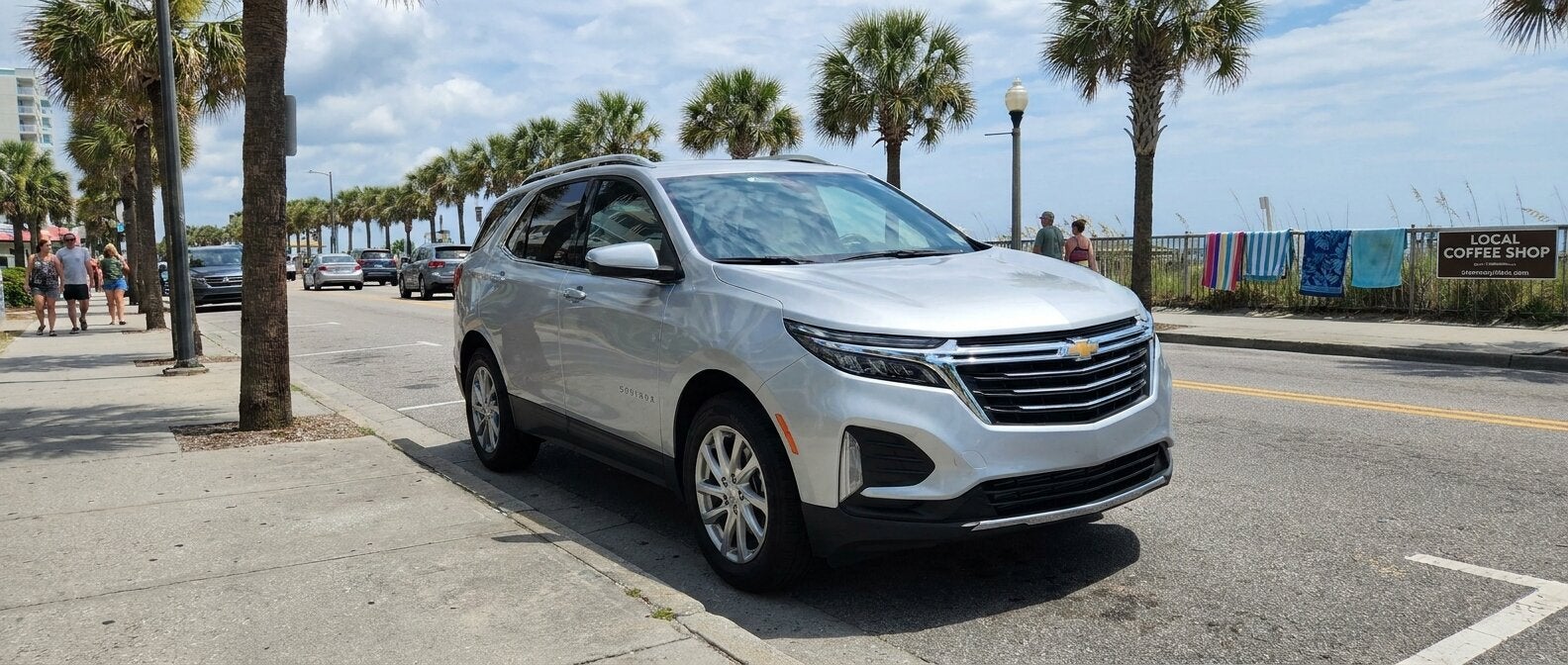
If you're running International Drive and US-501 every day, a used Equinox makes a lot of sense. The reason is simple. But "used Equinox" spans three very different generations, and which one you pick matters far more than the year on the sticker.
- Sweet spot for commuters: 2015-2017 (late second generation, oil and timing-chain problems largely worked out, proven powertrain).
- Also solid: 2019-2022 third generation (redesigned platform, cleaner complaint history) with one caveat on the 1.5L vacuum pump.
- The fourth generation (2024-2026) is the current lineup, if your budget reaches it, the 2026 EPA rating of 26 city / 29 highway mpg (FWD) makes it a genuinely efficient commuter.
- Skip 2010-2013. Documented timing chain and oil consumption issues logged with NHTSA across hundreds of complaints.
- Approach 2018 carefully, the launch year of the third generation had a documented brake vacuum pump concern on the 1.5L engine. Confirm VIN recall status before you buy.
- A pre-purchase inspection from a shop that knows GMs is not optional on any used Equinox. It's cheap insurance.
Browse our used Equinox inventory
Which Equinox Years Are Actually the Sweet Spot for a Daily Commuter?
The sweet spot is a range rather than one year, and for most used buyers we'd point first at the 2015-2017 models. By 2015, GM had corrected the piston-ring and oil-consumption problems that plagued the 2010-2013 Ecotec four-cylinder, and the 2.4L in those years had racked up enough real-world miles to prove it out. The 2017 is the final year of the second generation, and arguably the most refined version of that platform.
If you're open to spending a bit more, the 2019-2022 third-generation models are the other strong band. The 2019 brought a fully redesigned platform (not just a facelift), and NHTSA complaint volumes dropped sharply against the 2018 launch year. US-501 runs from Conway through Carolina Forest. Those years have held up well in the grinding, high-idle, stop-and-go commuting that stretch demands through the long coastal summer months, and they suit the commute.
| Model Year / Range | Sweet Spot? | Years to Watch | Why It Matters for Commuters |
|---|---|---|---|
| 2005-2009 (Gen 1) | No | All | Older V6 platform; fuel economy and reliability both trail later gens; skip for a commuter |
| 2010-2013 (Gen 2 early) | No | All | NHTSA logged hundreds of complaints for timing chain failure and abnormal oil consumption on the 2.4L Ecotec |
| 2014 (Gen 2 mid) | Cautious | Inspect carefully | Transitional year; some improvement but still inspect the engine thoroughly |
| 2015-2017 (Gen 2 late) | Yes | 2015 is the entry point | GM resolved the piston-ring issues by this band; 2017 is the most refined Gen 2 |
| 2018 (Gen 3 launch) | Cautious | 1.5L engine specifically | Brake vacuum pump concern documented via NHTSA TSB PIP5835; confirm VIN is clear |
| 2019-2022 (Gen 3) | Yes | 2019-2020 as the value pick | Cleaner complaint record; solid commuter platform; check for the vacuum pump TSB on 1.5L models |
| 2023 (Gen 3 final / Gen 4 intro) | Yes | Verify build date | Transition year; confirm whether the unit is Gen 3 or the new 2024 fourth-gen platform |
| 2024-2026 (Gen 4) | Yes (current gen) | None flagged yet | Full redesign; 2026 EPA-rated 26 city / 29 hwy mpg (FWD); current lineup at Palmetto Chevrolet |
Which Years Should You Watch Out For?
Two model-year bands deserve real caution, and they fail in different ways. The 2010-2013 cars carry an engine risk tied to oil consumption and timing chains, while the 2018 launch year carries the heaviest recall load in the model's history. Neither is automatically a dealbreaker, but both need homework before you sign.
2010-2013: the timing chain generation. NHTSA logged 780 complaints on the 2010 model and 795 on the 2011. The problem was systemic. The 2.4L Ecotec engine consumed oil at an abnormal rate, and once oil pressure dropped, the timing chain would stretch and eventually fail. Because the Ecotec is an interference engine, a broken chain lets valves and pistons collide, and that usually means a new engine rather than a repair. Per NHTSA complaint records, this pattern persisted through 2013, with some 2013 models showing timing chain problems too.
The 2012 posted 698 NHTSA complaints with repeated references to the same failure chain. We're not saying every 2010-2013 Equinox will have this problem. We are saying the maintenance history matters enormously on those years. Regular oil changes and documented oil-level checks separate the one that runs fine from the one that destroys its own engine. If you can't verify maintenance records, we'd pass.
See new 2026 Equinox options at Palmetto Chevrolet
2018: the launch year of Gen 3. The third generation is a genuinely good platform, but 2018 is where we'd slow down. NHTSA's Technical Service Bulletin PIP5835 documented a brake vacuum pump failure pattern on 2018-2022 Equinoxes equipped with the 1.5L LYX engine. When the pump fails, brake pedal effort increases sharply. In some cases, metal fragments from the pump get into the engine oil and damage the camshaft. NHTSA received six recalls for the 2018 model year overall, which makes it the most-recalled single year in Equinox history. That doesn't mean avoid every 2018. It means check the VIN against NHTSA's recall database, confirm the brake booster vacuum pipe recall (18V576000) has been addressed, and get an independent inspection.
Schedule a pre-purchase inspection with our service team
| Pros | Cons |
|---|---|
| Comfortable, quiet ride that handles stop-and-go without fatigue | EPA rating of 26-27 mpg combined (FWD) trails hybrid competitors in pure efficiency |
| 63.5 cu ft of cargo space (seats folded) gives real hauling flexibility | 175 hp 1.5L turbo feels strained under load, especially with a full vehicle at highway speeds |
| Standard safety tech across current-gen trims (automatic emergency braking, lane-keep assist) | Towing capacity limited to 1,500 lbs on FWD models; not a truck substitute |
| Compact footprint parks easily in crowded Grand Strand retail lots | Used prices have held relatively firm; good deals require patience |
| FWD models handle SC's flat, mild-winter roads well without the AWD premium | Early Gen 2 (2010-2013) has well-documented engine risk; requires careful vetting |
Schedule a Pre-Purchase Inspection
Which Equinox Year Is Right for Which Buyer?
The right year depends on your budget and how much current-generation safety tech you want, so we match buyers to a band instead of to one model year. A budget-first commuter, a buyer with a little more room, and someone who wants new each land in a different spot. We'll walk through all three.
Explore financing options at Palmetto Chevrolet
The budget-first commuter running Conway to Myrtle Beach on US-501 or SC-544 should target 2015-2017. These years price below Gen 3 models, they've shed the Gen 2 reliability problems, and they're proven. The 2.4L four-cylinder in those years isn't fast, but it's uncomplicated and well understood by any competent shop.
The buyer with a bit more budget who wants the current platform's safety tech and the EPA-rated 26/29 mpg (FWD) should look at 2019-2022. It drives noticeably better than Gen 2, the cabin stays quieter on the highway miles between Conway and the beach, and the standard safety features on those trims cover more ground. Just pull the VIN, confirm the TSB status, and get the brake system inspected if the vacuum pump recall hasn't been documented.
The buyer who wants new gets the 2026 Equinox. The fourth generation, now in its second model year, carries the EPA-rated 26 city / 29 highway / 27 combined mpg on FWD trims and standard Chevy Safety Assist on every trim level. That's a real upgrade in both tech and peace of mind. We've got current-gen units on our lot and can walk you through the trim differences.
The Coastal Carolina commuter reality comes down to where these cars actually live. International Drive, the stretch of US-501 between Conway and Carolina Forest Boulevard, and the SC-22 bypass corridor are where most of them spend their useful miles. At low speeds with frequent braking, the Equinox's CVT (FWD) or eight-speed automatic (AWD) handles the rhythm without drama. The 175-hp turbo four won't impress anyone merging onto SC-31 from a dead stop, and that's the honest tradeoff. For 95 percent of the commuting miles in Horry County, it's enough.
Frequently Asked Questions
What is the best used Chevy Equinox year to buy for a commuter?
The 2015-2017 range is our pick for buyers who want reliability at a used price point. By 2015, GM had corrected the oil consumption and timing chain problems that defined the 2010-2013 Ecotec four-cylinder. The 2017 is the most refined version of the second generation, and the last before the platform redesign. If your budget allows, the 2019-2022 third-generation models are solid too, with cleaner NHTSA complaint histories and better cabin tech.
Why do so many people warn against the 2010-2013 Equinox?
NHTSA logged 780 complaints on the 2010 model and 795 on the 2011, and a large share involve timing chain failure tied to abnormal oil consumption in the 2.4L Ecotec engine. Once oil dropped below proper levels, the timing chain would stretch and break. Because the Ecotec is an interference engine, that failure typically means engine replacement rather than a chain swap. The pattern shows up across 2010-2013 models. These years aren't impossible to own, but they do require verified, documented maintenance history.
Is the 2018 Chevy Equinox reliable enough to buy used?
Cautiously, yes. The 2018 is the launch year of the well-regarded third generation, and it also carries the most NHTSA recall campaigns of any single Equinox year (six total, per NHTSA records). The biggest ongoing concern involves the brake vacuum pump on 1.5L-equipped models, documented in GM Technical Service Bulletin PIP5835. Before you buy a 2018, check the VIN against the NHTSA database to confirm recall 18V576000 has been completed, and have the brake system inspected independently. A clean bill of health makes it a reasonable commuter; an uninspected unit is a risk. ---