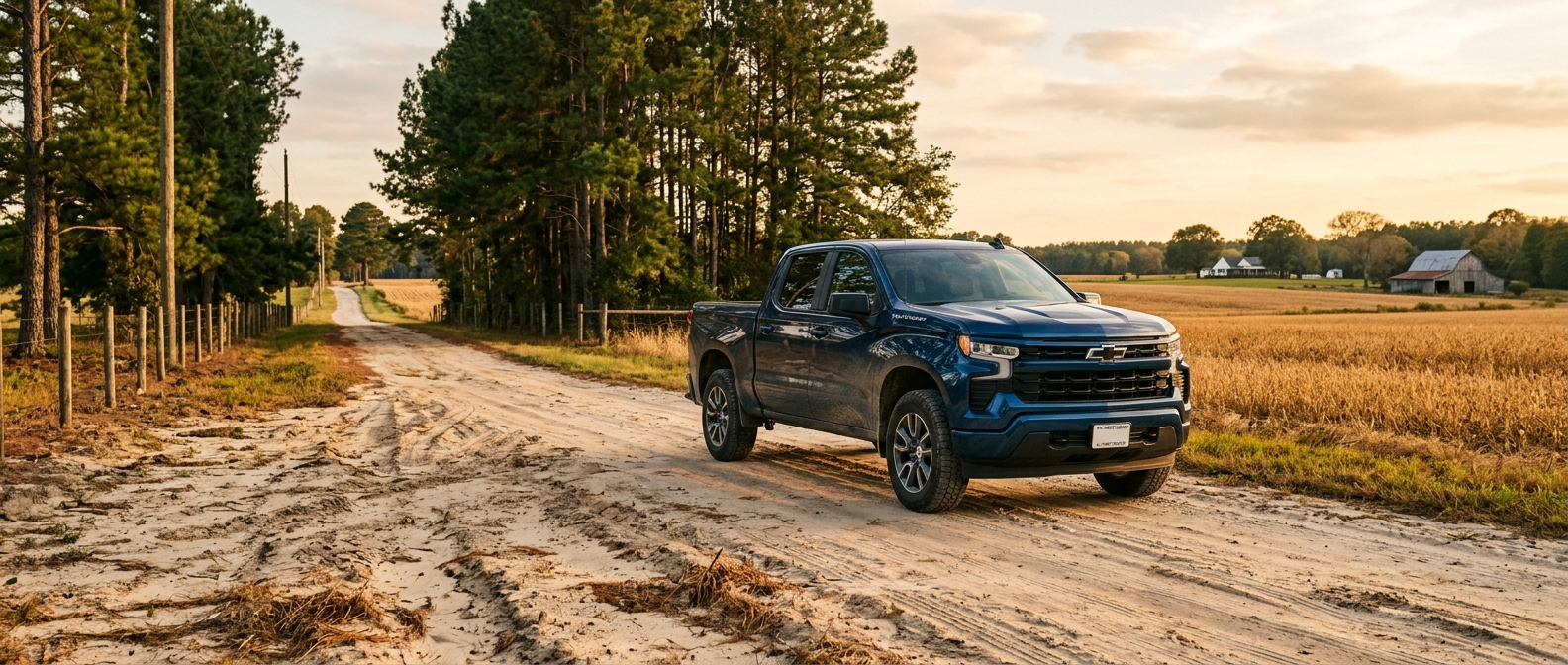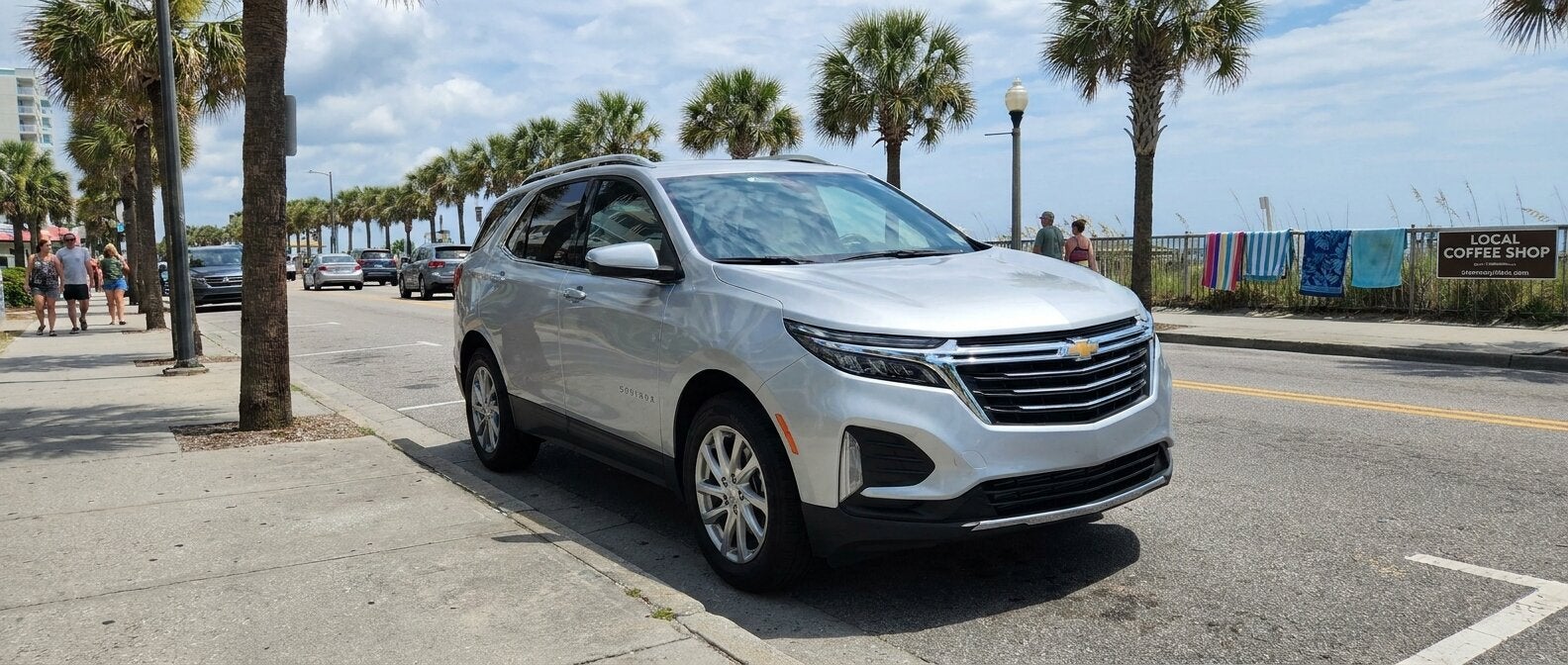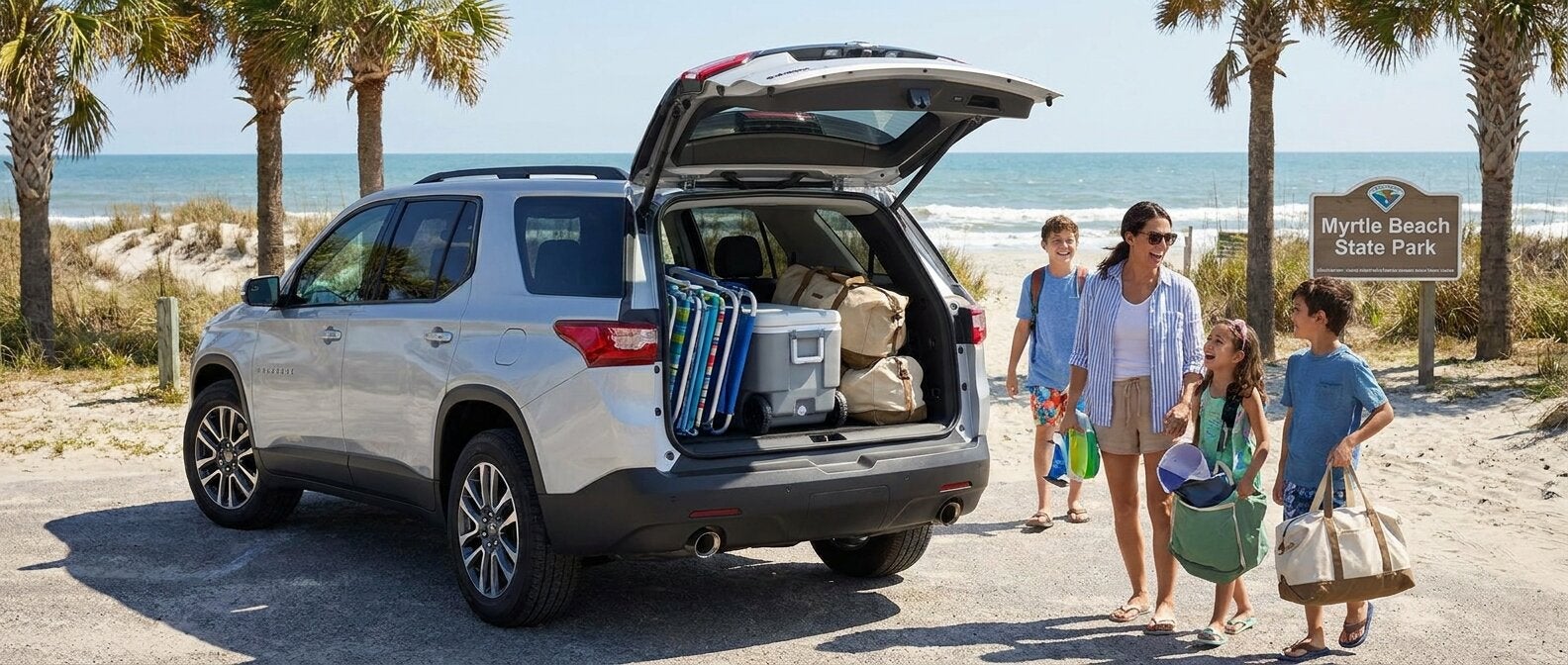



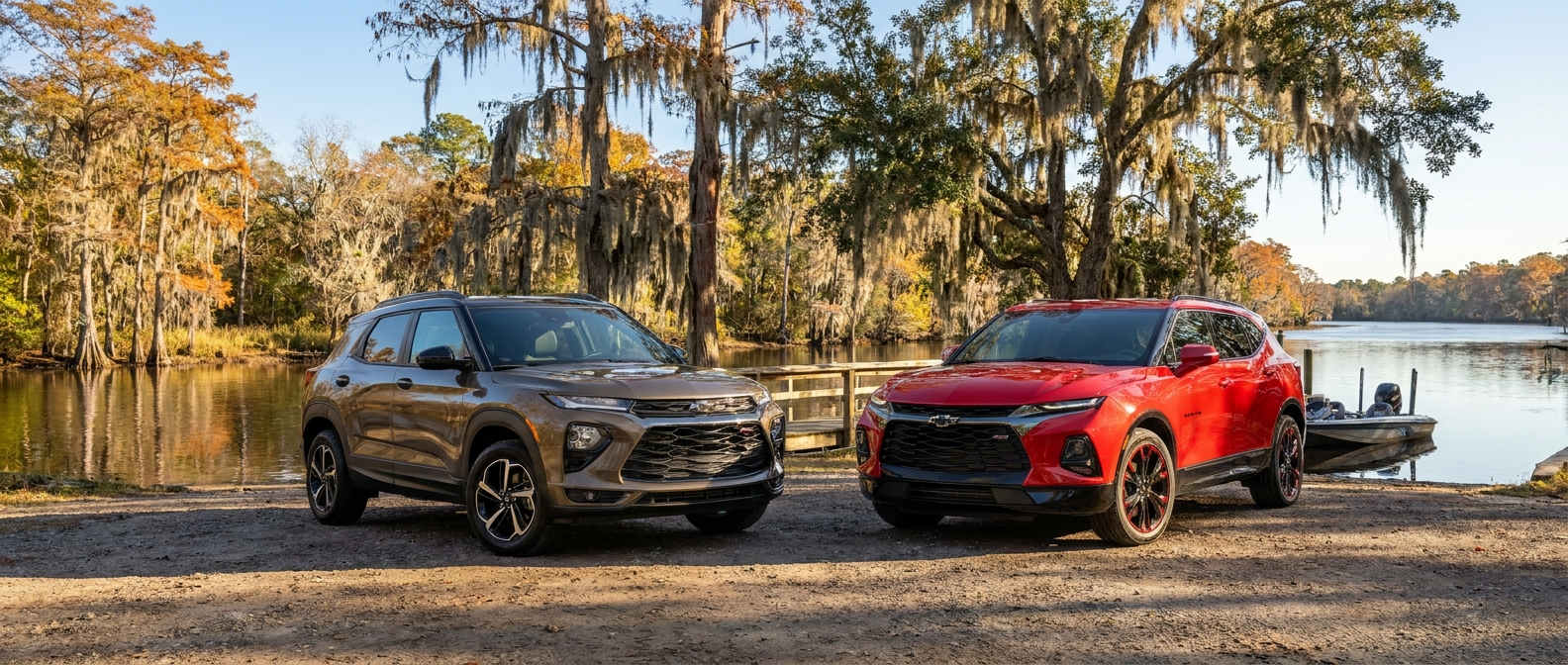
The Trailblazer wins on fuel economy and everyday ease. The Blazer wins on cargo, power, and the muscle to pull a boat to the Waccamaw River. Neither answer is wrong. What decides it is which one fits what you actually do on Horry County roads.
- The 2026 Trailblazer is 17 inches shorter and EPA-rated up to 31 mpg combined; the 2026 Blazer is a midsize SUV rated at 25 mpg combined with the turbo four.
- The Blazer hauls more (64.2 cu ft max cargo vs. 54.4) and can tow up to 4,500 lbs when properly equipped with the V6 and Trailering Package; the Trailblazer tops out at 1,000 lbs.
- If you commute the US-501 corridor and park in downtown Conway or near Coastal Carolina University, the Trailblazer's smaller footprint and better fuel economy are truly useful.
- If you need to pull a small boat to a Waccamaw River landing or regularly pack in the whole family for a beach-season run, the Blazer earns its size.
- Both come standard with Chevy Safety Assist at no extra trim cost.
We sell both on our lot at the Trailblazer, and a fair question before you pick is whether these are basically the same SUV with different names. They're not. Knowing the actual difference can save you from buying the wrong one for Conway life.
What's the Real Difference Between These Two?
They share a bowtie badge and a spot on the same Chevy lineup page, though the mission splits the moment you look past the nameplate, because the 2026 Trailblazer is a subcompact crossover and the 2026 Blazer is a midsize SUV built for heavier work. Same family, different mission.
| Spec | 2026 Trailblazer | 2026 Blazer (2.0T FWD) |
|---|---|---|
| Length | 174.1 in | 191.8 in |
| Engine | 1.3L Turbo 3-cyl, 155 hp | 2.0L Turbo I4, 228 hp |
| EPA Combined MPG | 31 mpg (1.3L FWD) | 25 mpg |
| Cargo (max, seats folded) | 54.4 cu ft | 64.2 cu ft |
| Towing (properly equipped) | 1,000 lbs | Up to 3,250 lbs (2.0T + pkg) |
| Standard Driver Assist | Chevy Safety Assist | Chevy Safety Assist |
| AWD Available | Yes (1.3L only) | Yes |
Those 17 inches the Trailblazer saves matter in a downtown Conway parking lot or around Coastal Carolina University during move-in weekend. They matter a lot less the moment you need to load up for a family beach trip or hitch anything heavier than a kayak trailer.
Does the Fuel Economy Gap Actually Matter on Your Commute?
It does on a long daily drive, and it isn't the only thing to weigh, so look at the plain arithmetic first without a dollar sign attached to any of it. The EPA rates the 2026 Trailblazer at 31 mpg combined (1.3L FWD) and the 2026 Blazer's turbo-four FWD at 25 mpg combined, a six-mpg spread. Run that over a daily US-501 trip between Conway and Myrtle Beach, roughly 30 to 40 miles each way, and those six miles per gallon add up across a month of commuting. If your main mission is getting to work and back without thinking about it, the Trailblazer earns that efficiency edge.
The Blazer's turbo four does reach 29 mpg highway on the EPA cycle, decent for a midsize SUV. The Blazer's fuel story reads better on a straight-shot highway stretch than it does in stop-and-go beach-season traffic on US-501, where any bigger engine works harder. Keep that in mind if summer Grand Strand congestion is part of your regular week.
Cargo, Towing, and the Waccamaw River Test
Cargo and towing are where the Blazer pulls clearly ahead for a certain Conway buyer, and the gap is real, though it only pays off if you actually haul gear or tow a boat, because for plenty of everyday drivers the Trailblazer's space is already enough.
Conway sits on the Waccamaw River in Horry County, and several public landings line the river north and south of town.
Chevrolet lists the 2026 Blazer at 64.2 cubic feet of maximum cargo space with the rear seats folded, a full 9.8 cubic feet more than the Trailblazer's 54.4-cu-ft maximum. Browse our current Blazer and Trailblazer inventory to see what trims we have on the ground. For a family packing for a week at the beach, or a contractor hauling samples and supplies, those extra cubic feet show up fast.
The towing gap is sharper:
- A Trailblazer's 1,000-lb rating covers a small cargo carrier or a lightweight utility trailer, and it won't pull a fishing boat or a personal watercraft to Billy Witherspoon Landing or Lee's Landing on the Waccamaw.
- Properly equipped with the 2.0T and the Trailering Package, the Blazer is rated at 3,250 lbs, enough for most aluminum fishing boats and lighter pontoons.
- Step up to the RS with the 3.6L V6, and Chevrolet rates it at up to 4,500 lbs with the Trailering Package and V6, properly equipped.
Check the door-jamb label for your specific configuration's rating before you hitch anything.
The honest tradeoff runs the other way. The Blazer's capability comes with a larger vehicle to park and a lower EPA combined rating. If you don't tow and you don't need the extra cargo room, you're paying for capability you won't use.
Practicality on Conway Roads and Beyond
Size in everyday use. The Trailblazer's 174.1-inch length slides into a standard garage bay without a second thought. The Blazer at 191.8 inches runs 17 inches longer, not impossible, but it's something you feel in a tighter parking situation. For anyone parking often on 4th Avenue near downtown Conway or working through the Conway Riverwalk area on a busy Saturday, the Trailblazer's smaller footprint is a real everyday convenience.
Passenger room. Both seat five. Up front the Trailblazer offers 40.9 inches of legroom with 39 inches in the rear, while the Blazer gives you 41 inches up front and 39.6 in back. The difference is small. Neither is a three-row situation, but the Blazer's wider body (76.7 inches vs. the Trailblazer's 71.2) opens up more shoulder room.
Power and highway feel. The Trailblazer's 1.3L produces 155 horsepower, enough for Conway-area driving and the US-501 and SC-544 corridors at normal traffic speeds. The Blazer's 2.0T puts out 228 horsepower. If you often merge onto SC-22 (Veterans Highway) with a full load or want more reserve when passing on a two-lane, that extra power has a purpose. The Trailblazer's CVT with the 1.2L base engine is noticeable, and we'd steer most buyers toward the 1.3L's nine-speed automatic for a more settled highway feel.
So Which Should You Pick?
The right call comes down to what your week actually looks like near Conway and the Grand Strand, because both SUVs are genuinely good, and the wrong one isn't a bad vehicle, just a bad fit for how you drive.
Choose the 2026 Trailblazer if:
- Your primary use is the daily US-501 commute and weekend errands
- You want the best fuel economy in the Chevy SUV lineup
- Parking in downtown Conway, near CCU, or in tight beach-town lots is a regular reality
- You don't tow, or tow only a cargo carrier or lightweight bike rack
- Budget matters and a smaller starting price is a priority
Choose the 2026 Blazer if:
- You pull a boat to a Waccamaw River landing on weekends (even occasionally)
- You have a family that fills five seats and still needs cargo room for the beach gear
- You want a more substantial highway presence and 228 horsepower in reserve
- You're willing to trade some MPG for a midsize SUV that feels like a midsize SUV
- The RS's available 3.6L V6 and 308 horsepower fit what you're looking for
Neither is a compromise. The Equinox sits between them in size and pricing, too, if you find yourself torn. The practical split at Palmetto Chevrolet tends to follow how you use the vehicle. Commuters and first-time SUV buyers lean toward the Trailblazer, while households that already own a boat or haul for a family lean toward the Blazer.
Frequently Asked Questions
Is the Chevy Trailblazer big enough for a family of four?
Yes, the 2026 Trailblazer seats five with 40.9 inches of front legroom and 39 inches in the rear, and it offers up to 54.4 cubic feet of cargo space with the rear seats folded. For a family of four on typical Grand Strand trips, it handles the load. Where it starts to feel tight is if you need to routinely pack for five adults plus luggage, or if you need to tow anything with a motor. Those situations favor the larger Blazer.
Can the Chevy Blazer tow a boat near Conway?
Yes, the 2026 Blazer can handle a typical small to mid-size fishing boat or pontoon, depending on how it's equipped. With the 2.0-liter turbo and the available Trailering Package, Chevrolet rates it at 3,250 lbs when properly equipped. The RS trim with the 3.6-liter V6 and Trailering Package reaches 4,500 lbs when properly equipped, which covers most aluminum fishing boats or lighter pontoons you'd put in at a Waccamaw River landing like Billy Witherspoon or Lee's Landing in Horry County. Always confirm your specific build's rating on the door-jamb label before towing.