




Blog

Chevy Trailblazer vs. Blazer: Which SUV Fits Conway Drivers?

Chevy Trailblazer vs. Blazer: Which SUV Fits Conway Drivers?

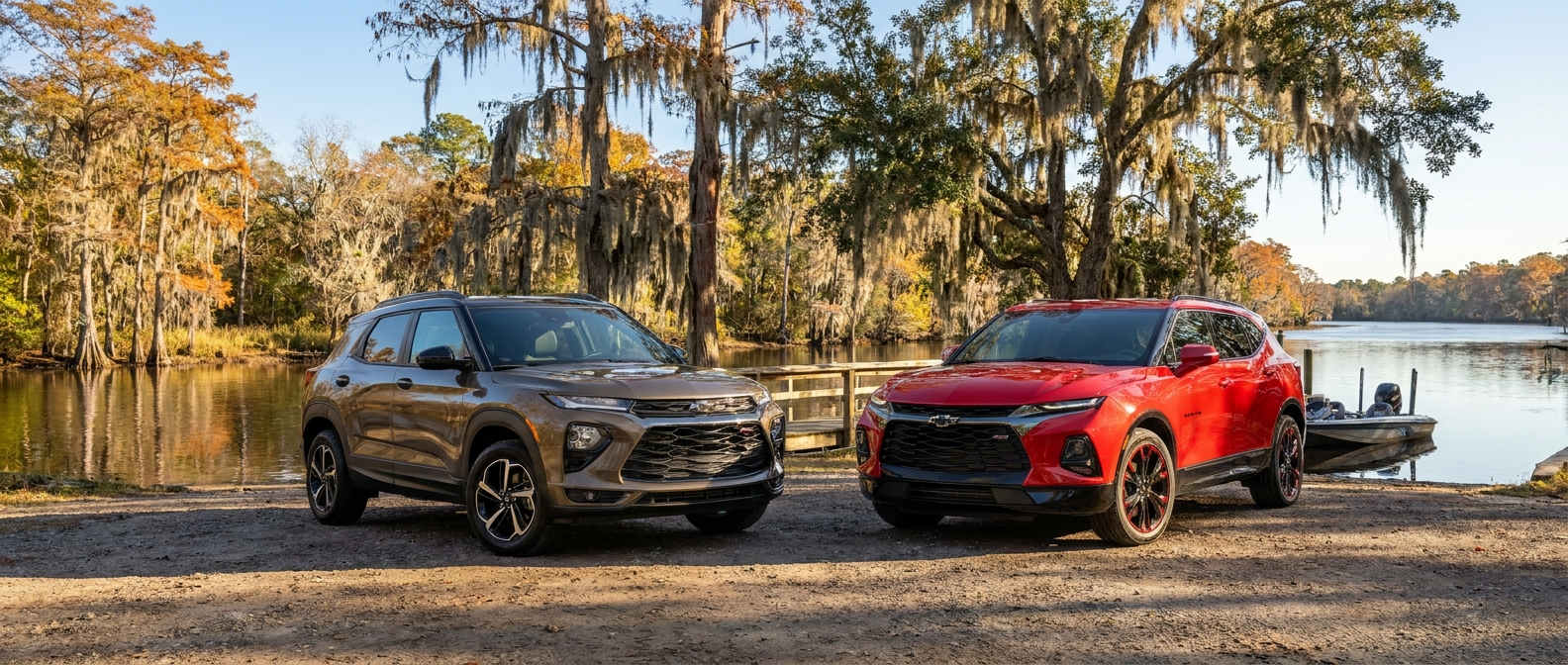
In this article What's the Real Difference Between These Two? Does the Fuel Economy Gap Actually Matter on Your Commute? Cargo, Towing, and the Waccamaw River Test Practicality on Conway Roads and Beyond So Which Should You Pick? The Trailblazer wins on fuel economy and everyday ease. The Blazer wins on cargo, power, and the muscle to pull a boat to the Waccamaw River. Neither answer is wrong. What decides it is which one fits what you actually do on Horry County roads. The short version The 2026 Trailblazer is 17 inches shorter and EPA-rated up to 31 mpg combined; the 2026 Blazer is a midsize SUV rated at 25 mpg combined with the turbo four. The Blazer hauls more (64.2 cu ft max cargo vs. 54.4) and can tow up to 4,500 lbs when properly equipped with the V6 and Trailering Package; the Trailblazer tops out at 1,000 lbs. If you commute the US-501 corridor and park in downtown Conway or near Coastal Carolina University, the Trailblazer's smaller footprint and better fuel economy are truly useful. If you need to pull a small boat to a Waccamaw River landing or regularly pack in the whole family for a beach-season run, the Blazer earns its size. Both come standard with Chevy Safety Assist at no extra trim cost. We sell both on our lot at the Trailblazer, and a fair question before you pick is whether these are basically the same SUV with different names. They're not. Knowing the actual difference can save you from buying the wrong one for Conway life. What's the Real Difference Between These Two? They share a bowtie badge and a spot on the same Chevy lineup page, though the mission splits the moment you look past the nameplate, because the 2026 Trailblazer is a subcompact crossover and the 2026 Blazer is a midsize SUV built for heavier work. Same family, different mission. Spec 2026 Trailblazer 2026 Blazer (2.0T FWD) Length 174.1 in 191.8 in Engine 1.3L Turbo 3-cyl, 155 hp 2.0L Turbo I4, 228 hp EPA Combined MPG 31 mpg (1.3L FWD) 25 mpg Cargo (max, seats folded) 54.4 cu ft 64.2 cu ft Towing (properly equipped) 1,000 lbs Up to 3,250 lbs (2.0T + pkg) Standard Driver Assist Chevy Safety Assist Chevy Safety Assist AWD Available Yes (1.3L only) Yes Those 17 inches the Trailblazer saves matter in a downtown Conway parking lot or around Coastal Carolina University during move-in weekend. They matter a lot less the moment you need to load up for a family beach trip or hitch anything heavier than a kayak trailer. What decides it for a lot of Conway buyers is towing. If you ever plan to tow, even a small aluminum johnboat to one of Horry County's Waccamaw River landings, the Trailblazer can't do it. Its 1,000-lb tow rating rules out anything with a motor. The Blazer, properly equipped, handles up to 3,250 lbs with the turbo four or up to 4,500 lbs with the V6 RS and Trailering Package. Does the Fuel Economy Gap Actually Matter on Your Commute? It does on a long daily drive, and it isn't the only thing to weigh, so look at the plain arithmetic first without a dollar sign attached to any of it. The EPA rates the 2026 Trailblazer at 31 mpg combined (1.3L FWD) and the 2026 Blazer's turbo-four FWD at 25 mpg combined, a six-mpg spread. Run that over a daily US-501 trip between Conway and Myrtle Beach, roughly 30 to 40 miles each way, and those six miles per gallon add up across a month of commuting. If your main mission is getting to work and back without thinking about it, the Trailblazer earns that efficiency edge. The Blazer's turbo four does reach 29 mpg highway on the EPA cycle, decent for a midsize SUV. The Blazer's fuel story reads better on a straight-shot highway stretch than it does in stop-and-go beach-season traffic on US-501, where any bigger engine works harder. Keep that in mind if summer Grand Strand congestion is part of your regular week. The EPA rates the 2026 Trailblazer at 31 mpg combined with the 1.3-liter turbo and front-wheel drive, and the 2026 Blazer (2.0-liter turbo, front-wheel drive) at 25 mpg combined. (U.S. Environmental Protection Agency, fueleconomy.gov) Explore Financing Options Cargo, Towing, and the Waccamaw River Test Cargo and towing are where the Blazer pulls clearly ahead for a certain Conway buyer, and the gap is real, though it only pays off if you actually haul gear or tow a boat, because for plenty of everyday drivers the Trailblazer's space is already enough. Conway sits on the Waccamaw River in Horry County, and several public landings line the river north and south of town. Chevrolet lists the 2026 Blazer at 64.2 cubic feet of maximum cargo space with the rear seats folded, a full 9.8 cubic feet more than the Trailblazer's 54.4-cu-ft maximum. Browse our current Blazer and Trailblazer inventory to see what trims we have on the ground. For a family packing for a week at the beach, or a contractor hauling samples and supplies, those extra cubic feet show up fast. The towing gap is sharper: A Trailblazer's 1,000-lb rating covers a small cargo carrier or a lightweight utility trailer, and it won't pull a fishing boat or a personal watercraft to Billy Witherspoon Landing or Lee's Landing on the Waccamaw. Properly equipped with the 2.0T and the Trailering Package, the Blazer is rated at 3,250 lbs, enough for most aluminum fishing boats and lighter pontoons. Step up to the RS with the 3.6L V6, and Chevrolet rates it at up to 4,500 lbs with the Trailering Package and V6, properly equipped. Check the door-jamb label for your specific configuration's rating before you hitch anything. The honest tradeoff runs the other way. The Blazer's capability comes with a larger vehicle to park and a lower EPA combined rating. If you don't tow and you don't need the extra cargo room, you're paying for capability you won't use. Practicality on Conway Roads and Beyond Size in everyday use. The Trailblazer's 174.1-inch length slides into a standard garage bay without a second thought. The Blazer at 191.8 inches runs 17 inches longer, not impossible, but it's something you feel in a tighter parking situation. For anyone parking often on 4th Avenue near downtown Conway or working through the Conway Riverwalk area on a busy Saturday, the Trailblazer's smaller footprint is a real everyday convenience. Passenger room. Both seat five. Up front the Trailblazer offers 40.9 inches of legroom with 39 inches in the rear, while the Blazer gives you 41 inches up front and 39.6 in back. The difference is small. Neither is a three-row situation, but the Blazer's wider body (76.7 inches vs. the Trailblazer's 71.2) opens up more shoulder room. Power and highway feel. The Trailblazer's 1.3L produces 155 horsepower, enough for Conway-area driving and the US-501 and SC-544 corridors at normal traffic speeds. The Blazer's 2.0T puts out 228 horsepower. If you often merge onto SC-22 (Veterans Highway) with a full load or want more reserve when passing on a two-lane, that extra power has a purpose. The Trailblazer's CVT with the 1.2L base engine is noticeable, and we'd steer most buyers toward the 1.3L's nine-speed automatic for a more settled highway feel. *Coming from a compact car or a first SUV, the Trailblazer's size tends to feel immediately manageable. Stepping down from a full-size or a larger crossover, the Blazer's proportions tend to feel more familiar.* So Which Should You Pick? The right call comes down to what your week actually looks like near Conway and the Grand Strand, because both SUVs are genuinely good, and the wrong one isn't a bad vehicle, just a bad fit for how you drive. Choose the 2026 Trailblazer if: Your primary use is the daily US-501 commute and weekend errands You want the best fuel economy in the Chevy SUV lineup Parking in downtown Conway, near CCU, or in tight beach-town lots is a regular reality You don't tow, or tow only a cargo carrier or lightweight bike rack Budget matters and a smaller starting price is a priority Choose the 2026 Blazer if: You pull a boat to a Waccamaw River landing on weekends (even occasionally) You have a family that fills five seats and still needs cargo room for the beach gear You want a more substantial highway presence and 228 horsepower in reserve You're willing to trade some MPG for a midsize SUV that feels like a midsize SUV The RS's available 3.6L V6 and 308 horsepower fit what you're looking for Neither is a compromise. The Equinox sits between them in size and pricing, too, if you find yourself torn. The practical split at Palmetto Chevrolet tends to follow how you use the vehicle. Commuters and first-time SUV buyers lean toward the Trailblazer, while households that already own a boat or haul for a family lean toward the Blazer. Frequently Asked Questions Is the Chevy Trailblazer big enough for a family of four? Yes, the 2026 Trailblazer seats five with 40.9 inches of front legroom and 39 inches in the rear, and it offers up to 54.4 cubic feet of cargo space with the rear seats folded. For a family of four on typical Grand Strand trips, it handles the load. Where it starts to feel tight is if you need to routinely pack for five adults plus luggage, or if you need to tow anything with a motor. Those situations favor the larger Blazer. Can the Chevy Blazer tow a boat near Conway? Yes, the 2026 Blazer can handle a typical small to mid-size fishing boat or pontoon, depending on how it's equipped. With the 2.0-liter turbo and the available Trailering Package, Chevrolet rates it at 3,250 lbs when properly equipped. The RS trim with the 3.6-liter V6 and Trailering Package reaches 4,500 lbs when properly equipped, which covers most aluminum fishing boats or lighter pontoons you'd put in at a Waccamaw River landing like Billy Witherspoon or Lee's Landing in Horry County. Always confirm your specific build's rating on the door-jamb label before towing. See What Your Current Vehicle Is Worth Palmetto Chevrolet 1122 4th Ave, Conway, SC 29526 (843) 248-4283

Read More
Chevy Farm Truck Checklist: Galivants Ferry Roads & Horry County Fields

Chevy Farm Truck Checklist: Galivants Ferry Roads & Horry County Fields

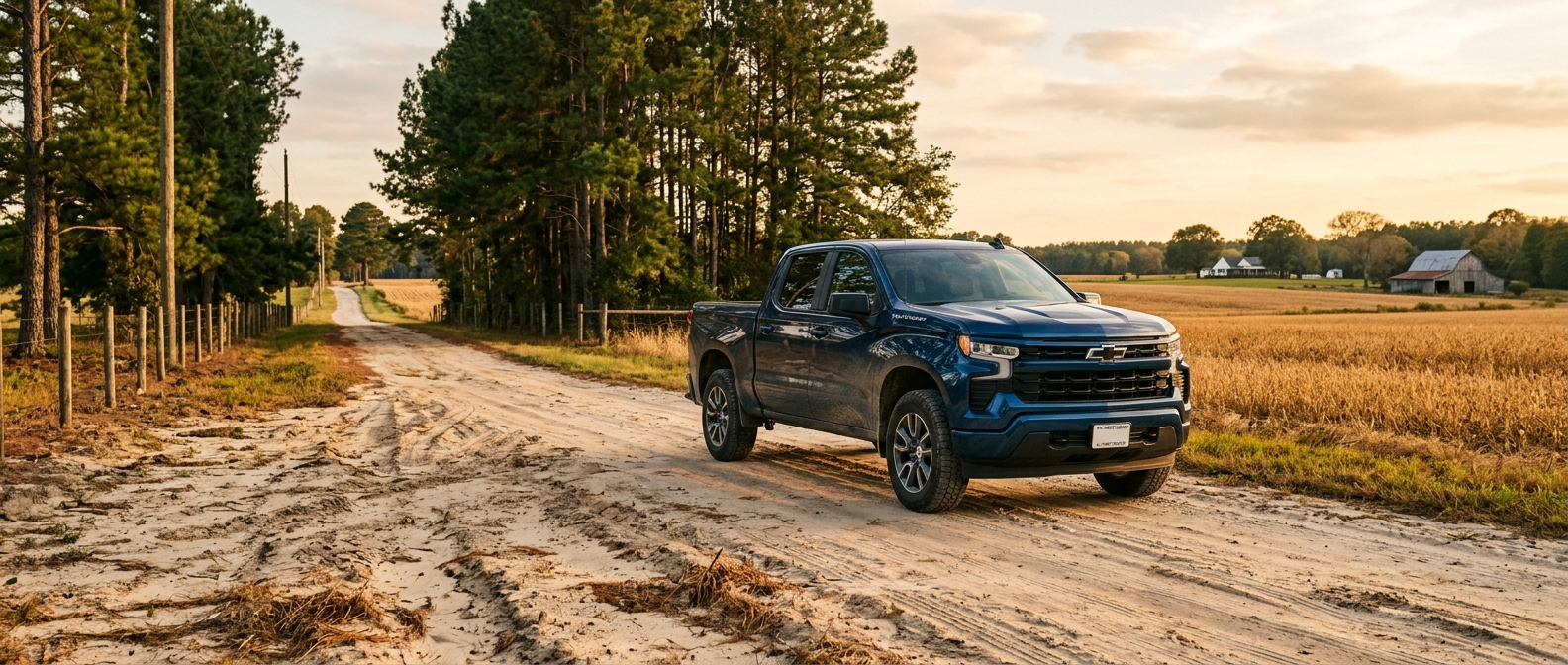
The sand and swamp-clay mix out in western Horry County won't forgive the wrong truck. If you're running field roads off Pee Dee Road or reaching acreage between Galivants Ferry and the Little Pee Dee River, you already know "has 4WD" doesn't tell you enough. A Chevy truck that works in this corner of South Carolina comes down to five specific decisions, and skip any one of them and you pay for it in stuck wheels, overloaded springs, or a truck too big to swing through the tight turnrows between row crops. We'll walk you through each one. Answer every item before you configure, and you'll step onto our lot at Palmetto Chevrolet knowing which model and trim fits your operation. Browse our 2026 Silverado 1500 inventory What Goes on the Checklist? Work through these five items in the order they're listed, since each one builds on the one before. Clearance shapes payload, payload shapes towing, and the highway leg decides how much truck you want to live with. Start at the top. 1. Ground clearance: will you cross rutted field roads or just gravel county roads? [ ] I need at least 8 to 9 inches of ground clearance for rutted dirt and saturated field access roads [ ] I regularly cross low spots that pool water after heavy summer rains or tropical weather [ ] I need maximum lift for deep ruts or heavily grown-over access paths (10+ inches) [ ] Gravel county roads and light off-pavement work are my primary surface (standard clearance is fine) 2. Payload: what's going in or on the truck? [ ] I haul feed sacks, fencing supplies, or small equipment in the bed (target: 1,500 to 1,700 lbs minimum) [ ] I haul heavier loads regularly. Gravel, timber, bulk fertilizer, or multiple large items at once [ ] I need to carry both passengers and cargo simultaneously (crew cab payload shrinks fast with people aboard) [ ] I've verified the specific door-jamb label payload for the exact configuration I want, not just the segment max 3. Towing: what's behind the truck? [ ] I pull a small horse trailer, single-axle livestock trailer, or utility trailer (up to 7,000 to 9,000 lbs) [ ] I pull a larger livestock trailer, equipment trailer, or hay wagon (up to 14,000 to 18,000 lbs) [ ] I need fifth-wheel or gooseneck capacity for large implements or multi-animal trailers [ ] No regular towing (tow rating is secondary to payload and ground clearance for my use) 4. 4WD engagement and traction management: how soft does it get? [ ] I need 4WD with a locking rear differential for soft, saturated ground after storms [ ] I work fields with sandy or mucky soil that shifts and sinks under truck weight [ ] I want a factory-tuned off-road suspension (not just 4WD mode) for consistent articulation in uneven ground [ ] I primarily run paved or hard-packed surfaces and 4WD is for occasional mud only 5. The highway leg: how far is it from the field to town? [ ] My daily run includes US-501 to Conway or north toward Dillon. Fuel economy matters as much as off-road capability [ ] I keep the farm truck on the farm (fuel economy is a secondary concern) [ ] The truck also serves as a family or crew vehicle (cab size and comfort are real requirements) [ ] I make frequent supply runs between field work and don't want an oversize truck for in-town errands Why Each Item Actually Matters Out Here Let's connect those checklist boxes to the trucks on our lot. The spec that reads clean on paper is the one that strands you in a wet field when it's wrong for the ground you cross. Ground Clearance and the Lowcountry Soil Problem Ground clearance is the easy one to underestimate. The sandy loam and swamp-clay mix in western Horry County saturates fast when summer squalls or the tail end of a tropical system rolls through. A truck sitting at 7.9 inches of ground clearance, the base measurement Chevrolet lists for a standard 2026 Colorado in 2WD, will drag its undercarriage on a rutted field road that a Trail Boss with 9.5 inches clears cleanly. It's the difference between scraping an oil pan and not. That gap is real. In Trail Boss trim, the 2026 Silverado 1500 runs a factory-lifted suspension. The 2026 Colorado Trail Boss gives you 9.5 inches of clearance, and the Colorado ZR2 goes to 10.7 inches with 33-inch mud-terrain tires and a 3-inch factory lift. Both Colorados are built for the soft-surface farm access the Galivants Ferry area throws at you after heavy rain. If your field access is a half-mile of two-track through wet sandy soil, those clearance numbers earn their keep. The ZR2 comes with a tradeoff worth naming. Its off-road suspension drops maximum towing to 6,000 lbs and payload to around 1,310 lbs (Chevrolet publishes both figures with their "properly equipped" caveat). Pulling a loaded livestock trailer, that's too tight. The Z71 at 8.9 inches keeps the full 7,700-lb tow rating and up to 1,590 lbs of payload, a better balance for mixed farm and towing use. See our Work Truck Solutions page for fleet and commercial options Payload Is the Number Buyers Most Often Ignore Towing capacity gets all the attention. Payload is the number that actually bites you. The payload rating limits how much you can carry in the bed, and it covers feed, gravel, fencing material, tools, and passengers all at once. A 2026 Silverado 1500 Regular Cab Work Truck can reach a Chevrolet-listed maximum payload of 2,260 lbs. Add a heavier-duty crew cab configuration, a sunroof, and an upgraded suspension, and that number drops. If your typical haul is two tons of chicken litter or a full load of pine straw bales, the Silverado 1500 is your ceiling. Need more on a regular basis, and plenty of western Horry County operations do once equipment, supplies, and workers share the bed, and the Silverado 2500 HD changes the math completely. Chevrolet lists the 2026 2500 HD at up to 3,979 lbs of payload (gas engine, properly equipped, verify your door-jamb label). That jump isn't small, and it comes down to two trips versus one. A note from our team on payload math: The spec-sheet max isn't the number you plan around. The door-jamb label on the truck you actually configure is the real limit. That number accounts for the cab size, bed length, engine, and every installed option. We've watched buyers spec a crew-cab long-bed with every comfort package and then wonder why their payload rating came out 400 lbs lighter than the brochure suggested. Check the label before you load. Matching the Tow Rating to What's Hitched Behind You A single-axle horse trailer loaded with two horses runs roughly 4,500 to 6,000 lbs, depending on trailer weight and horse size. The 2026 Colorado handles that without drama when it's set up with a proper hitch, rated for tow capacity up to 7,700 lbs when properly equipped. Step up to a four-horse slant-load with a dressing room or a loaded hay wagon and you're pushing 12,000 to 14,000 lbs. Now you're in Silverado 1500 territory, up to 13,300 lbs of tow capacity (properly equipped). What handles an equipment trailer with a tractor or skid steer aboard, or a cattle trailer loaded for a full run to market? That's a Silverado 2500 HD job. Chevrolet rates the 2026 2500 HD at up to 18,500 lbs of conventional towing with the gas engine and up to 20,000 lbs with the available Duramax diesel (both ratings when properly equipped. Verify your configuration). The Duramax option on the 2500 HD also delivers 975 lb-ft of torque. That low-end grunt is what gets a heavy trailer moving out of a soft field without wheel spin. Explore Financing for Your Farm Truck 4WD Engagement and Locking Differentials: What You Actually Need in Soft Ground Standard 4WD gives you torque to both axles, but it doesn't guarantee that torque reaches the wheels with traction when one side drops into soft or wet ground. A locking rear differential sends equal torque to both rear wheels no matter the traction difference between them. That feature pulls you out of a hole. On 4WD configurations, the 2026 Silverado 1500 WT comes with an automatic locking rear differential as standard equipment, per Chevrolet's published specs. Trail Boss trim layers a more aggressive off-road tune on top of that. You get the same standard automatic locking rear differential on the 2500 HD WT. Up top, the Colorado ZR2 runs front and rear electronic locking differentials, the most capable traction setup in the Chevy truck lineup for genuine off-road soft-ground work. Out here we watch what the ground does after back-to-back rain systems in Horry County's low-lying areas, where sandy soil that looks firm can sit saturated three inches down. A locking rear diff is what keeps forward momentum when one rear tire starts to spin on wet sand, and in that ground it isn't optional. The Highway Reality: US-501 and the Trip Back to Town Galivants Ferry sits about 25 miles northwest of Conway on US-501. If your farm truck doubles as your daily driver for supply runs, that corridor adds up fast. The 2026 Colorado's EPA-estimated fuel economy runs 17 city / 22 highway (2WD WT configuration, as listed). Cover that stretch a few times a week and the number matters. With the 2.7L TurboMax and 2WD, the 2026 Silverado 1500 is EPA-rated at 19 city / 22 highway. The 3.0L Duramax diesel in the 1500 is the most efficient option for high-mileage highway use, though the diesel premium affects your long-term cost planning. A 2026 Silverado 2500 HD is a thirstier road truck, built for capacity over economy. If your operation also uses it for regular commuting alongside field work, that fuel use is a real cost to weigh. The HD earns its place when the work demands it, and the Colorado or 1500 is plenty when it doesn't. View current new truck inventory at Palmetto Chevrolet Checklist shortcut by use case: Short-wheelbase farm errands and field access with moderate payloads: 2026 Colorado Trail Boss or Z71. Mixed farm and family use with regular towing up to 13,000 lbs: 2026 Silverado 1500 with 4WD Trail Boss. Heavy livestock, large implements, or multi-axle trailer pulling: 2026 Silverado 2500 HD with locking rear diff. Your Print-and-Go Recap Run through this quick summary before you come in, and you'll save yourself time at the counter. It takes about two minutes and tells our team exactly which trucks to pull around for you. What you need The spec that matters The truck that fits Soft-ground field access, tight farm roads 9.5"+ ground clearance 2026 Colorado Trail Boss or Z71 Wet-sand traction, deep ruts Locking rear differential (front and rear on ZR2) Colorado ZR2 or Silverado 1500 / 2500 HD with locking diff Light-to-medium bed loads (feed, tools, fencing) Payload up to ~1,700 lbs 2026 Colorado WT or LT Heavy bed loads or regular cargo runs Payload up to ~2,260 lbs (1500) or ~3,979 lbs (2500 HD) Silverado 1500 or Silverado 2500 HD Small-to-mid trailer (up to ~7,700 lbs) Tow rating 7,700 lbs properly equipped 2026 Colorado Large trailer or livestock load (up to ~13,300 lbs) Tow rating 13,300 lbs properly equipped 2026 Silverado 1500 Heavy equipment or full cattle trailer (up to ~20,000 lbs) Tow rating 18,500-20,000 lbs properly equipped 2026 Silverado 2500 HD Long daily highway runs on US-501 EPA-estimated fuel economy Colorado (best), Silverado 1500 Duramax (best in class) Bring your trailer's loaded weight, your typical bed load, and the roughest road surface you cross regularly. We'll match the spec to the job. Capability claims depend on properly equipped configuration, so always verify the door-jamb label for the specific truck you configure. Frequently Asked Questions What is the best Chevy truck for muddy farm roads near Galivants Ferry, SC? For soft, saturated ground in western Horry County, the 2026 Chevrolet Colorado Trail Boss (9.5 inches of ground clearance, standard 4WD) or the Colorado ZR2 (10.7 inches of clearance, 33-inch mud-terrain tires, front and rear locking differentials) handle rutted and wet field roads best in the midsize range. If you also need substantial towing or payload, the 2026 Silverado 1500 with 4WD and an automatic locking rear differential gives you more capacity with farm-road composure. The right choice depends on your trailer weight and typical bed load. Does the 2026 Chevrolet Silverado 2500 HD make sense for a small farm operation? It makes sense when the work demands it, and it's overkill when it doesn't. The 2026 Silverado 2500 HD gives you up to 3,979 lbs of payload and up to 20,000 lbs of towing (diesel, properly equipped). Those numbers justify the larger truck if you're pulling a full cattle trailer or moving heavy equipment. If your heaviest load is a single-axle horse trailer and your biggest bed haul is 1,500 lbs of feed, the 2026 Silverado 1500 or even a well-configured Colorado handles that work without the added size, weight, and fuel cost of the HD. What should I bring to the dealership to find my right farm truck? Bring your trailer's loaded weight, your typical bed load, and the worst road surface you cross regularly. We'll match the spec to the job and help you verify the door-jamb label for the specific configuration you choose, not just the marketing sheet. FAQ: What is the best Chevy truck for muddy farm roads near Galivants Ferry, SC? For soft, saturated ground in western Horry County, the 2026 Chevrolet Colorado Trail Boss (9.5 inches of ground clearance, standard 4WD) or the Colorado ZR2 (10.7 inches of clearance, 33-inch mud-terrain tires, front and rear locking differentials) handle rutted and wet field roads best in the midsize range. If you also need substantial towing or payload, the 2026 Silverado 1500 with 4WD and an automatic locking rear differential gives you more capacity with farm-road composure. The right choice depends on your trailer weight and typical bed load. Does the 2026 Chevrolet Silverado 2500 HD make sense for a small farm operation? It makes sense when the work demands it, and it's overkill when it doesn't. The 2026 Silverado 2500 HD gives you up to 3,979 lbs of payload and up to 20,000 lbs of towing (diesel, properly equipped). Those numbers justify the larger truck if you're pulling a full cattle trailer or moving heavy equipment. If your heaviest load is a single-axle horse trailer and your biggest bed haul is 1,500 lbs of feed, the 2026 Silverado 1500 or even a well-configured Colorado handles that work without the added size, weight, and fuel cost of the HD. What should I bring to the dealership to find my right farm truck? Bring your trailer's loaded weight, your typical bed load, and the worst road surface you cross regularly. We'll match the spec to the job and help you verify the door-jamb label for the specific configuration you choose, not just the marketing sheet. Value Your Trade-In Today Palmetto Chevrolet 1122 4th Ave, Conway, SC 29526 (843) 248-4283
2026 Chevrolet Equinox on a coastal South Carolina road near Myrtle Beach

Chevy Equinox by Model Year: The Used Buyer's Guide for Grand Strand Commuters

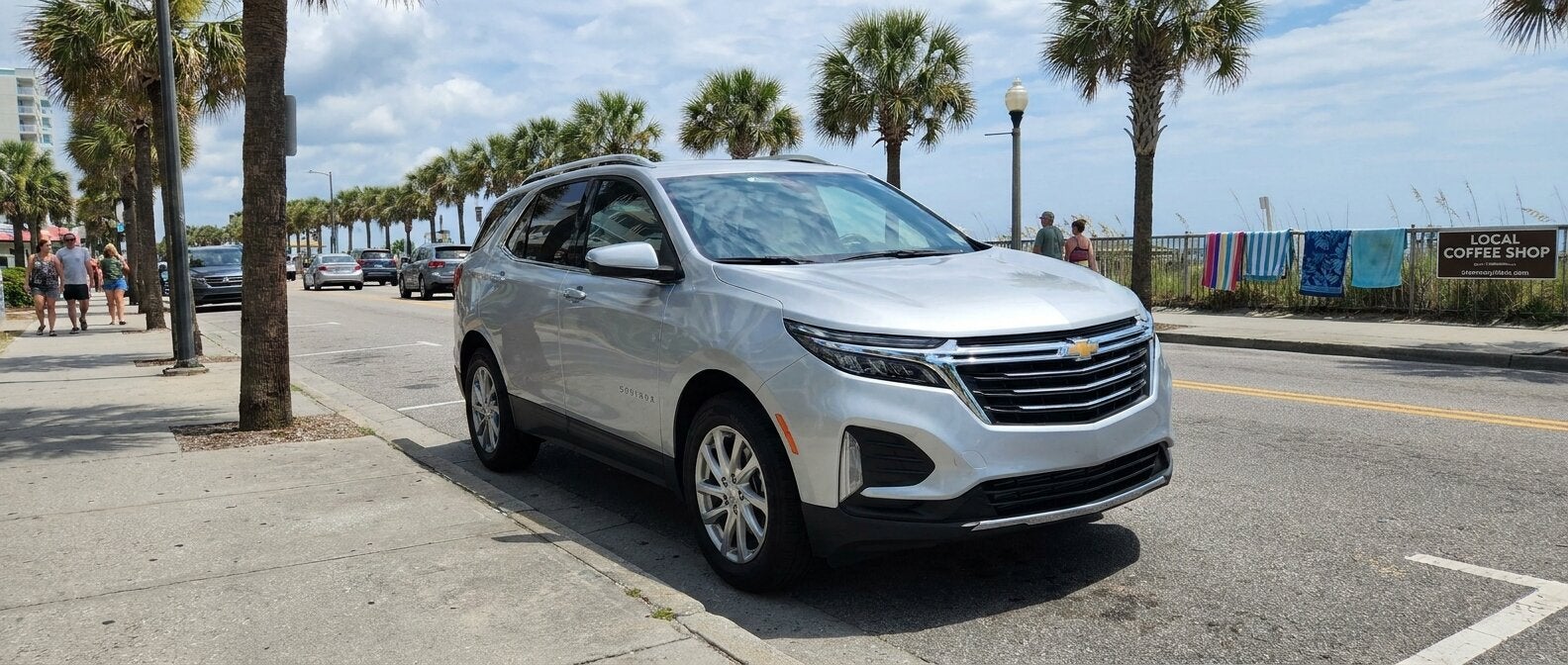
If you're running International Drive and US-501 every day, a used Equinox makes a lot of sense. The reason is simple. But "used Equinox" spans three very different generations, and which one you pick matters far more than the year on the sticker. The short version Sweet spot for commuters: 2015-2017 (late second generation, oil and timing-chain problems largely worked out, proven powertrain). Also solid: 2019-2022 third generation (redesigned platform, cleaner complaint history) with one caveat on the 1.5L vacuum pump. The fourth generation (2024-2026) is the current lineup, if your budget reaches it, the 2026 EPA rating of 26 city / 29 highway mpg (FWD) makes it a genuinely efficient commuter. Skip 2010-2013. Documented timing chain and oil consumption issues logged with NHTSA across hundreds of complaints. Approach 2018 carefully, the launch year of the third generation had a documented brake vacuum pump concern on the 1.5L engine. Confirm VIN recall status before you buy. A pre-purchase inspection from a shop that knows GMs is not optional on any used Equinox. It's cheap insurance. Browse our used Equinox inventory Which Equinox Years Are Actually the Sweet Spot for a Daily Commuter? The sweet spot is a range rather than one year, and for most used buyers we'd point first at the 2015-2017 models. By 2015, GM had corrected the piston-ring and oil-consumption problems that plagued the 2010-2013 Ecotec four-cylinder, and the 2.4L in those years had racked up enough real-world miles to prove it out. The 2017 is the final year of the second generation, and arguably the most refined version of that platform. If you're open to spending a bit more, the 2019-2022 third-generation models are the other strong band. The 2019 brought a fully redesigned platform (not just a facelift), and NHTSA complaint volumes dropped sharply against the 2018 launch year. US-501 runs from Conway through Carolina Forest. Those years have held up well in the grinding, high-idle, stop-and-go commuting that stretch demands through the long coastal summer months, and they suit the commute. Model Year / Range Sweet Spot? Years to Watch Why It Matters for Commuters 2005-2009 (Gen 1) No All Older V6 platform; fuel economy and reliability both trail later gens; skip for a commuter 2010-2013 (Gen 2 early) No All NHTSA logged hundreds of complaints for timing chain failure and abnormal oil consumption on the 2.4L Ecotec 2014 (Gen 2 mid) Cautious Inspect carefully Transitional year; some improvement but still inspect the engine thoroughly 2015-2017 (Gen 2 late) Yes 2015 is the entry point GM resolved the piston-ring issues by this band; 2017 is the most refined Gen 2 2018 (Gen 3 launch) Cautious 1.5L engine specifically Brake vacuum pump concern documented via NHTSA TSB PIP5835; confirm VIN is clear 2019-2022 (Gen 3) Yes 2019-2020 as the value pick Cleaner complaint record; solid commuter platform; check for the vacuum pump TSB on 1.5L models 2023 (Gen 3 final / Gen 4 intro) Yes Verify build date Transition year; confirm whether the unit is Gen 3 or the new 2024 fourth-gen platform 2024-2026 (Gen 4) Yes (current gen) None flagged yet Full redesign; 2026 EPA-rated 26 city / 29 hwy mpg (FWD); current lineup at Palmetto Chevrolet Which Years Should You Watch Out For? Two model-year bands deserve real caution, and they fail in different ways. The 2010-2013 cars carry an engine risk tied to oil consumption and timing chains, while the 2018 launch year carries the heaviest recall load in the model's history. Neither is automatically a dealbreaker, but both need homework before you sign. 2010-2013: the timing chain generation. NHTSA logged 780 complaints on the 2010 model and 795 on the 2011. The problem was systemic. The 2.4L Ecotec engine consumed oil at an abnormal rate, and once oil pressure dropped, the timing chain would stretch and eventually fail. Because the Ecotec is an interference engine, a broken chain lets valves and pistons collide, and that usually means a new engine rather than a repair. Per NHTSA complaint records, this pattern persisted through 2013, with some 2013 models showing timing chain problems too. The 2012 posted 698 NHTSA complaints with repeated references to the same failure chain. We're not saying every 2010-2013 Equinox will have this problem. We are saying the maintenance history matters enormously on those years. Regular oil changes and documented oil-level checks separate the one that runs fine from the one that destroys its own engine. If you can't verify maintenance records, we'd pass. See new 2026 Equinox options at Palmetto Chevrolet 2018: the launch year of Gen 3. The third generation is a genuinely good platform, but 2018 is where we'd slow down. NHTSA's Technical Service Bulletin PIP5835 documented a brake vacuum pump failure pattern on 2018-2022 Equinoxes equipped with the 1.5L LYX engine. When the pump fails, brake pedal effort increases sharply. In some cases, metal fragments from the pump get into the engine oil and damage the camshaft. NHTSA received six recalls for the 2018 model year overall, which makes it the most-recalled single year in Equinox history. That doesn't mean avoid every 2018. It means check the VIN against NHTSA's recall database, confirm the brake booster vacuum pipe recall (18V576000) has been addressed, and get an independent inspection. Schedule a pre-purchase inspection with our service team A note from our team: When someone brings a used Equinox in for a pre-purchase inspection, the first two things we look at are oil level and maintenance records on second-gen models, and brake pedal feel on early third-gen units. Those two checks catch the situations that matter most. It's a quick inspection, and worth every minute before you sign anything. Pros Cons Comfortable, quiet ride that handles stop-and-go without fatigue EPA rating of 26-27 mpg combined (FWD) trails hybrid competitors in pure efficiency 63.5 cu ft of cargo space (seats folded) gives real hauling flexibility 175 hp 1.5L turbo feels strained under load, especially with a full vehicle at highway speeds Standard safety tech across current-gen trims (automatic emergency braking, lane-keep assist) Towing capacity limited to 1,500 lbs on FWD models; not a truck substitute Compact footprint parks easily in crowded Grand Strand retail lots Used prices have held relatively firm; good deals require patience FWD models handle SC's flat, mild-winter roads well without the AWD premium Early Gen 2 (2010-2013) has well-documented engine risk; requires careful vetting Schedule a Pre-Purchase Inspection Which Equinox Year Is Right for Which Buyer? The right year depends on your budget and how much current-generation safety tech you want, so we match buyers to a band instead of to one model year. A budget-first commuter, a buyer with a little more room, and someone who wants new each land in a different spot. We'll walk through all three. Explore financing options at Palmetto Chevrolet The budget-first commuter running Conway to Myrtle Beach on US-501 or SC-544 should target 2015-2017. These years price below Gen 3 models, they've shed the Gen 2 reliability problems, and they're proven. The 2.4L four-cylinder in those years isn't fast, but it's uncomplicated and well understood by any competent shop. The 2015-2017 band is where second-generation reliability actually landed, after GM corrected the oil consumption issue that defined 2010-2013. The buyer with a bit more budget who wants the current platform's safety tech and the EPA-rated 26/29 mpg (FWD) should look at 2019-2022. It drives noticeably better than Gen 2, the cabin stays quieter on the highway miles between Conway and the beach, and the standard safety features on those trims cover more ground. Just pull the VIN, confirm the TSB status, and get the brake system inspected if the vacuum pump recall hasn't been documented. The buyer who wants new gets the 2026 Equinox. The fourth generation, now in its second model year, carries the EPA-rated 26 city / 29 highway / 27 combined mpg on FWD trims and standard Chevy Safety Assist on every trim level. That's a real upgrade in both tech and peace of mind. We've got current-gen units on our lot and can walk you through the trim differences. The Coastal Carolina commuter reality comes down to where these cars actually live. International Drive, the stretch of US-501 between Conway and Carolina Forest Boulevard, and the SC-22 bypass corridor are where most of them spend their useful miles. At low speeds with frequent braking, the Equinox's CVT (FWD) or eight-speed automatic (AWD) handles the rhythm without drama. The 175-hp turbo four won't impress anyone merging onto SC-31 from a dead stop, and that's the honest tradeoff. For 95 percent of the commuting miles in Horry County, it's enough. Frequently Asked Questions What is the best used Chevy Equinox year to buy for a commuter? The 2015-2017 range is our pick for buyers who want reliability at a used price point. By 2015, GM had corrected the oil consumption and timing chain problems that defined the 2010-2013 Ecotec four-cylinder. The 2017 is the most refined version of the second generation, and the last before the platform redesign. If your budget allows, the 2019-2022 third-generation models are solid too, with cleaner NHTSA complaint histories and better cabin tech. Why do so many people warn against the 2010-2013 Equinox? NHTSA logged 780 complaints on the 2010 model and 795 on the 2011, and a large share involve timing chain failure tied to abnormal oil consumption in the 2.4L Ecotec engine. Once oil dropped below proper levels, the timing chain would stretch and break. Because the Ecotec is an interference engine, that failure typically means engine replacement rather than a chain swap. The pattern shows up across 2010-2013 models. These years aren't impossible to own, but they do require verified, documented maintenance history. Is the 2018 Chevy Equinox reliable enough to buy used? Cautiously, yes. The 2018 is the launch year of the well-regarded third generation, and it also carries the most NHTSA recall campaigns of any single Equinox year (six total, per NHTSA records). The biggest ongoing concern involves the brake vacuum pump on 1.5L-equipped models, documented in GM Technical Service Bulletin PIP5835. Before you buy a 2018, check the VIN against the NHTSA database to confirm recall 18V576000 has been completed, and have the brake system inspected independently. A clean bill of health makes it a reasonable commuter; an uninspected unit is a risk. --- Value Your Trade-In Palmetto Chevrolet 1122 4th Ave, Conway, SC 29526 (843) 248-4283
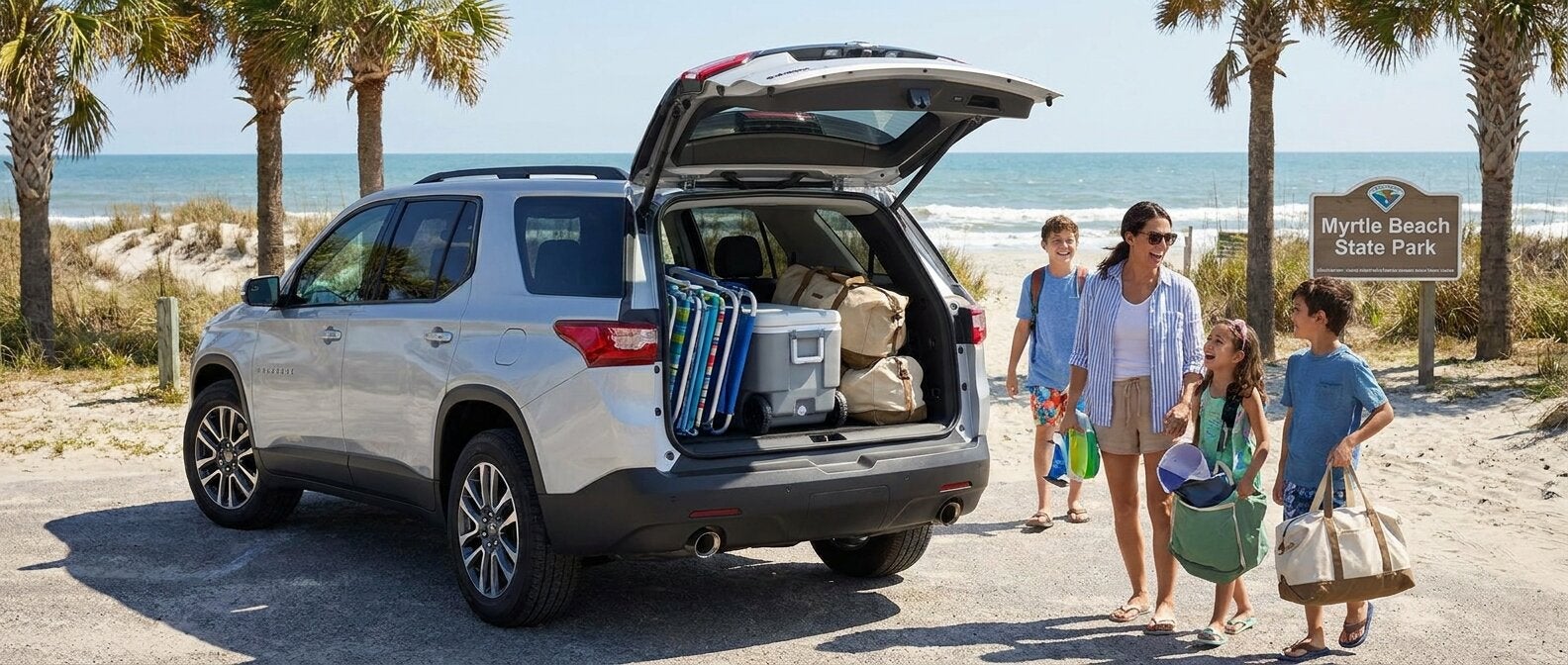
2026 Chevy Traverse liftgate open at Myrtle Beach with beach chairs, cooler, and vacation gear loaded inside

Does the Chevy Traverse Have Enough Cargo Space for a Myrtle Beach Vacation?

The 2026 Chevrolet Traverse gives you 22.9 cubic feet behind the third row with every seat filled, 56.6 cubic feet once you fold that third row, and a maximum of 97.6 cubic feet with both rear rows flat. For a Grand Strand family trip, that range means the Traverse handles everything from a packed day run with all eight seats occupied to a full-week condo haul with the third row stowed and the floor stacked with gear. How Much Cargo Space Does the 2026 Traverse Actually Give You? You get a usable 22.9 cubic feet behind the third row with all eight seats up, and that climbs to 56.6 cubic feet the moment you fold the third row, so the question for a Grand Strand run isn't the peak number, it's whether you can keep the seats you need and still fit the gear heading down US-501. Chevrolet lists three configurations for the 2026 Traverse, and each maps to a different kind of Grand Strand trip. Cargo Configuration Cubic Feet Conway-to-Beach Scenario All 3 rows occupied 22.9 cu ft Day trip: cooler, 4 beach chairs, dry bags 3rd row folded 56.6 cu ft Weekend trip: 4 full-size suitcases plus all gear Both rows folded 97.6 cu ft Full week: pack like you're moving into the condo Behind the third row, a 50-quart hard-sided cooler, three fold-flat beach chairs slid in vertically, and a tote or two will fit. The 22.9 cubic feet is real and usable. It just isn't bottomless. Fold the third row and the picture opens up. 56.6 cubic feet handles four full-size suitcases laid flat with backpacks stacked on top, and that's the configuration that fits a multi-day condo stay best. The AutoSense power liftgate comes on the LT trim and above. After you've circled a Myrtle Beach oceanfront lot three times on a Saturday in July, popping the tailgate with a foot swipe when your arms are full earns its keep. Every single trip. What Fits, and Which Trim Makes Sense for the Beach? Which trim makes sense for the beach comes down to weighing passenger count against loading ease, and that balance is real, since every extra seat you keep up is cargo space and walk-through room you give up on the drive down US-501. Browse the 2026 Traverse trims on our lot to see what's in stock, but here's the core decision. The LT's second-row bench seats eight, which means more people and tighter cargo-per-person math. The RS, High Country, and Z71 come with captain's chairs in the second row, dropping to seven seats but opening a walk-through aisle that makes loading easier and third-row access a lot less of a contortion for teenagers. Trim 2nd Row Max Passengers Grand Strand Best Use LT Bench 8 Full family of 8, day trips Z71 Captain's chairs 7 AWD plus off-pavement access RS Captain's chairs 7 Same capacity, sport styling High Country Captain's chairs 7 Long drives, power-folding rows One feature worth calling out on the High Country is the one-touch power-folding Chevrolet builds into both the second and third rows. When you're rearranging in a resort parking garage while everyone else waits on you, one-touch folding beats a manual panel. Every time. The EPA rates the 2026 Traverse FWD at 20 city / 26 highway / 22 combined mpg. The drive from Conway east on US-501 or SC-22 (Veterans Highway) runs mostly highway once you clear Aynor, so a loaded Traverse makes a sensible road-trip case on that corridor. AWD drops efficiency to 20 city / 24 highway / 21 combined mpg, also per EPA estimates, and on flat coastal South Carolina a beach-trip family rarely needs it, not for a run like this one. For a Myrtle Beach family trip, the 2026 Traverse's 56.6 cubic feet behind the second row (third row folded) is the most practical configuration: four suitcases plus a full gear load, with every passenger still seated. Team observation: For a family with two or three kids, that eighth seat on the LT bench earns its keep around town, and the same third row folds flat without tools when the week's gear outgrows a day-trip load. The AutoSense liftgate makes that swap-and-go routine easier than it sounds, since it closes hands-free while you're rearranging in a rush. Can the Traverse Handle the Full Conway-to-Beach Run With a Loaded Cabin? Yes, a loaded Traverse handles the full Conway-to-beach run without complaint, and the bigger variable on that trip is route timing rather than the vehicle, because you can pack the cabin full and the engine still has plenty held in reserve for the highway stretches east of Aynor. US-501 is the most direct path from Conway to Myrtle Beach, but on a peak summer Saturday it slows to a crawl between Aynor and the SC-31 interchange. SC-22 (Veterans Highway) is the documented bypass for the northern Grand Strand, and locals who know the corridor use it to cut time when 501 backs up. The 2026 Traverse's 328-horsepower turbocharged 2.5-liter engine merges and passes without hesitation on those highway stretches, and its 121-inch wheelbase gives the ride a settled feel that shorter crossovers don't match on that run. The Equinox is a capable commuter for smaller families, but seven or eight people headed to Myrtle Beach for a week will feel the size difference right away. Oceanfront parking during summer is tight, and several public access lots fill by mid-morning on busy weekends. The Traverse's flat cargo floor and low load lip let you slide a loaded cooler in by yourself. No lifting over a tall sill. The Suburban gives you more total cargo volume if you're coordinating a large group or towing a trailer to the beach. It's the right tool for that job. The Traverse earns its spot when you want three rows of seats, nearly 98 cubic feet of maximum cargo potential, and a vehicle you can actually park at the Myrtle Beach Boardwalk without a plan. See What Your Trade Is Worth Here's a concrete recommendation before the FAQ. If you're a family of five to eight making the Conway-to-Myrtle-Beach run regularly, the LT with FWD is the value entry point, and that bench seat keeps your options open. If your trips tend to run longer than a weekend, consider stepping up to the High Country for the power-folding rows, which you'll reach for on every run down. Frequently Asked Questions Can the 2026 Chevy Traverse fit beach gear for a full family with all seats up? With all three rows occupied, the 2026 Traverse gives you 22.9 cubic feet behind the third row. That's enough for a large cooler, three to four fold-flat beach chairs, and a bag or two for a day trip from Conway to Myrtle Beach. For a multi-day stay where you need suitcases for the whole family, fold the third row to access 56.6 cubic feet behind the second row. Is the third row of the Traverse practical for adults on the drive to the beach? The 2026 Traverse third row offers adult-usable legroom, which puts it ahead of some competitors in the segment. For short-to-medium hauls like the Conway-to-Myrtle-Beach run, most adults manage it without complaint. On longer drives, teens and adult passengers will feel the difference in legroom compared to the first two rows, so it's worth having that conversation before you're an hour down US-501. Does the Traverse have AWD, and do I need it for a Myrtle Beach trip? AWD is available on the LT, RS, and High Country trims and comes standard on the Z71. For the flat coastal roads and highway runs typical of a Grand Strand beach trip, front-wheel drive handles everything you'll encounter. The EPA rates FWD at 22 mpg combined versus 21 mpg combined for AWD. AWD adds value if you're also driving up toward the North Carolina mountains or dealing with wet beach-access sand lanes, but it's not a requirement for a standard Myrtle Beach vacation run from Conway. --- Get Pre-Approved for the Traverse You Want Palmetto Chevrolet 1122 4th Ave, Conway, SC 29526 (843) 248-4283
2026 Chevrolet Traverse on a South Carolina highway en route from Conway to Savannah

Best Chevy SUVs for the Conway to Savannah Road Trip

The drive from Conway to Savannah covers about 213 miles on a mix of US-378 and I-95. Run it non-stop and you're looking at roughly three hours and forty minutes. Add a couple of intentional pauses and the whole thing becomes a full, unhurried day that lands you on River Street before the dinner rush. We'll lay out the plan and help you pick the Chevy SUV that fits your crew. We spend a lot of time talking with families loading up for exactly this kind of run. The question that decides vehicle fit isn't "which one looks coolest on paper?" The better question is "how many miles can we go between fill-ups, and does everything we're bringing actually fit?" Those two things shape the day more than any brochure feature. The 2026 Traverse is where we start the conversation for most groups, though it isn't the only right answer. What's the Route? The route breaks into four stops that spread a 213-mile drive across one easy day, and the table below lays out every leg in one view, with drive times built on normal fall and early-winter traffic on I-95 and no stop time folded in. Stop Drive from Previous What to Do What to Pack/Know 1. Conway Riverwalk (Start). Pre-trip stretch along the Waccamaw River; grab coffee downtown Full tank, tire pressure checked 2. Walterboro Wildlife Sanctuary ~1 hr 30 min Boardwalk loop through ACE Basin Lowcountry; free, opens at dawn Walking shoes, water bottles from the cooler 3. Hardeeville, SC / I-95 Fuel Stop ~40 min Fuel and snacks before the Georgia line Good moment for a Traverse or Equinox fill-up; Tahoe diesel drivers can often skip this 4. Savannah Historic District ~30 min Forsyth Park, River Street, City Market Parallel street parking on Jones or Gaston; Traverse fits standard spaces fine Those four stops form the backbone of a solid day. Total seat time with the stops above lands around five to five and a half hours, which keeps it approachable with kids. The Stops, in Detail Stop 1: Conway Riverwalk (Mile Zero) Pull out of your driveway in Conway and give yourself fifteen minutes before you jump on US-378 West. The Conway Riverwalk runs right along the Waccamaw River downtown. You get a short leg-stretch, a decent cup of coffee from one of the Main Street shops, and a clean mental shift from "home" to "road trip." Check your tire pressure before you leave. A small thing, but it makes a noticeable difference in highway fuel economy over 200-plus miles. A cold morning start in Horry County in November can leave your tires reading two to four PSI below what they showed in September. Worth the ninety seconds to top them off. The EPA highway ratings for the 2026 Traverse FWD (26 mpg) and the 2026 Equinox FWD (29 mpg highway) assume correctly inflated tires. Stop by Palmetto Chevrolet and our service team can help with a quick pre-trip tire check before a long run if you haven't rotated recently. Stop 2: Walterboro Wildlife Sanctuary (The Real Midpoint) Walterboro sits right off I-95 at exits 53 and 57, about ninety minutes southwest of Conway, and this is where the Lowcountry really earns its name. The Walterboro Wildlife Sanctuary is a 600-plus-acre preserve inside the ACE Basin, the largest undeveloped estuary on the East Coast, and it sits three minutes from the interstate. Free entry, open dawn to dusk. The boardwalk trail wanders through braided creek swamp and hardwood flats draped in Spanish moss. You're likely to see herons, egrets, wild turkey, and deer. Call it the antidote to two hours of windshield staring. Give it forty-five minutes to an hour and everyone re-boards refreshed. The cargo math matters here too, because this is also where the Traverse's 97.6 cubic feet of maximum cargo capacity (with seats folded) earns its keep if you've packed a stroller, bikes, or a soft-sided cooler. The 2026 Equinox folds to 63.5 cubic feet, which handles a couple's weekend bags without a fuss. You feel the difference when you're unloading at a trail parking lot. Timing note (November). November is genuinely one of the best months for this drive. Heat and humidity have broken. The mosquitoes at the sanctuary stay manageable, unlike July. I-95 traffic between Walterboro and Hardeeville runs lighter than the summer beach-season corridor, and Savannah's squares are comfortable for walking all afternoon. Stop 3: Hardeeville, SC (Fuel Before Georgia) About forty minutes south of Walterboro, Hardeeville is the last South Carolina town before you cross into Georgia, which makes it a natural fuel stop even though most of these Chevy SUVs can reach Savannah without it. For a 2026 Tahoe running the Duramax 3.0L turbo-diesel, Chevrolet rates this configuration at an EPA-estimated 28 mpg highway with RWD. That 24-gallon tank gives you a theoretical highway range pushing past 650 miles. A crew in that rig might skip Hardeeville entirely. For the Traverse FWD (26 mpg highway, 21.7-gallon tank), you're looking at a highway range north of 550 miles, so the stop's optional comfort rather than necessity on a 213-mile trip. The 2026 Equinox FWD goes up to 29 mpg on the highway on a 14.8-gallon tank. That works out to about 420 highway miles on a full tank. You left Conway full, so Hardeeville is an easy stop either way. The Tahoe asks for one honest tradeoff. That diesel economy is real, and the 5.3L V8 is rated at 20 mpg highway with RWD. If you're towing a camper or a boat (the Tahoe handles up to 8,400 lbs when properly equipped, so verify the door-jamb label for your specific configuration), it's the right tool for this run. For four adults and luggage, the Traverse or Equinox costs noticeably less to feed on a November road day. Schedule a Pre-Trip Service Check Stop 4: Savannah Historic District (The Payoff) Take I-95 to I-16 East and you're in downtown Savannah in ten minutes, where Forsyth Park makes the natural first stop, a 30-acre city park anchored by one of the most photographed fountains in the South. Live oaks and Spanish moss make the Conway Riverwalk feel like a preview. After the park, it's a short walk to City Market, Broughton Street, or River Street depending on your crew's appetite and energy. Parking in the Historic District takes a little planning. The Traverse fits standard parallel spaces on the residential streets (Jones Street, Gaston Street) without drama. Its overall length is 204.4 inches. Plan your spot before you arrive on a busy weekend, since Savannah draws crowds year-round. You'll find the Tahoe hard to park on the tight colonial-grid streets. Factor that in when you're choosing a vehicle for a city-destination trip versus a towing or big-family run. Tweak It to Your Crew Treat this itinerary as a framework and adjust it to your group, because the right SUV for the Conway-to-Savannah run changes with crew size and gear load far more than any single feature on the spec sheet, once you know who's riding and what you're hauling. The 2026 Suburban makes sense if your group's bigger than eight, or if you need a seven-to-eight-passenger vehicle that can also haul enough cargo for a long Savannah weekend without an argument over who sits where. For a couple, or two adults and one kid, the Equinox stretches the fuel budget farthest and parks anywhere. Crew Size / Gear Load Best Fit Why It Works Here Couple or small family, light packing 2026 Equinox 29 mpg hwy, parks in tight Savannah spots, manageable day-to-day size Family of 5-7, weekend bags, stroller 2026 Traverse 26 mpg hwy (FWD), 97.6 cu ft max cargo, 5,000 lbs tow if you trail a small camper Family of 7-9 OR towing a larger rig 2026 Tahoe or Suburban Tahoe diesel hits 28 mpg hwy, up to 8,400 lbs tow (properly equipped) One easy trap is sizing up "just in case" and then paying to feed a larger fuel tank all year for a vehicle that only gets stretched on a couple of road trips. If the Traverse covers 90% of your year and you're not towing, it covers the Conway-to-Savannah run comfortably. The Tahoe earns its place when the trailer hitch is actually loaded. [ ] Check tire pressure before departure (all four plus the spare) [ ] Fill the tank at Palmetto Chevrolet's neighborhood gas stations in Conway before getting on US-378 [ ] Download an offline map section for the Walterboro detour off I-95 [ ] Pack a soft-sided cooler that fits flat under the Traverse's second row [ ] Bring walking shoes you can leave on after Walterboro into Savannah [ ] Look up Forsyth Park parking before 10 AM on a Saturday [ ] Check the weather for the Lowcountry corridor; November fog is common before 9 AM near the ACE Basin Stop by and see us at Palmetto Chevrolet on 4th Ave in Conway. Our team can walk you through what's on the lot and help you figure out which SUV fits your version of this trip. Explore Financing Options Palmetto Chevrolet 1122 4th Ave, Conway, SC 29526 (843) 248-4283
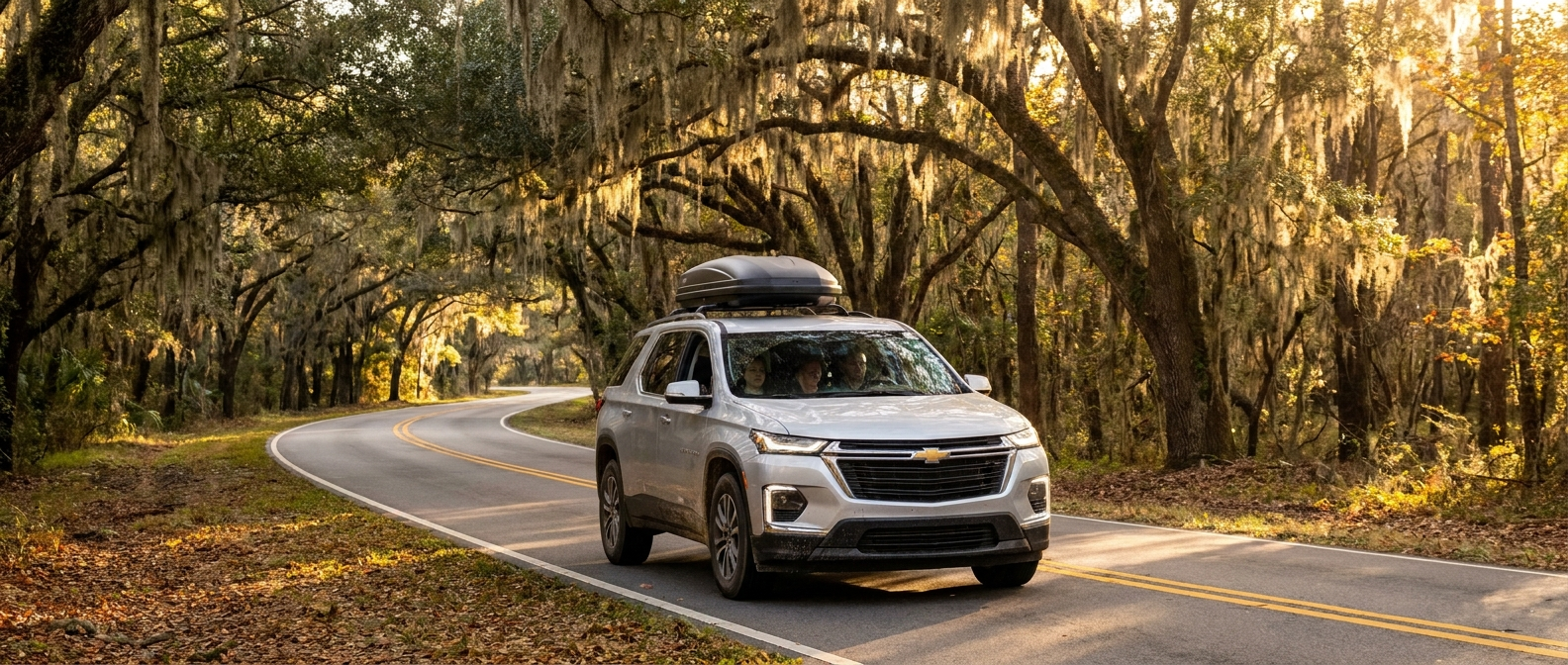
2026 Chevrolet Silverado 1500 Work Truck on a Grand Strand job site in Conway, SC

Chevy Silverado for Grand Strand Businesses: Which Tier Fits Your Work

In this article What Does 'Value' Actually Mean in a Work Truck? What Do You Actually Get at Each Tier? Matching the Trim to the Job in Horry County The Case for the HD Tier (and When the 1500 Genuinely Covers It) The Smart Choice for Grand Strand Business Buyers For most Horry County trades, service businesses, and owner-operators running the US-501 corridor, the 2026 Silverado line delivers more practical capability per dollar than anything else in its class. Buying the wrong tier is a real mistake, though. Overshoot and you're paying for comfort features that sit idle in the work bed. Undershoot and you're making two trips where one was possible, or stressing a powertrain pulling a trailer it was never matched to. We work with a lot of local contractors, landscapers, HVAC crews, and marina operators out of our Conway lot. The Silverado 1500 is the right answer for a wide range of Grand Strand businesses. But "Silverado" covers nine trim levels and three different truck classes. The better question is which configuration is actually worth your money for the work you're doing here. What Does 'Value' Actually Mean in a Work Truck? Value in a business context is simpler than the marketing makes it sound, and it comes down to a single ratio, the capability you actually use divided by the operating cost you carry every day, which means the right trim depends entirely on the work you're doing. A trim loaded with leather and a premium audio system is a poor value if the truck spends its days hauling mulch and parking on a muddy site. A bare-bones WT is equally poor value if the owner-operator is driving it two hours a day on US-501 and showing up to client meetings stiff and distracted. The Grand Strand's business profile is specific, and right now it's a construction story. The Myrtle Beach metropolitan area is the second-fastest growing population center in the country, per 2026 U.S. Census Bureau data. Conway alone is in the middle of an 808-acre waterfront transformation on a former Santee Cooper site, with a TIF funding structure approved in December 2025 and construction timelines stretching two to three years out. All of that means steady demand for roofing crews, concrete contractors, electrical subcontractors, landscapers, and general subs, every one of whom needs a truck that earns its keep five days a week. The tier you choose should match the actual work, and the Silverado line breaks down cleanly once you've named the job. The table below lays it out. What Do You Actually Get at Each Tier? Each tier draws a clear line on the spec sheet, with Chevrolet publishing payload and towing by configuration, and the gaps between those tiers run wide enough to decide which jobs a truck can shoulder day after day without complaint. The numbers below show where each one lands, and they're worth reading closely. Silverado Tier Work Fit Towing (when properly equipped) Max Payload (when properly equipped) Who It's For 1500 Work Truck (WT) Light commercial Up to 9,500 lbs (2.7L TurboMax) Up to 2,260 lbs Landscapers, painters, solo tradespeople with enclosed or open trailers under 8,000 lbs 1500 LT Work + daily driver Up to 13,300 lbs (w/ Max Trailering Pkg) Up to 2,260 lbs Owner-operators who need tech, comfort for long days on US-501, and real towing range 1500 LTZ Premium work/daily Up to 13,300 lbs Up to 2,260 lbs Business owners client-facing daily; ProGrade Trailering system standard 2500 HD Heavy commercial Up to 22,420 lbs (diesel, properly equipped) Up to 3,979 lbs HVAC, plumbing, electrical contractors pulling enclosed trailers, skid steers, or equipment 3500 HD Maximum duty Up to 36,000 lbs gooseneck (diesel DRW, properly equipped) Up to 7,442 lbs Crane-assist, flatbed, or multi-unit equipment haulers; heavy marina or marine contractors All payload and towing figures are from Chevrolet's published specifications and require proper equipment configuration. Verify the door-jamb Tire and Loading Information label on your specific truck before hauling. Don't skip reading that label. Matching the Trim to the Job in Horry County The WT earns its keep when the truck works as a pure tool, and that's a solid fit for plenty of Horry County crews, with vinyl floors, a 7-inch screen, and 17-inch steel wheels built to take abuse rather than turn heads in a parking lot. The truck is genuinely durable, it carries the same 2,260-pound payload ceiling as the LT (because the lighter interior actually helps), and the 2.7L TurboMax four-cylinder puts out 310 horsepower and 430 lb-ft of torque. For a painter or landscaper running an open trailer to job sites off SC-544 or SC-22, that combination is plenty, and the lower acquisition cost matters for a business watching its fixed expenses. The math is simple enough. With the LT, the conversation changes. Chevrolet adds a 13.4-inch touchscreen, a 12.3-inch digital driver information center, Google Built-In connectivity, and heated front seats, which matter when you're running 40 minutes each way to Myrtle Beach and back. The Silverado 2500 HD closes the gap the moment your trailer weight climbs past what a half-ton was designed to handle comfortably. Its 6.6L Duramax diesel produces 975 lb-ft of torque and pulls up to 22,420 pounds when properly equipped, which covers most enclosed-trailer and skid steer scenarios without drama. Our Work Truck Solutions team can walk through fleet upfit options for the HD line if you're running multiple vehicles. Our team's honest observation: The LT trim is where owner-operators often settle after driving both the WT and the LT back to back. A WT handles the job. The LT handles the job *and* the driver, which matters when you're in that seat six or seven hours a day. We think of that as a fatigue calculation, not an upsell. Next step: If you're not sure whether a 1500 or 2500 HD matches your trailer, bring us the actual trailer weight (not an estimate) and we'll pull the Chevrolet trailering guide for the specific configuration. Getting that number wrong is expensive either way. The Case for the HD Tier (and When the 1500 Genuinely Covers It) The HD tier is the right call for a real share of Grand Strand contractors, and we'd rather say that plainly than have you find out on a loaded trailer on US-501. The 1500 simply isn't built for every job in this market. If your enclosed trailer is loaded with HVAC equipment and refrigerant, or you're pulling a skid steer to a site in Carolina Forest, you need to know the actual loaded trailer weight before you decide. A loaded 1500 handles up to 13,300 pounds on the right configuration with the Max Trailering Package. The number is real. But the Silverado 2500 HD offers up to 22,420 pounds of diesel towing and up to 3,979 pounds of payload, with a heavier-duty chassis built for sustained load cycles. The difference shows up across three or four years of daily hauling, long after day one. The 1500 wins clearly when your trailer stays under 8,000 to 10,000 pounds and your work week mixes hauling with client visits, long highway stretches, and days where the truck is parked and you're on foot. Step up to the HD when the load is consistent, heavy, and the truck functions as a commercial asset more than a personal vehicle. The load makes the call. Explore Financing for Your Business Truck The Smart Choice for Grand Strand Business Buyers The 2026 Silverado line is wide enough that the right answer sits somewhere in it for almost every Horry County business, and the trick is letting the numbers lead the decision from the first conversation at our Conway lot onward. Read Chevrolet's trailering guide first, then check the door-jamb label on the specific truck, and you'll have the actual payload in hand. Those two numbers drive the conversation. If your work week looks like a mix of a medium trailer, long drives on US-501 or Veterans Highway, and client-facing time, the 1500 LT is genuinely hard to beat. If your trailer is heavy, your loads are daily, and the truck is a commercial vehicle first, step to the 2500 HD with the Duramax option and don't look back. If you run multiple trucks, our Work Truck Solutions program is built for fleet buyers, not one-off transactions. The Grand Strand is in the middle of a building cycle that's going to run for years. Having a truck that's sized for that work, not the other way around, is the practical call. Frequently Asked Questions What payload and towing should a Grand Strand contractor look for in a Silverado? For most trades hauling a loaded open or enclosed trailer, the 2026 Silverado 1500 covers the range. Chevrolet lists up to 2,260 pounds of payload and up to 13,300 pounds of towing when properly equipped with the Max Trailering Package. If your trailer weight routinely exceeds 10,000 pounds loaded, or your payload consistently runs above 2,000 pounds in the bed, the Silverado 2500 HD is the more honest fit, with up to 22,420 pounds of diesel towing and up to 3,979 pounds of payload per Chevrolet's published specifications. Always verify the specific truck's door-jamb Tire and Loading Information label before hauling. Is the Silverado Work Truck or LT better for a Horry County small business? The Work Truck (WT) makes sense when the truck is strictly a tool, with vinyl floors, a durable 7-inch-screen interior, and the same 2,260-pound payload ceiling as higher trims because the lighter build actually preserves capacity. The LT adds a 13.4-inch touchscreen, 12.3-inch digital driver information center, Google Built-In, and heated seats. For an owner-operator who covers long stretches of US-501 to Myrtle Beach daily and also meets clients, the LT's comfort features translate into real productivity. For a pure fleet asset driven by different crew members, the WT's lower complexity and durability-first build is the stronger case. Value Your Current Work Truck Palmetto Chevrolet 1122 4th Ave, Conway, SC 29526 (843) 248-4283
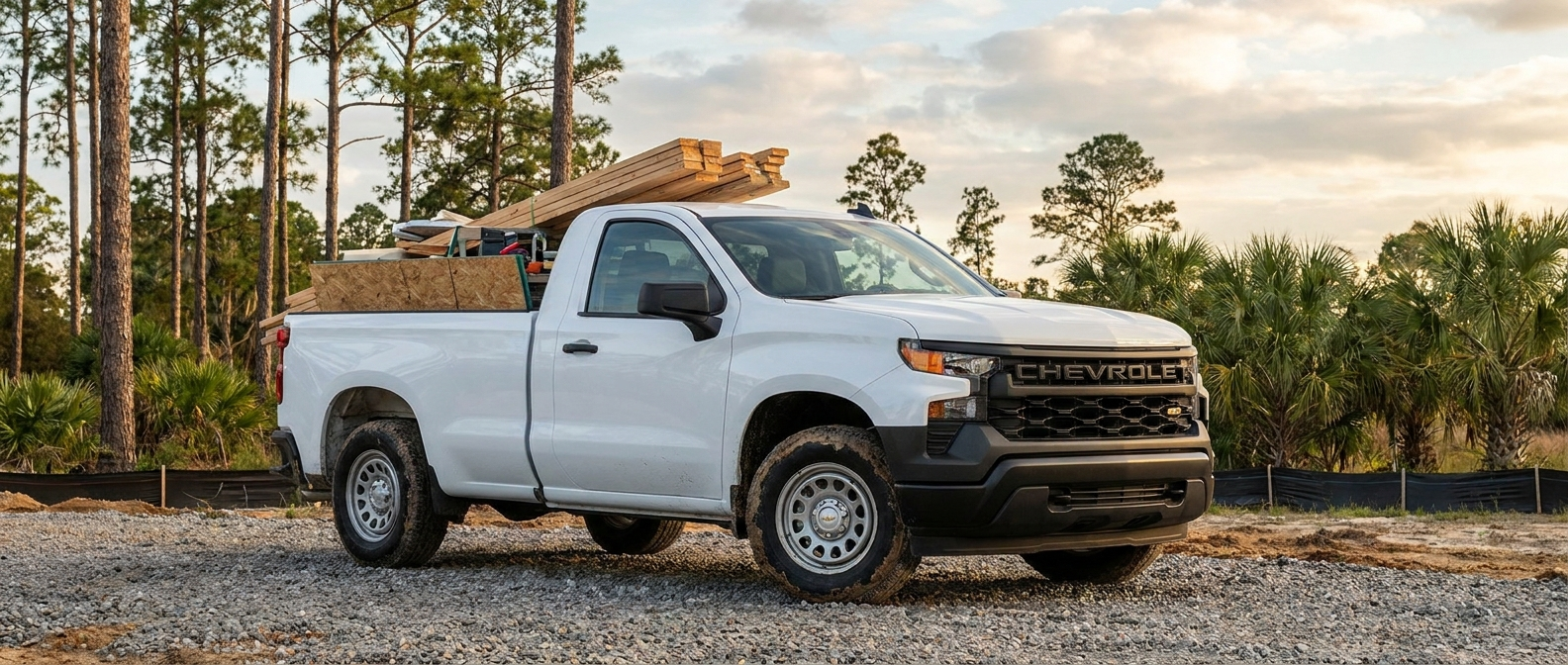
2026 Chevrolet Colorado Trail Boss at a Waccamaw River boat launch near Longs, SC

Chevy Colorado for Outdoor Trips Near Longs, SC | Palmetto Chevrolet

In this article Why Does the Colorado Fit the Outdoor Terrain Near Longs? The Trail Boss and Z71 Are the Practical Choices for the Waccamaw Corridor A Local Detail Worth Knowing Before You Load Up The Colorado Fits the Outdoor Use Case in Horry County Parking at Waccamaw River Heritage Preserve and Vereen Memorial Gardens comes on packed sand and pine straw, not asphalt. Those surfaces hold up fine until a wet November drops a few inches of standing water into the ruts. You don't think about any of it until your SUV high-centers on a root ball with a kayak strapped to the roof. Right in those conditions, the 2026 Colorado earns its spot for outdoor trips in this corner of Horry County. We won't call it the flashiest answer. It fits, though. The 2026 Colorado Trail Boss carries 9.5 inches of ground clearance, a 2-inch factory lift, 32-inch all-terrain tires, and a locking rear differential standard. For the unpaved boat launches and sandy pull-offs along the Waccamaw corridor near Longs, that combination handles what you'll actually run into on Grand Strand coastal terrain. Browse our 2026 Colorado inventory to see what's available on our lot right now. Why Does the Colorado Fit the Outdoor Terrain Near Longs? The Colorado fits the terrain here for a simple reason, the Lowcountry doesn't throw rocks or mountain grades at you, it throws soft sandy soil, waterlogged put-ins, and gravel access roads gone to muck after a coastal rain, and the Trail Boss hardware is built to clear exactly that. A standard pickup handles the paved stuff fine. The test comes when you're a good distance from the water on a sandy boat ramp and still need to keep moving. Local Condition / Use Colorado Feature That Handles It Why It Matters Here Soft sandy soil at Waccamaw River launch sites 9.5-in ground clearance (Trail Boss) with 2-in factory lift Clears rutted, wet sandy terrain without dragging the frame Unpaved parking at Vereen Memorial Gardens 32-in all-terrain tires standard on Trail Boss and Z71 AT compound grips packed-sand and pine-straw surfaces that all-seasons float on Kayak trailer or small jon boat tow Up to 7,700 lbs tow capacity, properly equipped A loaded kayak trailer runs well under 1,000 lbs; this truck is not close to its limit Gear haul for multi-day river camping 5-ft bed (61.7 in on floor), 41.9 cu ft cargo Coolers, dry bags, paddles, and camping gear fit without stacking on the roof Wet launch recovery, locking rear needed G80 limited-slip rear differential standard on Trail Boss and Z71 Delivers torque to the wheel with grip rather than spinning the one that's stuck in mud River access road approach angles 30.5-degree approach angle on Trail Boss Clears the step-up lip at unpaved boat ramps without nose contact Approach angle (30.5 degrees on the Trail Boss, per Chevrolet) is the spec that's easy to overlook. The angle decides whether the front bumper digs into the base of a launch ramp before the tires get there. The Trail Boss and Z71 Are the Practical Choices for the Waccamaw Corridor Both the Trail Boss and the Z71 make the practical pick here because they share the same 2.7L TurboMax engine producing 310 horsepower and 430 lb-ft of torque, the same 4WD, the same G80 limited-slip rear differential, and 32-inch all-terrain tires on 18-inch wheels, so the split between them comes down to clearance, not capability. The EPA rates both at 17 city, 22 highway, and 19 combined mpg. Week to week, US-501 commuting between Conway and Longs, they're identical trucks, more or less. What separates them is half an inch of ground clearance and suspension geometry. The Trail Boss gets the 2-inch factory lift and sits at 9.5 inches of clearance. A Z71 sits at 8.9 inches, same off-road hardware, minus the lift. For the terrain at Vereen Memorial Gardens (the parking area drops onto softer ground as you approach the lower lot near the boardwalks) or the access areas off SC-9 heading toward the river, that extra clearance matters. Not life-or-death. But it matters. If you're towing something bigger and need a full-size, that's a different conversation. For a kayak trailer, a canoe strapped in the bed, or a jon boat, the Colorado is the right size truck. It fits in tight spots a Silverado 1500 doesn't. The ZR2 goes further, with 10.7 inches of ground clearance, Multimatic DSSV dampers, and 33-inch mud-terrain tires. It's built for genuine rock-crawling. The coastal terrain near Longs doesn't require it, and you give up 1,700 lbs of tow capacity versus the Trail Boss for the privilege. If your trips are river paddles and state park campgrounds rather than backcountry crawling, the Trail Boss or Z71 is where the value sits. Explore Financing Options Per fueleconomy.gov, the 2026 Colorado Trail Boss and Z71 are EPA-estimated at 17 city / 22 highway / 19 mpg combined. A Trail Boss equipped with the optional mud-terrain tires is EPA-estimated at 17 city / 20 highway / 18 mpg combined. A Local Detail Worth Knowing Before You Load Up The Waccamaw River Heritage Preserve protects 28 miles of river, and primitive camping is allowed along the banks by boat or backpacking only, per SC DNR regulations, so you get no hookups and no drive-up sites, which makes your truck the base camp. You carry your gear in. What you can fit in the bed and lock under a tonneau is what you've got. The 5-foot bed on the Colorado crew cab (61.7 inches of floor length) handles a full weekend loadout. A river-ready setup runs two kayaks on the tailgate extension or a hitch-mounted kayak carrier, a 60-quart cooler standing upright, dry bags stacked flat, tent, and paddles laid along the rail. We're describing a real configuration, not a brochure estimate. The bed isn't enormous, but it's organized. River Island Adventures in Longs runs guided kayak tours and rentals right on the Waccamaw River. The access road to their launch is unpaved. Same story for the Wortham's Landing put-in that paddlers use as the starting point for the Heritage Preserve stretch. If you're arriving with a loaded truck and a trailer, you want ground clearance before you need it. The Colorado Fits the Outdoor Use Case in Horry County The Colorado fits the outdoor use case in Horry County with one tradeoff worth naming plainly, because a midsize truck means the bed isn't as deep as a Silverado and the cab isn't as cavernous as a full-size crew cab. Load four adults plus gear and it rides tighter than a full-size. For one or two people with serious gear, it's right-sized. What it delivers at that size is the ability to actually get where you're going. The two-speed transfer case (standard on Trail Boss and Z71) with 4-Low gives you a gear ratio for crawling a slippery launch. Hill descent control holds a wet, tilted ramp at a controlled speed so you don't slide. These aren't features you use constantly. But the one time you need 4-Low on a November morning when the ramp is covered in algae, you'll be glad it's there. For everyday use back in Conway or running errands between Longs and the Grand Strand, the same truck handles US-501 without drama. The platform gives you genuinely capable off-road hardware you don't have to build up after the fact. See current Colorado and truck inventory at Palmetto Chevrolet, or schedule a pre-trip service check before the season gets rolling. Schedule a Pre-Trip Service Check Palmetto Chevrolet 1122 4th Ave, Conway, SC 29526 (843) 248-4283
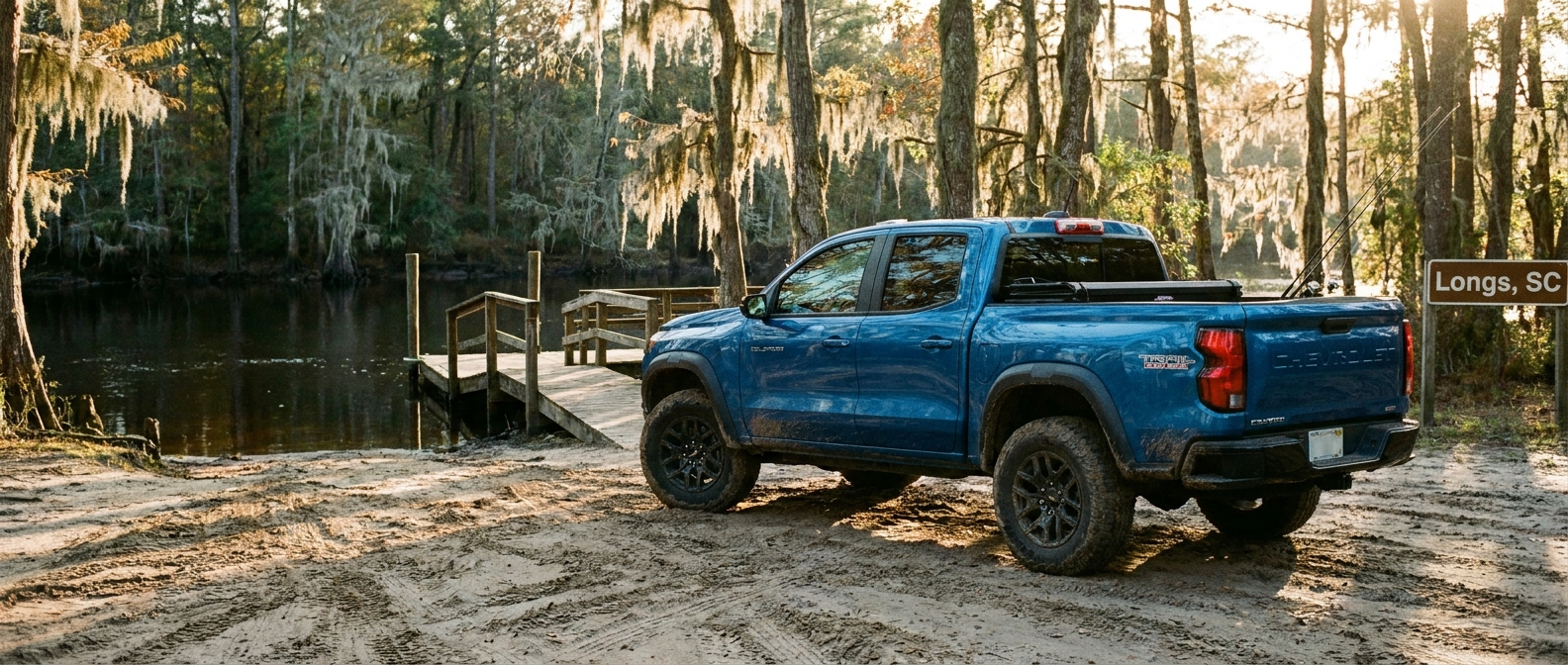
2026 Chevrolet Silverado 1500 loaded with lumber at a building supply store in Horry County, SC

3 Best Chevy Trucks for Homeowners Near Loris, SC

In this article The Ranking at a Glance No. 2: The Colorado Handles More Than You Think (With One Real Limit) No. 3: The Silverado 2500 HD Is Exactly Right (for a Specific Homeowner) No. 1: Why the Silverado 1500 Is the Right Truck for Most Loris Homeowners Our Recommendation, Straightforward Haul lumber from Blanton Building Supplies on Broad Street, load a couple of pallets of mulch, or pull your riding mower and a utility trailer down SC-22 toward Conway for a weekend project, and the right truck makes all of that feel routine. The wrong one either undersells you or costs you money you didn't need to spend. Our team's straight answer is simple. The 2026 Silverado 1500 is the best all-around truck for the majority of Loris-area homeowners. It carries real payload without stepping up to heavy-duty operating costs, and it handles the full range of weekend-project needs. But it isn't the only right answer, which is why we put together this ranked breakdown. The Ranking at a Glance Rank Truck Best For Standout Spec 1 2026 Silverado 1500 Most homeowners (hauling + light towing) Up to 2,260 lb payload; up to 13,300 lb towing, properly equipped 2 2026 Colorado Occasional haulers, tighter driveways Up to 7,700 lb towing; up to 1,710 lb payload 3 2026 Silverado 2500 HD Heavy equipment trailers, serious loads Up to 3,689 lb payload; up to 18,500 lb conventional towing Every capability figure here is a Chevrolet-published maximum for a properly equipped configuration, and your specific door-jamb label is the authoritative number for your truck. No. 2: The Colorado Handles More Than You Think (With One Real Limit) The 2026 Colorado earns its spot here because it genuinely covers the lighter end of what homeowners do, and it stays easy to park while doing it, though its payload ceiling is the one number you'll want to respect before you load heavy. Lumber run for deck boards? Yes. A pallet of pine straw bags? Easy. One Saturday's worth of bagged mulch or concrete mix? You're fine. Chevrolet rates the 2026 Colorado at up to 7,700 pounds of towing with the Advanced Trailering Package and up to 1,710 pounds of payload on the WT and LT trims. That 7,700-pound tow rating ties it for the top spot in the midsize segment. A single 2.7-liter turbocharged engine runs across all trims, producing 310 horsepower and 430 pound-feet of torque paired with an 8-speed automatic. The honest tradeoff. A standard pallet of wet mulch or topsoil can weigh between 1,500 and 2,000 pounds. At 1,710 pounds maximum payload for the WT/LT, you're close to the edge with one loaded pallet before you've counted passengers and any tools in the cab. Not a dealbreaker for someone who buys materials in manageable loads, but it's a constraint if you load heavy and figure you'll deal with it later. The Colorado also comes only as a five-foot short bed, which affects how you manage longer lumber without an overhang flag. The Colorado is the right call if you live on a lot with a tighter driveway or carport, park in a garage, or just don't need a full-size truck for anything else you do. Call it a real truck with real capability. Just know where the ceiling is before you pull up to Builders FirstSource on Santee Cooper Lane. No. 3: The Silverado 2500 HD Is Exactly Right (for a Specific Homeowner) Most homeowners don't need a heavy-duty truck, but a specific few genuinely do, and out in northern Horry County the fit is the homeowner moving serious weight, pulling loaded trailer equipment regularly, or running a small side operation that puts real tonnage behind the hitch. For that buyer, the capability isn't excess. It's the whole reason to shop this truck. The 2026 Silverado 2500 HD is rated at up to 18,500 pounds of conventional towing with the gas 6.6-liter V8, which produces 401 horsepower and 464 pound-feet of torque. Step up to the available 6.6-liter Duramax diesel and that torque figure jumps to 975 pound-feet. Payload reaches up to 3,689 pounds depending on configuration, so a loaded landscape trailer with a zero-turn mower, a chain saw, and a week's worth of materials isn't even close to the limit. The caveat worth stating is that this is a bigger, heavier truck with bigger operating costs. If your heaviest regular haul is a riding mower and a few bags of fertilizer, the Silverado 2500 HD is more truck than the job calls for. Where it makes undeniable sense is when you're pulling a loaded enclosed trailer, moving equipment that would strain a half-ton, or doing regular work that puts genuine weight in the bed every week. Right there is where the HD earns its place. Buying caution. Payload capacity is configuration-specific and printed on your door-jamb label, not in the brochure. Two trucks in the same trim with different cab styles or engine choices can have meaningfully different payload ratings. Verify your specific truck's label before you load up. The 2026 Silverado 1500 with the 2.7L TurboMax engine carries up to 2,260 pounds of payload, per Chevrolet's published specs, giving a full-size margin for palletized materials that the Colorado can't match. No. 1: Why the Silverado 1500 Is the Right Truck for Most Loris Homeowners The Silverado 1500 earns the top spot for the widest range of homeowners in this area because it carries real full-size payload without pushing you into heavy-duty running costs, though it does ask for a bit more parking room and a little more at the pump than a midsize Colorado. For the trucks most folks here actually buy, the margin lands where you need it. Chevrolet lists the 2026 Silverado 1500 at up to 2,260 pounds of payload with the 2.7-liter TurboMax engine and up to 13,300 pounds of towing when properly equipped with the 3.0-liter Duramax diesel or 6.2-liter V8 paired with the Max Trailering Package. The 2.7-liter TurboMax itself (the engine in the base and mid-trim configurations most homeowners end up buying) tows up to 9,500 pounds. A loaded utility trailer, a boat, or a landscape trailer carrying a riding mower and equipment all fit with room to spare. The 2,260-pound payload number is what separates it from the Colorado in practical terms. A full pallet of concrete pavers can hit 3,000 pounds, so you'd still split that. But you can load a full pallet of bagged mulch, two people in the cab, and a toolbox and stay well within rating. That margin matters when you're loading at Builders FirstSource on a Saturday and you're not doing weight math in your head. Engine options cover real-world variety. The 5.3-liter V8, if you want it, produces up to 11,300 pounds of towing capacity. The 6.2-liter EcoTec3 V8 at 420 horsepower and 460 pound-feet of torque matches the diesel's 13,300-pound peak. For a homeowner who also boats or tows a camper a few times a year, that upper range keeps one truck handling multiple jobs. For the way homeowners around Loris and Conway actually use a truck, the Silverado 1500 in a crew cab with the standard bed hits the widest target. You get enough room for tools and family, a bed that handles full-length lumber runs without juggling the load, and tow ratings that cover a real boat or camper without requiring an HD registration. The genuine downside is worth naming. The Silverado 1500 is larger than a Colorado to park and maneuver, and fuel economy is lower. If you're doing one lumber run a month and otherwise driving daily to Conway on SC-22, that difference adds up and it's worth weighing. The truck that works hardest also costs more to run. What the Silverado 1500 gives you is the ability to handle the job that exceeds what you planned for. Browse what we've got in stock and ask our Work Truck Solutions team about the bed and trim configurations that fit what you actually haul. Explore Financing Options Our Recommendation, Straightforward The 2026 Silverado 1500 is the right truck for the widest range of Loris-area homeowners because its payload and towing capacity handle the real-world loads, from a pallet run at Blanton Building Supplies to pulling a loaded camper down US-501 toward the beach, without forcing you into heavy-duty truck costs you don't need. If your regular loads stay light and your driveway is tight, the Colorado gets the job done. If you're moving serious iron on a trailer week after week, step up to the Silverado 2500 HD. Everyone else lands on the 1500. Come see us at Palmetto Chevrolet in Conway, or start with what you've already got. Value Your Trade-In Palmetto Chevrolet 1122 4th Ave, Conway, SC 29526 (843) 248-4283
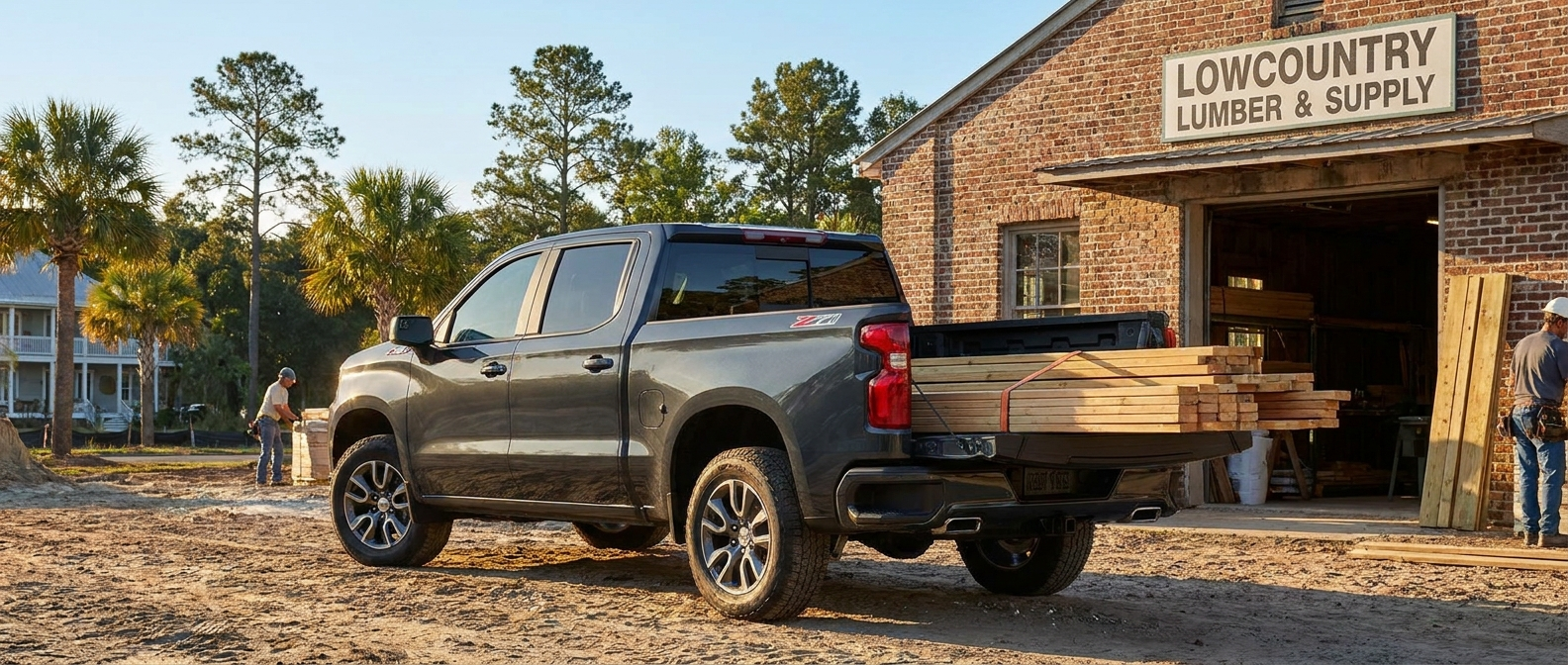
2026 Chevrolet Equinox parked outside a South Carolina hospital, silver, compact SUV for healthcare worker commute

2026 Chevy Equinox Trim Guide for Conway Healthcare Workers

In this article What Actually Matters When Choosing a Trim? Fuel Economy: Where the FWD vs AWD Decision Gets Real The Right Safety Features for Shift-Work Driving Match the Equinox to How You Actually Drive If you drive between Conway and the Grand Strand on a rotating shift schedule, the vehicle decision isn't just about features. It comes down to what happens at mile 30 of a 12-hour day when US-501 stacks up near Carolina Forest and your phone is at 4 percent. The 2026 Equinox handles that specific situation well. But three trim levels exist, and they solve different problems for different people on this corridor. We'll walk you through picking the one that actually fits your life. Browse the 2026 Equinox at Palmetto Chevrolet The short version Short commute, tight budget, solid safety coverage: the LT FWD is the call. Every safety feature you need comes standard. Long US-501 run, night or early-morning shifts: the RS or ACTIV in AWD adds adaptive cruise and 203 lb-ft of torque for the merge-heavy corridor. Family gear, beach trips, scrubs plus groceries: the ACTIV's hands-free power liftgate and roof rails earn their keep. The honest tradeoff: the 1.5L turbo is adequate, not brisk. Under a full load or towing anything, you'll feel it. All three trims carry the same Chevy Safety Assist suite standard. No trim-level haggling on that front. What Actually Matters When Choosing a Trim? What matters most comes down to three things, your shift schedule, your commute distance, and what you carry. Everything else is secondary. Option Best For Key Spec Tradeoff Equinox LT FWD In-Conway commuter, short runs to Conway Medical Center EPA 26 city / 29 hwy / 27 combined mpg No standard blind-spot monitoring; needs the optional Safety & Technology Package Equinox LT AWD Slightly longer hauls, occasional wet-road confidence EPA 25 city / 29 hwy / 26 combined mpg; 203 lb-ft torque Adds AWD premium, same blind-spot caveat as FWD LT Equinox RS AWD Night-shift commuters who want standard blind-zone assist Same EPA figures as LT AWD; sportier exterior No roof rails or hands-free liftgate Equinox ACTIV AWD Post-shift family hauling, beach weekends, bigger cargo loads Hands-free power liftgate, roof rails, all-terrain tires Highest trim cost; all-terrain tires trade some highway smoothness Every figure in that table comes straight from Chevrolet's published specifications and EPA ratings. The city/highway split for FWD is the EPA's 26/29 mpg figure. AWD trims drop to 25/29. Fuel Economy: Where the FWD vs AWD Decision Gets Real For a Horry County healthcare worker, the commute math matters more than the trim badge, and the plain reality is that FWD and AWD sit a lot closer together than the showroom pitch suggests once you run the numbers on a real daily route. The EPA rates the 2026 Equinox FWD at 27 mpg combined. The AWD version comes in at 26 mpg combined. A one-mpg difference in combined driving is genuinely small. On the US-501 run from Conway to Grand Strand Medical Center in Myrtle Beach, roughly 14 miles each way, the practical daily fuel difference between the two configurations amounts to a few ounces of gasoline. So why does AWD keep coming up on this corridor? Not ice, not mountain roads. The pull is the confidence factor on wet mornings during hurricane season, and the extra torque. Chevrolet lists 203 lb-ft of torque for AWD models versus 184 lb-ft for FWD, and on the merge from SC-22 (Veterans Highway) onto US-501 toward the beach, you can actually feel that difference in traffic. See what Equinox trims are in stock now Compare the fully electric Equinox EV if your commute is under 40 miles round-trip Worth knowing before you decide. Blind Zone Steering Assist and Rear Cross Traffic Braking come standard on the RS and ACTIV. On the LT, they sit inside an optional Safety and Technology Package. If those features matter to you, and for a commuter driving tired off a night shift they should, factor that into your trim comparison before you assume the LT is the simpler choice. The Right Safety Features for Shift-Work Driving Every 2026 Equinox ships with the full Chevy Safety Assist suite as standard equipment on every trim. The suite includes: Automatic emergency braking, plus front pedestrian and bicyclist braking Lane keep assist with lane departure warning A forward collision alert and following distance indicator IntelliBeam automatic high beams No extra charge, no trim-level exception. The timing is what makes it count, because shift workers drive when other people don't. The pre-dawn run down US-501 after a night at Conway Medical Center is exactly the scenario those features were designed for. Lane keep assist catches a lane wander you might not notice. Automatic high beams handle the back roads near downtown Conway without you touching a button. Rear Park Assist and Reverse Automatic Braking also come standard across all three trims. Hospital parking garages are tight. Having the system apply the brakes if you back toward an unseen pillar is worth more per square foot than almost anything else on the spec sheet. Keep your safety systems calibrated with a service visit Check the charging layout before you get attached to a trim. Chevrolet lists front and rear USB ports as standard, and wireless device charging comes available at higher configurations. A phone that dies between shifts is a real inconvenience. The 11.3-inch Google built-in touchscreen with wireless Apple CarPlay and Android Auto keeps your navigation live for the whole run without hunting for a cable. The 2026 Equinox carries over 15 standard safety and driver assistance features across all three trim levels, per Chevrolet's published specifications. Pros and Cons for the Healthcare Worker Specifically Pros Cons Full Chevy Safety Assist suite standard on every trim Blind-zone monitoring requires optional package on the LT 29.8 cu ft cargo behind the rear seat for bags, gear, and groceries 1.5L engine (175 hp) feels modest under heavier loads Front and rear USB ports standard; wireless charging available AWD adds cost, though the fuel economy penalty is just 1 mpg combined Hands-free power liftgate on ACTIV for loading when your hands are full All-terrain tires on ACTIV add road noise on the highway run Adaptive cruise control standard on all trims for highway fatigue management Cargo space (29.8 cu ft) trails a few class competitors Explore Financing Options Match the Equinox to How You Actually Drive Matching the Equinox to your driving comes down to where you drive and what you load, so we'll frame it by the three commute patterns that run through Horry County rather than by the badge on the tailgate. If your entire commute is in Conway (Conway Medical Center is 4 miles from Palmetto Chevrolet on 4th Avenue), the LT FWD is genuinely enough. The fuel economy is the sharpest in the lineup, parking at Singleton Ridge is manageable with the rear assist standard, and the base safety suite handles the real risks on the route. Add the Safety and Technology Package for blind-zone coverage and you're done. If you're covering the US-501 corridor to Myrtle Beach, we'd push toward the LT AWD at minimum, and the RS if you want blind-zone assist without the package negotiation. The extra torque from the 8-speed automatic and AWD hardware shows up on the merge zones. The RS gives you the clean styling, too, if that matters at the end of a long week. If you're hauling family after shifts, the ACTIV makes a legitimate case. The hands-free power liftgate means you can open the cargo area without setting down the diaper bag or the grocery sacks. Roof rails let you run a cargo carrier on a family beach day. The all-terrain tires are never going to see actual trails, but they shrug at the pothole-ridden service road behind any hospital without drama. We'll be blunt about the Equinox. It isn't exciting to drive. One-hundred-seventy-five horsepower from a 1.5L turbo is adequate for Horry County roads, not exhilarating. But adequacy is exactly what you want in a vehicle that starts at 5:45 AM and pulls into the driveway after midnight. It starts, it handles, it parks, and the technology doesn't fight you. That's the job. Come see us at Palmetto Chevrolet on 4th Avenue in Conway and we'll walk you through whichever configuration matches your schedule. Our team knows the US-501 run and the parking situations at both hospitals, and we can match trim to commute without overcomplicating it. Frequently Asked Questions Is the 2026 Equinox reliable enough for a shift worker who can't afford downtime? The 2026 Equinox is now in its second model year of the fourth generation, which means the early production wrinkles are worked out. Chevrolet's Chevy Safety Assist suite comes standard on all three trims, and the 1.5L turbocharged engine uses a direct injection and automatic stop/start system that's been proven across Chevrolet's lineup. For a shift worker who needs the car to start reliably at odd hours, the platform's solid. We'd recommend staying current on maintenance, which our service team in Conway can handle, to protect that reliability over the long haul. Does the 2026 Equinox have enough cargo space for a healthcare worker's daily gear? Yes, with room to spare. Chevrolet lists 29.8 cubic feet of cargo space behind the rear seats, which handles a large scrubs bag, a meal-prep cooler, and a small gym bag at the same time. Fold the rear seats flat and that number expands to 63.5 cubic feet. The ACTIV's hands-free power liftgate is worth a look if your hands are typically full when you reach the vehicle, which is most days in healthcare. The LT and RS require a manual liftgate, a minor but real distinction after a 12-hour shift. Value Your Current Vehicle Palmetto Chevrolet 1122 4th Ave, Conway, SC 29526 (843) 248-4283
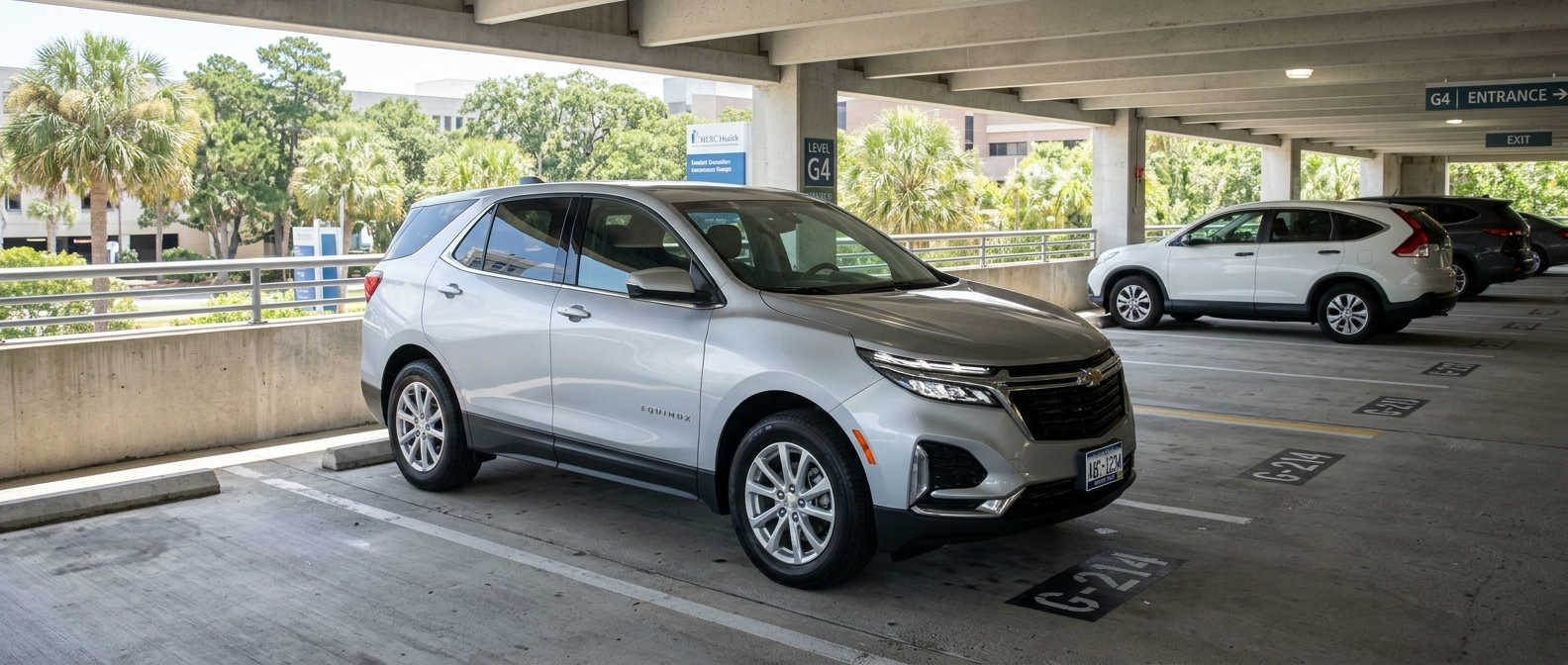
2026 Chevrolet Trailblazer parked near Coastal Carolina University in Conway SC

3 Chevy SUVs Compared for Students Near Coastal Carolina University

Parking at CCU is genuinely rough right now, and it's not getting easier. Record enrollment means more cars fighting for the same finite lots, and US-501 through Conway is still under a widening project that makes rush-hour commutes feel longer than the map suggests. What you drive matters here, and so does how big it is. We're a short drive from campus on 4th Ave in Conway, and the three questions below are worth answering before you shop. Students and parents sometimes arrive set on the Chevy they think they want, then pick a different one once we work through those questions. Consider this guide those three questions, answered with the numbers so you can decide before you ever set foot on the lot. The short version Tight budget and city driving only: The Trax is the leanest entry point with an EPA-estimated 30 mpg combined and a genuinely compact footprint. Best all-around for CCU life: The Trailblazer hits the sweet spot, with available AWD, an EPA-estimated 31 mpg combined on the 1.3L FWD, and a size that still fits in a standard campus spot. Roommates, road trips, hauling everything you own: The Equinox wins on cargo (63.5 cu ft max vs 54.4 in the Trailblazer) but it's 9 inches longer and steps up in entry cost. The one thing Trax can't do: AWD is not available on any 2026 Trax trim. If you're planning winter road trips home or want grip on a rainy night on SC-544, that matters. All three seat five and include wireless Apple CarPlay and Android Auto standard. How Do They Compare? The Full Matrix All three are compact Chevy SUVs that seat five, yet they split along size, drivetrain, and cargo, so the right one depends on how far you drive and how much you'll haul. The short version is that the Trax runs leanest, the Trailblazer balances, and the Equinox carries the most. If you just want the difference spelled out, you'll find it in the table below. 2026 Trax 2026 Trailblazer 2026 Equinox Body length 178.6 in 174.1 in 183.2 in Standard engine 1.2L Turbo (137 hp) 1.2L Turbo (137 hp) 1.5L Turbo (175 hp) Available engine FWD only 1.3L Turbo (155 hp) 1.5L Turbo (175 hp) Drivetrain FWD only FWD or AWD FWD or AWD EPA combined (best trim) 30 mpg 31 mpg 27 mpg Max cargo (seats folded) 54.0 cu ft 54.4 cu ft 63.5 cu ft Towing capacity Not rated Up to 1,000 lbs Up to 1,500 lbs Standard screen Available 11-in 11-in standard 11.3-in standard Best for Lowest entry cost, pure FWD commuting AWD availability + efficiency balance Maximum cargo + family-size space Sources: Chevrolet.com model pages (accessed October 2026); EPA fuel economy figures. A couple of things jump out of that table. The Trax is actually 4.5 inches longer than the Trailblazer, which catches people off guard. Inside it feels smaller because it's narrower and lower. The Equinox runs a full 9 inches longer than the Trailblazer, and in the overflow lot across US-501 from campus, that inch count turns into a parking decision. Browse the Trax on our lot if the entry-level price is the filter that matters most. Is AWD Worth It for a CCU Student? AWD earns its keep for some CCU students and not others, and the deciding factor is where you point the car when you're off campus, since Conway winters stay mild while a January run up I-26 or a February stretch on I-77 is a different road entirely. The national comparison articles tend to skip that split. So who actually needs it? If every break you take lands in Myrtle Beach or Hilton Head, you'll be fine with front-wheel drive, and the same goes for a student heading home to flat, warm Jacksonville. South Carolina winters are mild, and Conway rarely sees ice, with snow on the Grand Strand rare enough to be memorable. Road trips home change that math, because a student from the North Carolina mountains or the mid-Atlantic who takes I-26 in January or I-77 in February is driving a very different road. AWD won't match true 4WD in deep snow, so keep your expectations in check there. On wet pavement, though, and on fast acceleration out of a rain-soaked intersection on SC-544, the extra grip truly helps. Among these three, the Trailblazer is the only one where you'll even find AWD as an option. The 2026 Trax is front-wheel drive on every single trim, as Chevrolet's specs confirm. The Equinox offers AWD too, but you're stepping up to a larger vehicle to get it. If your priority is AWD in the most efficient, most compact package here, look hard at the Trailblazer RS or ACTIV with the 1.3L and the 9-speed automatic. The 2026 Trailblazer with the 1.3L and AWD returns an EPA-estimated 28 mpg combined, while the FWD version of the same engine earns 31 mpg combined. Adding AWD costs you about 3 mpg, and that's the whole tradeoff. There's one local detail worth flagging before you shop. The US-501 corridor between downtown Conway and the CCU campus entrance gets legitimately heavy during move-in weekends and home football games, so a smaller vehicle is easier to thread through traffic and park. The Trailblazer's 174.1-inch length (per Chevrolet) comes in shorter than the Trax overall, which still catches shoppers off guard. If you're living in one of the SC-544 complexes, here's what the week looks like: A commute that's easy on a Tuesday morning and 25 minutes longer on game day Parking structures with tight turning radii that punish anything wider than a midsize Trips to downtown Conway's Riverwalk area where street parking requires maneuvering Weekend runs to the beach that put a premium on real cargo flexibility Get Pre-Approved Before You Visit Which SUV Fits Which CCU Student There's no single winner here, because the right SUV tracks your budget, your routes, and your cargo, so sort yourself by those three and the answer falls out quickly. You know your own week better than we do, and the picks below line up with it. Choose the Trax if: your budget is the hard ceiling, you stay in Horry County almost exclusively, and AWD has never crossed your mind. The EPA-estimated 30 mpg combined holds up in everyday driving, and the entry-price gap versus the Trailblazer means something on a student budget. Choose the Trailblazer if: you want the flexibility of AWD without jumping up in size or cargo cost, you road-trip north or inland at least a couple of times a year, and you like having the option of the RS or ACTIV trim for a little more personality. For the typical CCU routine, this is the one we'd point to, with the honest caveat that it costs more than the Trax to get AWD equipped. The Trailblazer isn't the budget pick. It's the value pick. Choose the Equinox if: you're hauling a lot, and 63.5 cu ft against 54.4 in the Trailblazer is a real 9 cubic feet rather than a rounding difference, or you have passengers who need rear-seat legroom regularly, or you're buying one vehicle for the next five to seven years and want room to grow into it. The Equinox's 175-hp standard engine also pulls noticeably harder at highway speeds, which matters on I-95 runs to Charlotte or Atlanta. The honest tradeoff is length, since 183.2 inches is full compact-SUV territory and it shows in tighter lots. The Trailblazer's flat-folding front passenger seat, a Chevrolet-listed feature, adds a long-load option no one else in this comparison has All three include standard wireless Apple CarPlay and Android Auto The Trailblazer and Equinox both offer remote start as a trim-level option; the Trax does not on every trim The Trailblazer 11-inch touchscreen is standard on every trim; the Trax's 11-inch display is available, not universal See current Trailblazer, Trax, and Equinox inventory at Palmetto Chevrolet Frequently Asked Questions Which Chevy SUV is best for a Coastal Carolina University student? For most CCU students, the 2026 Trailblazer is the strongest all-around fit. It's shorter overall than the Trax (174.1 inches versus 178.6 inches), offers available AWD for students who road-trip home to colder climates, and earns an EPA-estimated 31 mpg combined on the FWD 1.3L engine. Students on the tightest budget who stay local should look at the Trax first; students who haul a lot or need rear-seat space regularly should step up to the Equinox. Does the 2026 Chevy Trax have AWD? No. The 2026 Chevrolet Trax is front-wheel drive only on every trim, per Chevrolet's own specifications. All-wheel drive is not available on any 2026 Trax configuration. If AWD is important to you, the 2026 Trailblazer and the 2026 Equinox both offer it as an available option. Value Your Trade-In Online Palmetto Chevrolet 1122 4th Ave, Conway, SC 29526 (843) 248-4283

2026 Chevrolet Traverse parked at The Market Common lifestyle center in Myrtle Beach, South Carolina on a sunny fall day

Which Chevy SUV Should You Drive to The Market Common?

In this article What's the Plan at a Glance? The Main Event: Why the Market Common Rewards a Bigger SUV The Route: Conway to The Market Common on US-501 The Right Chevy for Your Crew Size and Your Day Getting Into the Right One at Palmetto Chevrolet Take the Chevy that fits your crew and your cargo, because The Market Common is a full-day errand, not a quick stop. Drive US-501 southeast from Conway about 15 miles, park once for free in the surface lots, and you'll have the whole day for shopping, dining, and Savannah's Playground. The right SUV makes that day easy. The wrong one leaves you cramped. The 2026 Chevy Traverse is our first recommendation for most families making this run, and we'll show you why in a minute. But we also stock two other Chevys that serve the trip well if you're hauling two people instead of six. What's the Plan at a Glance? Stop What to Do Best Time Parking Notes The Market Common main district Shop Barnes & Noble, Anthropologie, Pottery Barn, boutiques 10 AM - 2 PM Free surface lots throughout; street-grid layout Valor Park (Valor Memorial Garden) Saturday farmers market (April - December, 10 AM - 3 PM) Saturday mornings Pull alongside Farrow Parkway; easy in/out Grand Park and Savannah's Playground All-abilities free playground, walking paths, fishing spots Any daylight hour Parking off Crabtree Lane; flat lot, easy for larger SUVs Dining row (Tupelo Honey, Gordon Biersch, Nacho Hippo, and others) Lunch or dinner on the outdoor patios Midday or evening Park once and walk; the whole district is pedestrian-scale The Main Event: Why the Market Common Rewards a Bigger SUV Picture 114 acres of walkable lifestyle center on the former Myrtle Beach Air Force Base, and it's designed for a day, not a drive-by. You're going to load shopping bags, stroller gear, and whatever the kids picked up at Savannah's Playground before you get back on US-501. Loading all of that is where the 2026 Traverse earns its keep. Chevrolet lists up to 98 cubic feet of cargo space with the rear seats folded, and even with three rows occupied you still have 22.9 cubic feet behind the third row. That's not a spec you notice until you're trying to stuff a Pottery Barn lamp and a weekend's worth of bags into something smaller. The 2026 Traverse also seats up to eight. It helps when you're meeting family at the farmers market at Valor Park on a Saturday and someone needs to ride home with you. The turbocharged 2.5-liter four-cylinder makes 328 horsepower and 326 lb-ft of torque (Chevrolet's figures), and the EPA rates FWD models at 20 city and 27 highway. A highway number like that keeps the Conway-to-Myrtle Beach run genuinely affordable. Palmetto Chevrolet team note: US-501 between Conway and Myrtle Beach tightens up during peak beach-season weekends. The Traverse's 17.7-inch touchscreen standard on every 2026 trim runs Google Maps with live traffic built in, so you can see the backup at the Socastee interchange before you're already in it. At 79.6 inches, the Traverse is wide, and width is the tradeoff worth naming. The Market Common's surface lots are roomy, but if you're squeezing into the angled street spots along the main retail strip during a crowded Saturday farmers market, a narrower SUV is genuinely easier to park there. The Route: Conway to The Market Common on US-501 The drive from Conway runs about 15 miles down US-501 southeast into Myrtle Beach, roughly 24 minutes off-peak, though on peak summer weekends or during the holiday shopping stretch in November and December, that same stretch can slow considerably through the Socastee area. You'll want to leave early enough to get ahead of the backup. During the farmers market season, leave Conway before 10 AM on a Saturday, or swing back on SC-544 through Socastee for a different look at the corridor. Our team leans on that routing when beach traffic builds, and you'll thank yourself for the early start. The 2026 Equinox is the right choice for that kind of trip when it's just two adults or a small family. It seats five, rides lighter on the lot, and the EPA rates the FWD model at 27 miles per gallon combined, which matters over a corridor you'll run multiple times a month. Behind the second row you get 29.8 cubic feet of cargo space (per Chevrolet's specs) with a flat load floor that handles shopping bags without a puzzle. It also slips into the tighter angled spots on the Market Common's main retail street without the width anxiety the Traverse can bring on a busy afternoon. The 2026 Equinox carries an EPA-combined rating of 27 mpg on FWD models, making it the most fuel-efficient gas SUV in our lineup for the Conway-to-Market Common run. The Right Chevy for Your Crew Size and Your Day The right Chevy here comes down to crew size and cargo, and the call is simpler than it sounds. Three Chevys serve this trip well, and which one fits depends on who's coming along and what you plan to carry back to Conway. The 2026 Trailblazer is the one we'd hand to a Conway commuter or a CCU student making a solo or two-person Market Common run. The 1.3-liter turbocharged three-cylinder with front-wheel drive earns an EPA estimate of 29 city and 33 highway miles per gallon. That's the most highway-efficient option in this category, and it matters when you're making this drive regularly. At 174 inches long, it parks without drama anywhere in the district. The tradeoff is real. With 25.3 cubic feet behind the rear seats, you don't have much room if you're a committed shopper. Know what you're buying before you buy it. Here's how the matchup shakes out. Your situation Best fit Why it works Family of 5 or more, full shopping day 2026 Traverse 98 cu ft max cargo, 8-passenger seating, 17.7-inch Google Maps screen Couple or small family, regular trips 2026 Equinox 27 mpg combined (EPA, FWD), 29.8 cu ft behind row 2, easy parking Solo or two-up, efficiency-first 2026 Trailblazer 33 mpg highway (EPA, FWD 1.3L), 174 inches long, nimble in tight spots Savannah's Playground with gear and stroller 2026 Traverse or Equinox Flat load floors, power liftgates, real cargo headroom The Market Common is flat, the parking is free, and none of these SUVs will leave you hunting for a spot. What changes is how loaded down you'll be when you walk back to the car. Explore Financing Options Getting Into the Right One at Palmetto Chevrolet We're on 4th Avenue in Conway, about 15 miles from The Market Common along the same US-501 corridor you'd take to get there. So we can put you in a Traverse, an Equinox, or a Trailblazer and let you preview the ride before you ever pull into the Market Common's lot for real. Come down and see what we have on the lot. If you've got a vehicle to trade, start there too. A quick trade assessment makes the whole process faster, and our team will walk you through what your current vehicle is worth before we talk about anything else. The Market Common rewards the right vehicle. We've got three that fit. Come find yours. Value Your Trade-In Palmetto Chevrolet 1122 4th Ave, Conway, SC 29526 (843) 248-4283

2026 Chevrolet Silverado 1500 on a Horry County job site near Red Hill, Conway, SC

Your Silverado Isn't Working Hard Enough for Red Hill: Here's the Fix

If you're driving near Red Hill and your truck feels like it's fighting you on US-501 every afternoon, or you're running a job trailer down SC-544 and second-guessing whether you've got enough engine under the hood, the problem probably isn't your driving. A lot of Silverado buyers pick a configuration tuned for somewhere else. The fix is straightforward. Match the engine, cab, and drivetrain to what Horry County genuinely demands, and that's what this guide walks through. Browse the 2026 Silverado 1500 at Palmetto Chevrolet to see what's on the lot while you read. What's Actually Going on with Your Truck Mismatch? What's going on is usually a mismatch rather than a bad truck, because the Grand Strand blends contractor hauling, coastal trailer towing, US-501 commuting between Red Hill and Myrtle Beach, and payload-heavy trade work into a single buying decision, and a Silverado tuned for one of those jobs can genuinely struggle at another. Contractors haul materials through Horry County's construction boom, families pull a camper or boat trailer toward the coast, commuters grind the US-501 corridor between Red Hill and Myrtle Beach, and tradespeople need real payload capacity without paying for engine they'll never use. Pick the wrong config and you'll either overpay on fuel or under-deliver on the job site. Run through the full diagnostic below. Symptom You're Experiencing Likely Cause Right Silverado Fix Engine strains on loaded job-site runs Under-engined for actual payload (2.7L at tow limit) 5.3L EcoTec3 V8 for consistent hauls over 9,000 lbs Burning fuel sitting in US-501 beach traffic Large-displacement engine at idle in stop-and-go 2.7L TurboMax or Duramax diesel for daily commuting Trailer sways on SC-22 at highway speed Missing trailering package / sway control Max Trailering Package + Trailer Sway Control on any trim Rust showing on bed floor or undercarriage Coastal humidity and salt air accelerating surface oxidation Regular undercarriage rinse, bedliner, touchup on paint chips Cab feels cramped for the whole crew Wrong cab config for actual headcount Crew Cab for 4-5 workers; Double Cab fine for 2-3 Engine Choice Is Almost Always the Root Cause Engine choice is almost always the root cause here, and the 2.7L TurboMax is a genuinely capable starting point for a lot of buyers even though it's the engine people tend to outgrow once real commercial work shows up. Chevrolet rates it at 310 horsepower and 430 lb-ft of torque, with a maximum payload of 2,260 lbs and up to 9,500 lbs of towing (properly equipped, always verify your door-jamb label). For a Red Hill commuter who occasionally hauls a small trailer, that's plenty. The EPA rates the 2.7L TurboMax at around 18 city / 21 highway mpg in rear-wheel drive, which matters when you're sitting in beach-season traffic on US-501 four days a week. The problem shows up when that same truck gets pressed into real commercial duty. Pull a loaded flatbed toward a Conway job site day after day, and you're working that engine near its ceiling. Push the 2.7L into daily commercial hauling and it will feel strained. No way around it. At that point the 5.3L EcoTec3 V8 is the step worth making. Chevrolet rates the 5.3L at 355 horsepower and 383 lb-ft of torque, with up to 11,300 lbs of towing capacity (properly equipped). It handles most pontoon boats, mid-size travel trailers, and equipment loads without breathing hard. If your work life includes anything north of 9,000 lbs regularly, the 5.3L is the engine you want. Silverado 2500 HD and Silverado 3500 HD belong in the conversation if your payload or tow requirements go consistently beyond what the 1500 lineup supports. Commercial buyers near Red Hill who are running real construction loads should look hard at those two. The Duramax 3.0L Turbo-Diesel is a different animal entirely. Chevrolet lists 305 horsepower and 495 lb-ft of torque, with a maximum towing capacity of up to 13,300 lbs (properly equipped). The EPA estimates 23 city / 28 highway mpg in rear-wheel drive. For a contractor or retiree who drives significant highway miles and tows a large boat or heavy camper on long trips, the diesel math works. Fewer fuel stops, serious torque, and the highest tow rating in the lineup. The real tradeoff is service. Diesel upkeep is more involved, and you'll want a technician familiar with the engine when it needs attention. Coastal SC heads-up: The Waccamaw National Wildlife Refuge sits right on Red Hill's western edge, and the humidity off the Waccamaw River corridor is real year-round. Coastal salt air doesn't need oceanfront living to find its way under a truck. Keep an eye on paint chips in the bed and along the rocker panels, and touch them up quickly. A spray-in bedliner and a monthly undercarriage rinse go a long way on any truck parked in Horry County, whatever engine you choose. Next step: If you know your typical load weight and tow frequency, our team can pull the door-jamb sheet on any Silverado on the lot and confirm the actual rated capacity for that specific truck's configuration before you commit. When to Handle It Yourself vs. When to See Our Service Team Plenty of Silverado upkeep you can handle right in your own driveway near Red Hill, though a short list of jobs genuinely belongs with our service team because they lean on calibration equipment or diesel-specific know-how you won't have at home. Check tire pressure monthly, since Horry County's heat cycles move it more than you'd guess. Rinse the undercarriage after any run near the coast. Inspect the bed after hauling anything abrasive. Keep up with the oil interval, because the 2.7L TurboMax and 5.3L V8 both do better staying on schedule in this hot, humid climate. Some jobs you shouldn't try to DIY. Anything trailering-system related (brake controller calibration, hitch receiver torque), the 5.3L's Dynamic Fuel Management system if it starts ticking, and any electrical diagnostic on Chevy Safety Assist features all belong with us. The standard Chevy Safety Assist suite on every 2026 Silverado includes Automatic Emergency Braking, Forward Collision Alert, Front Pedestrian Braking, Lane Keep Assist with Lane Departure Warning, Following Distance Indicator, and IntelliBeam automatic high beams. These are safety-critical systems with sensors that need calibration equipment to verify. Bring those to us. Schedule service at Palmetto Chevrolet when you're ready. Our team is right here in Conway, a short run from Red Hill on US-501. Schedule Your Silverado Service Appointment The 2026 Silverado 1500 is the final year of its current generation before the 2027 redesign, so inventory is a real consideration right now. If you're in the market, now's the moment to choose a configuration thoughtfully rather than default to whatever's on the lot. We can help you spec it right. Frequently Asked Questions Which Silverado 1500 engine is right for towing a boat near Red Hill? For most pontoon boats and mid-size trailers common on the Grand Strand, the 5.3L EcoTec3 V8 is the right balance. Chevrolet rates it at up to 11,300 lbs of towing capacity when properly equipped, which covers the large majority of recreational trailers in this area. If you're consistently pulling a large offshore boat or heavy camper and logging serious highway miles, the Duramax 3.0L Turbo-Diesel's 13,300-lb rating and EPA-estimated 23 city / 28 highway mpg (rear-wheel drive) makes a strong case. Always confirm your specific truck's rated capacity on the door-jamb label before you tow. Does the coastal humidity in Horry County actually affect a truck's maintenance needs? It does, in a real and specific way. The combination of high humidity and occasional salt air off the Grand Strand accelerates surface oxidation on exposed steel. Bed floors, rocker panels, and undercarriage components are the places to watch. The 2026 Silverado's Durabed has 89.1 cubic feet of cargo space, but bare steel in a truck bed is vulnerable once the coating gets scratched. A spray-in bedliner, prompt attention to paint chips, and periodic undercarriage rinsing are practical habits rather than extreme precautions here. Our service team can inspect those areas if you want a professional eye on it. FAQ Which Silverado 1500 engine is right for towing a boat near Red Hill? For most pontoon boats and mid-size trailers common on the Grand Strand, the 5.3L EcoTec3 V8 is the right balance. Chevrolet rates it at up to 11,300 lbs of towing capacity when properly equipped, which covers the large majority of recreational trailers in this area. If you're consistently pulling a large offshore boat or heavy camper and logging serious highway miles, the Duramax 3.0L Turbo-Diesel's 13,300-lb rating and EPA-estimated 23 city / 28 highway mpg (rear-wheel drive) makes a strong case. Always confirm your specific truck's rated capacity on the door-jamb label before you tow. Does the coastal humidity in Horry County actually affect a truck's maintenance needs? It does, in a real and specific way. The combination of high humidity and occasional salt air off the Grand Strand accelerates surface oxidation on exposed steel. Bed floors, rocker panels, and undercarriage components are the places to watch. The 2026 Silverado's Durabed has 89.1 cubic feet of cargo space, but bare steel in a truck bed is vulnerable once the coating gets scratched. A spray-in bedliner, prompt attention to paint chips, and periodic undercarriage rinsing are practical habits rather than extreme precautions here. Our service team can inspect those areas if you want a professional eye on it. Value Your Current Trade-In Palmetto Chevrolet 1122 4th Ave, Conway, SC 29526 (843) 248-4283

2026 Chevrolet Silverado 1500 towing a trailer on SC Highway 90 near Conway, South Carolina

How to Set Up Your Chevy Truck for Pulling a Trailer on Highway 90

SC Highway 90 runs 23 miles as a two-lane corridor from Red Hill in Conway all the way to Little River, and according to the Grand Strand Area Transit Study, it's seen more growth and traffic pressure than just about any other stretch in Horry County. When you're pulling a boat, an enclosed cargo trailer, or a camper through it, a sloppy setup that feels manageable on an empty parking lot turns real on you the moment a line of cars stacks up behind you on a two-lane. The short answer has three parts. Choose the Chevy truck that fits your load, confirm three numbers before you hook up (trailer weight, tongue weight, and payload remaining), and run through the six-step setup below before you ever leave the driveway. Tongue weight should be 10 to 15 percent of your loaded trailer's total weight, per Chevrolet's published trailering guidelines. Get that wrong and every other step in the setup becomes less effective. The 2026 Silverado 1500 is on our lot right now, and it's the truck we'd point most readers toward first, though the right pick genuinely depends on what you're pulling. Let us walk through both the selection and the procedure. What You Need Before You Start Before you touch a hitch ball, pull four numbers off your specific truck and your specific trailer, because the towing rating on the window sticker is only the ceiling under ideal conditions and what you can *actually* tow is whatever's left after passengers, gear, and options eat into that number. Treat the sticker as a starting point, not a promise. What to find Where to find it Why it matters for SC 90 Truck's maximum towing rating Door-jamb certification label (not the brochure) Your specific build may rate lower than the advertised max Trailer's loaded weight Weigh station or a certified scale Empty ratings don't reflect coolers, gear, or water tanks Tongue weight Tongue scale or certified scale Must be 10-15% of loaded trailer weight (Chevrolet 2026 Trailering Guide) Truck's remaining payload GVWR minus actual curb weight plus occupants Tongue weight counts against payload, not just tow rating Once you have those four numbers, the setup steps below go quickly. If you haven't weighed your trailer loaded, do that first. Guessing is how people end up with a swaying trailer on SC 90 at 55 mph with no room to correct. How to Set Up Your Chevy Truck for a Highway 90 Tow The procedure below is the one we walk customers through, and it applies whether you're pulling a pontoon from Conway toward Little River or hauling an enclosed trailer to a job site off SC 22. The steps stay the same; the numbers change by truck. Step 1: Confirm your truck and engine match your load. Three Chevy trucks cover the trailer weights you'll encounter on Highway 90. Chevrolet lists these as the properly-equipped ceilings. Verify your specific configuration on the door-jamb label. Truck Engine Max Towing (properly equipped) Best for on SC 90 2026 Colorado 2.7L TurboMax 7,700 lbs Jet ski, jon boat, small utility trailer 2026 Silverado 1500 5.3L EcoTec3 V8 11,300 lbs Mid-size camper, pontoon, enclosed cargo trailer 2026 Silverado 1500 6.2L EcoTec3 V8 / Duramax 3.0L diesel 13,300 lbs Larger travel trailer, heavy equipment 2026 Silverado 2500 HD 6.6L Duramax Turbo-Diesel V8 20,000 lbs conventional / up to 22,420 lbs gooseneck Gooseneck, commercial equipment, fifth wheel The Colorado comes with a real trade-off. Its 7,700 lbs covers a surprising range of recreational trailers, and it's a nimbler truck in tighter spots. What it gives up is headroom. Tow within 80 percent of your rating and you'll have a buffer; push into the 90-plus percent range regularly and the Silverado 1500 is the smarter call. Step 2: Check the door-jamb label, not the window sticker. Plenty of folks jump from here straight to step three, and that's the slip-up. Your truck's actual tow and payload rating for its specific configuration (engine, cab style, bed length, axle ratio, options) lives on the Trailering Information Label on the door frame. Chevrolet's 2026 Trailering Guide is explicit that the door-jamb label is the authoritative number for your unit, not the brochure max. Wheel size alone can change the 2500 HD's conventional tow ceiling significantly. Two minutes here prevents a miscalculation you can't fix roadside. Step 3: Calculate and verify your tongue weight. Tongue weight is the downward force your trailer's coupler puts on the hitch ball. Per Chevrolet's 2026 Trailering Guide, for conventional towing that number should fall between 10 and 15 percent of the loaded trailer's total weight. A 6,000-pound loaded trailer needs 600 to 900 pounds of tongue weight. Too light and the trailer pushes the rear of the truck around; too heavy and the front wheels lose contact with the road. A tongue scale from any hardware store gives you a real number in about two minutes. No guessing. On heavy equipment trailers, running across a certified scale before every long haul is cheap insurance. The habit keeps you legal and safe on a two-lane. Step 4: Match your hitch class and check the ball height. Use a hitch rated for your trailer's tongue weight. Chevrolet's published guidance is clear that for tongue weights above 600 pounds on most Silverado configurations, a weight-distributing hitch with sway control is required. (For the 2500 HD, the threshold is different. Check the guide specific to your model year.) Ball height matters too. When your trailer is hooked up and level from front to back, the setup is right. Tongue-high or tongue-low means you're putting uneven stress on the hitch and the trailer frame, and that shows up as sway on longer highway stretches. Step 5: Connect the 7-pin connector and test every light. Every Chevy truck from the Colorado up comes with a 7-pin sealed connector when you add the trailering package. Plug in and walk the trailer. Check left turn, right turn, brake lights, running lights, hazards. Do it before you leave the driveway. SC 90 sees heavy traffic between Conway and the SC 22 interchange, and a trailer with no brake lights in that kind of traffic is a problem that gets expensive fast. Step 6: Load the trailer and set the brake controller gain. Chevrolet's trailering guidance recommends placing about 60 percent of your cargo weight over the front half of the trailer, with the load distributed evenly side to side. Heavy items low and centered, lighter items toward the rear. Once loaded, set your in-cab electric trailer brake controller (the Silverado 1500 and 2500 HD both offer an integrated unit) and do one slow brake test in a parking lot before you hit SC 90. Adjust the gain until the trailer brakes engage firmly without locking up. Tip: The step people get wrong most often. Step 3 is the one. Checking the truck's tow rating is easy; actually weighing the loaded trailer and running the tongue-weight math is the part that gets skipped before leaving. A trailer that's been sitting on the hitch all week didn't get lighter. It may have gotten heavier if you've been loading it. Weigh it loaded, every time. Seasonal note: SC 90 between Conway and Little River sees its heaviest recreational traffic from Memorial Day through Labor Day, with significant RV and boat-trailer volume headed toward North Myrtle Beach. If you're towing into that window, give yourself extra following distance and check your trailer's brake adjustment before the season starts, not after your first run. Before You Pull Out: A Quick-Reference Recap The recap below is the one we'd hand you at the counter before you leave, so you can run the whole setup from memory, though none of it replaces reading the door-jamb label for your own build. Print it, take a photo, keep it in the truck. Step 1: Match truck and engine to your trailer weight using the table above. Step 2: Read the door-jamb Trailering Information Label for your specific build's rating. Step 3: Weigh your loaded trailer. Calculate tongue weight (10-15% of loaded weight). Verify it with a tongue scale. Step 4: Confirm hitch class. Use a weight-distributing hitch with sway control if your tongue weight exceeds 600 lbs (Silverado 1500; verify your threshold on the 2500 HD or Colorado). Step 5: Connect 7-pin plug. Walk the trailer and test all lights before leaving. Step 6: Load 60% of cargo over the front half of the trailer. Set brake controller gain and do a slow-speed brake test before pulling onto SC 90. Always: Keep your loaded trailer's weight to 80 percent of your rated ceiling or below for the most stable tow on a two-lane highway like SC 90. If you're not sure whether your trailer and your truck's configuration line up, bring both to our service team. We can check the door-jamb label with you, look at your hitch setup, and confirm the brake controller is calibrated right before you head north on SC 90. Schedule a Pre-Trip Service Check Getting the right truck under you starts before any of this. If you're in the market and towing is a real part of how you use your truck, let's talk specs and configurations on the lot. The difference between a Silverado 1500 with the 5.3L and one with the Duramax diesel is real, and it shows up on that stretch between Conway and Little River. *By the Palmetto Chevrolet Team | October 2026* *All towing and payload ratings are for properly equipped vehicles. Your specific truck's certified rating is on the door-jamb Trailering Information Label. Verify your configuration's numbers before towing. Tongue weight and load calculations are your responsibility as the operator.* Frequently Asked Questions What is the maximum towing capacity of the 2026 Silverado 1500? Chevrolet rates the 2026 Silverado 1500 at up to 13,300 pounds when properly equipped with the Duramax 3.0L turbo-diesel or the 6.2L EcoTec3 V8 and the Max Trailering Package. The 5.3L V8 tops out at 11,300 pounds, and the 2.7L TurboMax reaches 9,500 pounds. Your certified number is on the door-jamb label. How much can a 2026 Silverado 2500 HD tow on a conventional hitch? Chevrolet rates the 2026 Silverado 2500 HD at up to 20,000 pounds on a conventional hitch with the 6.6L Duramax turbo-diesel and Max Trailering Package on a properly equipped Crew Cab. Gooseneck configurations can reach 22,420 pounds. The 6.6L gas V8 reaches up to 18,700 pounds. Explore Financing Options Palmetto Chevrolet 1122 4th Ave, Conway, SC 29526 (843) 248-4283

Contact Us

Fill out this form below and we'll contact you shortly
*Required Fields